The brief
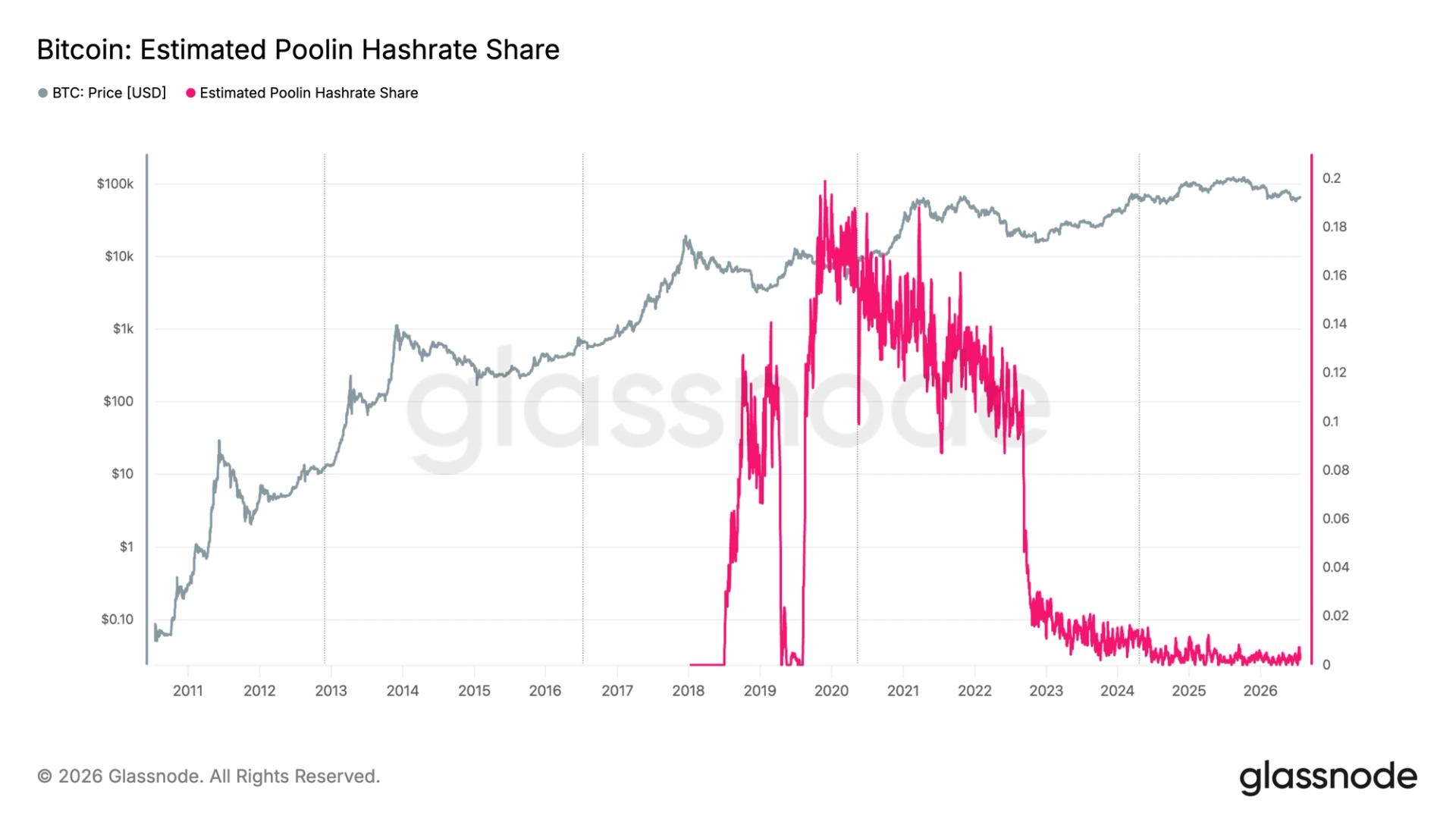
Poolin, once the largest Bitcoin mining pool, has filed for Chapter 11 bankruptcy, marking a significant downturn for the company that previously controlled a substantial portion of Bitcoin's hashrate.
Context
The Singapore-based mining pool is now facing financial difficulties, with debts amounting to $173 million and plans to sell its assets to recover funds.S1S2
Key points
- Poolin controlled nearly a fifth of Bitcoin's global hashrate at its peak.S1
- The company has initiated a $52 million sale of its two mining sites in West Texas.S2
- The bankruptcy filing is part of a creditor recovery program.S2
- Poolin's financial troubles reflect broader challenges in the cryptocurrency mining industry.S1
- The company is selling off its remaining assets to address its debts.S1
- Poolin's situation highlights the volatility and risks associated with cryptocurrency mining.S1
- The filing for Chapter 11 allows Poolin to reorganize its debts while continuing operations.S2
- The outcome of the asset sales will impact the company's ability to recover financially.S2
Why it matters
- The bankruptcy of a major player like Poolin could signal ongoing instability in the cryptocurrency market.S1
- This event may affect investor confidence in Bitcoin mining operations.S1
- The situation underscores the financial pressures faced by mining companies amid fluctuating cryptocurrency prices.S2
What to watch
- Monitor the progress of Poolin's asset sales and their impact on creditor recovery.S2
- Watch for reactions from other major mining pools regarding their financial health.S1
- Observe how this bankruptcy influences regulatory discussions around cryptocurrency mining.S1