
Context
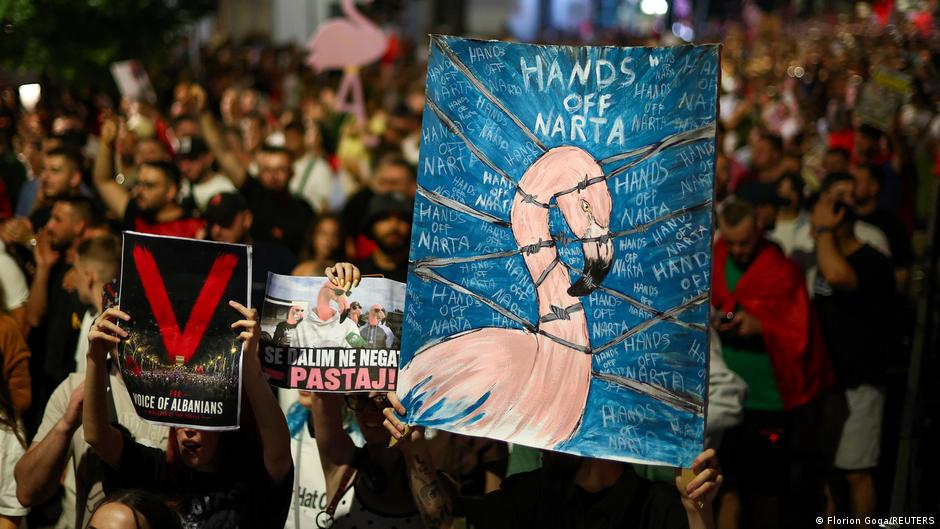
The protests, referred to as the 'Flamingo Revolution', have drawn significant attention globally as citizens express their discontent with the current political climate in Albania. S1S2
Key points
- Protesters are advocating for democratic reforms in Albania. S1S2
- Prime Minister Edi Rama describes the protests as part of a hybrid war. S1S2
- The movement has gained international media coverage due to its scale and intensity. S1S2
- Demonstrators are calling for greater transparency and accountability from the government. S1S2
- The protests have been marked by large crowds and sustained public engagement. S1S2
- Participants in the protests are diverse, including various age groups and political affiliations. S1S2
- The government has responded to the protests with a mix of dialogue and dismissive rhetoric. S1S2
- Social media has played a significant role in organizing and promoting the protests. S1S2
Why it matters
- The protests highlight ongoing struggles for democratic governance in Albania. S1S2
- They reflect broader regional tensions regarding political legitimacy and public trust in institutions. S1S2
- The situation could influence Albania's relations with international partners and its EU aspirations. S1S2
What to watch
Related live story