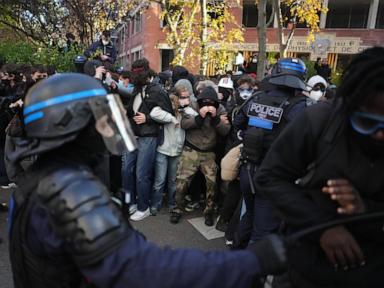
On November 6, 2026, France witnessed a significant wave of protests as workers across the country marched demanding a ‘dignified wage’ in response to the escalating cost of living. Government estimates indicated that approximately 600,000 individuals participated in the demonstrations, while the General Confederation of Labour (CGT) union claimed the number was as high as 1.6 million. This surge in activism reflects growing discontent as the eurozone's second-largest economy grapples with financial challenges.
The protests were marked by clashes in several cities, where police deployed tear gas to disperse crowds as tensions escalated. These demonstrations followed a series of youth-led protests that had already highlighted the frustrations of younger generations regarding economic conditions. The unrest comes at a politically sensitive time, with elections set to take place in six months to replace President Emmanuel Macron, whose administration is facing increasing scrutiny amid rising far-right sentiments in opinion polls.S1S2
As the protests unfolded, the CGT union emphasized the urgent need for wage increases to combat inflation and the rising cost of living, which have left many workers struggling. The demonstrations not only signify a call for better pay but also reflect broader concerns about economic stability and the future direction of France's political landscape as the nation prepares for a pivotal electoral season.S1S2