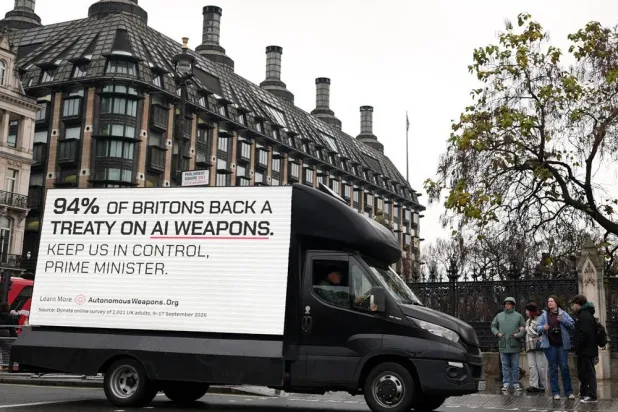
The 128 countries at a United Nations conference in Geneva have agreed to "elaborate" on a possible accord regulating lethal autonomous weapons, known as "killer robots", within the next two years. The announcement on Saturday at the Convention on Certain Conventional Weapons came after nearly 100 nations pushed for swift adoption of legally binding rules on weapons capable of killing without a human making the final decision to fire.
Key arms-producing nations, including the United States, Russia and Israel, opposed that push, and decisions under the convention require the agreement of all member states. Diplomats said Russia's objections over procedure led to some formal sessions being called off, and talks over the final wording ran through the night. Julien Thoeni, the Swiss diplomat who chaired the conference, said some countries had rejected the word "negotiate", so the agreed text refers instead to the "elaboration" of an instrument.S1S2
Thoeni said more than 10 years of talks had produced a significant step for humanitarian disarmament. "It shows that even in today's deeply divided world, multilateral diplomacy can still deliver concrete results," he told reporters. He said the process should determine which weapons can be banned under international humanitarian law and which can be permitted but regulated.S1
Stop Killer Robots, a coalition of 300 organisations opposed to the development and use of autonomous weapons, called the mandate "watered down", saying it offered no clear route to legally binding rules. Its executive director, Nicole van Rooijen, said autonomous weapons were being deployed in combat, including systems that use artificial intelligence to choose targets. "Delaying the creation of a legally binding instrument puts civilians and humanity at risk," she told AFP.S1
Verity Coyle, deputy director for arms at Human Rights Watch, said the outcome was disappointing. "It does not provide the urgent action needed to agree new rules – but the technology is racing ahead," she told AFP. The talks had been held in Geneva since Monday as alarm grows over the use of lethal autonomous weapons systems in conflicts, including in Ukraine, Sudan and the Middle East. The U.N. secretary-general, the pope and the Red Cross have all called for strong and legally binding rules.S1S2