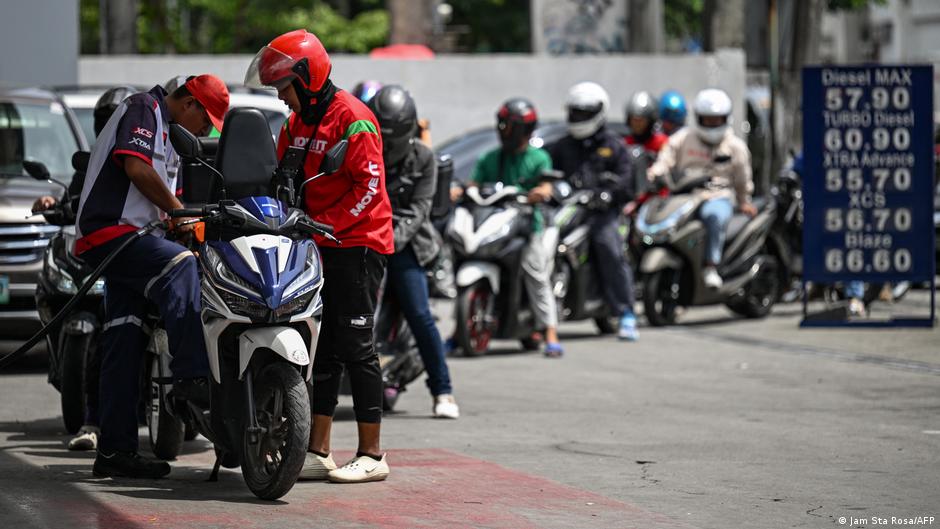
Southeast Asia Turns to Russian Oil Amid Economic Pressures

Russia
The brief

Southeast Asian governments are increasingly relying on Russian energy supplies as they face economic challenges exacerbated by the Iran war.

Context

The ongoing conflict in Iran has disrupted oil, gas, and fertilizer imports, prompting Southeast Asian nations to seek alternative energy sources.S1S2

Key points

  • Southeast Asian countries are prioritizing energy security amid global supply disruptions.S1
  • Governments in the region are disregarding pressure from the EU regarding Russian energy imports.S1S2
  • Russian oil is viewed as a critical resource for economic survival in Southeast Asia.S1
  • The shift towards Russian energy reflects broader geopolitical dynamics in the region.S1
  • Southeast Asia's energy strategy is evolving in response to external pressures and market conditions.S2
  • The reliance on Russian oil may alter trade relationships within the region and beyond.S1
  • Economic factors are driving the decision to engage with Russian energy despite international sanctions.S2
  • This trend may lead to increased energy cooperation between Southeast Asia and Russia.S1

Why it matters

  • The reliance on Russian oil could impact regional stability and international relations.S1
  • Southeast Asia's energy choices may influence global energy markets and pricing.S2
  • The situation highlights the complexities of energy dependence in a changing geopolitical landscape.S1

What to watch

  • Monitor how Southeast Asian nations balance their energy needs with international diplomatic pressures.S1
  • Watch for potential shifts in trade agreements as countries adapt to new energy sources.S2
  • Observe the long-term implications of increased Russian energy imports on regional politics.S1

Timeline · newest first
5mos Deutsche Welle · 4 reports

Is Russian oil becoming a lifeline for Southeast Asia?

With oil, gas and fertilizer imports squeezed by the Iran war, Southeast Asian governments are brushing off EU pressure and treating Russian energy as a tool of economic survival.

Southeast Asia Turns to Russian Oil Amid Economic Pressures

1 outlet 4 reports
The brief

Southeast Asian governments are increasingly relying on Russian energy supplies as they face economic challenges exacerbated by the Iran war.

Context

The ongoing conflict in Iran has disrupted oil, gas, and fertilizer imports, prompting Southeast Asian nations to seek alternative energy sources.S1S2

Key points

  • Southeast Asian countries are prioritizing energy security amid global supply disruptions.S1
  • Governments in the region are disregarding pressure from the EU regarding Russian energy imports.S1S2
  • Russian oil is viewed as a critical resource for economic survival in Southeast Asia.S1
  • The shift towards Russian energy reflects broader geopolitical dynamics in the region.S1
  • Southeast Asia's energy strategy is evolving in response to external pressures and market conditions.S2
  • The reliance on Russian oil may alter trade relationships within the region and beyond.S1
  • Economic factors are driving the decision to engage with Russian energy despite international sanctions.S2
  • This trend may lead to increased energy cooperation between Southeast Asia and Russia.S1

Why it matters

  • The reliance on Russian oil could impact regional stability and international relations.S1
  • Southeast Asia's energy choices may influence global energy markets and pricing.S2
  • The situation highlights the complexities of energy dependence in a changing geopolitical landscape.S1

What to watch

  • Monitor how Southeast Asian nations balance their energy needs with international diplomatic pressures.S1
  • Watch for potential shifts in trade agreements as countries adapt to new energy sources.S2
  • Observe the long-term implications of increased Russian energy imports on regional politics.S1
Timeline · newest first

Sources · 2 citations

S1S2 Deutsche Welle 4 reports · EN