The brief
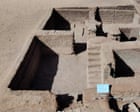
Archaeologists have uncovered a well-preserved Byzantine-era city in Egypt's western desert, revealing significant insights into ancient urban life.
Context
The discovery took place in the Dakhla oasis, where the remains of a fourth-century city were found, including residential and religious structures.S1S2
Key points
- The site includes a basilica-style church, highlighting the religious practices of the time.S1
- Residential quarters were also uncovered, providing insights into daily life in the Byzantine era.S1
- Archaeologists found various artifacts, including coins and pottery fragments.S1
- The discovery contributes to understanding urban development in ancient Egypt.S1
- The excavation site is located in the Dakhla oasis, known for its historical significance.S2
- This find adds to the growing body of evidence regarding Byzantine influence in Egypt.S1
- The well-preserved nature of the site allows for detailed study of economic activities.S1
- The excavation is part of ongoing archaeological efforts in Egypt's western desert.S2
Why it matters
- Understanding Byzantine urban life can provide context for the region's historical development.S1
- The findings may attract further archaeological interest and tourism to the area.S2
What to watch
- Further excavations may reveal additional structures and artifacts from the Byzantine period.S1
- Researchers will likely analyze the artifacts to gain deeper insights into the economy of the time.S1