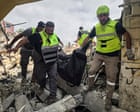
Israel Escalates Airstrikes in Lebanon Amid Ongoing Conflict

Israel
The brief

Israel has intensified its military operations in Lebanon, conducting over 120 airstrikes in a single day, marking one of the heaviest bombing campaigns in recent weeks.

Context

The escalation comes as Israel's Prime Minister Benjamin Netanyahu announced an increase in military offensives against Hezbollah, complicating ongoing US negotiations with Iran regarding peace in the region.S1S2

Key points

  • Israel launched more than 120 airstrikes against Lebanon, indicating a significant escalation in military action.S1
  • The airstrikes are part of a broader strategy to maintain military pressure on Hezbollah.S2
  • Netanyahu stated that the military offensive against Hezbollah is being intensified.S1
  • The recent bombing marks one of the heaviest days of airstrikes in weeks, reflecting a shift in Israel's military approach.S1
  • The escalation complicates US efforts to mediate peace talks between Israel and Iran.S1
  • Israel's actions signal a calculated effort to prolong the conflict despite international diplomatic efforts.S2
  • The situation raises concerns about the potential for further regional instability.S2
  • The US-brokered ceasefire from the previous month appears to be ineffective in halting hostilities.S1

Why it matters

  • The escalation could lead to increased violence and instability in the region, affecting neighboring countries.S2
  • It highlights the challenges faced by the US in negotiating peace amid ongoing military actions.S1
  • The situation may impact global perceptions of US foreign policy in the Middle East.S2

What to watch

  • Monitor developments in US-Iran negotiations as they may influence the conflict's trajectory.S1
  • Watch for responses from Hezbollah and other regional actors to Israel's intensified military actions.S2
  • Keep an eye on international reactions to the escalation, particularly from the UN and European nations.S1
Timeline · newest first
5mos The Guardian

Israel fires more than 120 airstrikes at Lebanon and says it is escalating offensive

One of heaviest days of bombing in weeks complicates US talks with Iran, which insists any peace deal must mean end of attacks on LebanonMiddle East crisis – live updatesIsrael lau…

5mos The New Arab

Why is Israel escalating its war on Lebanon now?

Israel’s deadly strikes and ground advances in Lebanon signal a calculated effort to keep the war going despite US-Iran talks

Israel Escalates Airstrikes in Lebanon Amid Ongoing Conflict

2 outlets 2 reports
The brief

Israel has intensified its military operations in Lebanon, conducting over 120 airstrikes in a single day, marking one of the heaviest bombing campaigns in recent weeks.

Context

The escalation comes as Israel's Prime Minister Benjamin Netanyahu announced an increase in military offensives against Hezbollah, complicating ongoing US negotiations with Iran regarding peace in the region.S1S2

Key points

  • Israel launched more than 120 airstrikes against Lebanon, indicating a significant escalation in military action.S1
  • The airstrikes are part of a broader strategy to maintain military pressure on Hezbollah.S2
  • Netanyahu stated that the military offensive against Hezbollah is being intensified.S1
  • The recent bombing marks one of the heaviest days of airstrikes in weeks, reflecting a shift in Israel's military approach.S1
  • The escalation complicates US efforts to mediate peace talks between Israel and Iran.S1
  • Israel's actions signal a calculated effort to prolong the conflict despite international diplomatic efforts.S2
  • The situation raises concerns about the potential for further regional instability.S2
  • The US-brokered ceasefire from the previous month appears to be ineffective in halting hostilities.S1

Why it matters

  • The escalation could lead to increased violence and instability in the region, affecting neighboring countries.S2
  • It highlights the challenges faced by the US in negotiating peace amid ongoing military actions.S1
  • The situation may impact global perceptions of US foreign policy in the Middle East.S2

What to watch

  • Monitor developments in US-Iran negotiations as they may influence the conflict's trajectory.S1
  • Watch for responses from Hezbollah and other regional actors to Israel's intensified military actions.S2
  • Keep an eye on international reactions to the escalation, particularly from the UN and European nations.S1

Timeline · newest first

Sources · 2 citations

S1 The Guardian 1 report · EN
S2 The New ArabLead 1 report · EN