Story Iran

Iran Faces Rising Food Prices Amid Ongoing Conflict

Iran
The brief

Iranians are experiencing significant challenges in affording basic food items as ongoing conflict drives prices higher, prompting government efforts to provide relief.

Context

The economic situation in Iran has worsened due to external conflicts, leading to increased living costs and food insecurity for many citizens.S1S2

Key points

  • Authorities are implementing food vouchers to help consumers cope with rising prices.S1S2
  • The minimum wage is being raised as part of efforts to alleviate financial pressure on residents.S1S2
  • Despite government measures, many residents in Tehran report struggling to make ends meet.S1S2
  • The conflict has exacerbated existing economic difficulties in Iran.S1S2
  • Food prices have surged, impacting the affordability of basic necessities.S1S2
  • Residents express concern over their ability to purchase sufficient food.S1S2
  • The government's response includes both financial aid and wage adjustments.S1S2
  • Economic instability continues to challenge the Iranian populace amid ongoing tensions.S1S2

Why it matters

  • Rising food prices can lead to increased poverty and social unrest.S1S2
  • Government interventions may not be sufficient to address the scale of the crisis.S1S2
  • Food insecurity poses a significant threat to public health and stability in Iran.S1S2

What to watch

  • Monitor the effectiveness of government measures like food vouchers and wage increases.S1S2
  • Watch for potential protests or public discontent as economic conditions worsen.S1S2
  • Keep an eye on international responses to the situation in Iran and its economic implications.S1S2
Timeline · newest first
4mos Deutsche Welle · 2 reports

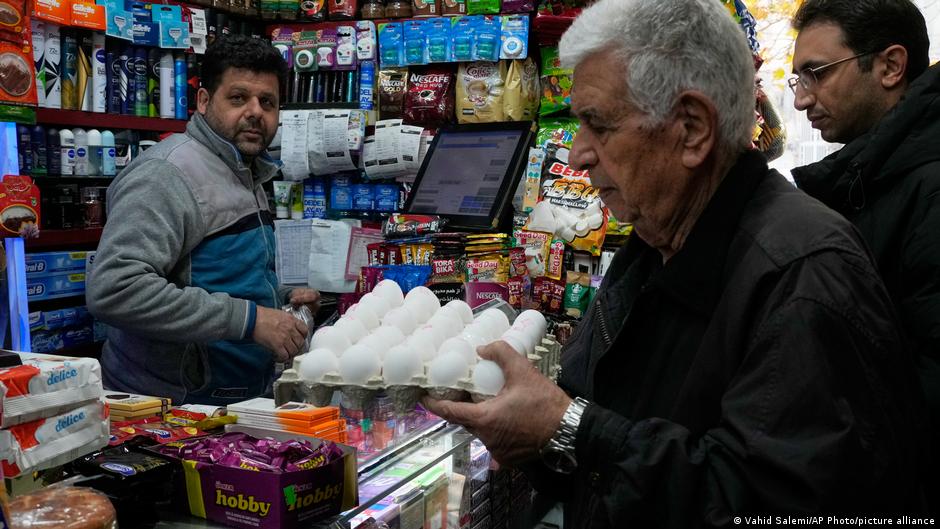
Iranians struggle to buy food as war drives up prices

Authorities in Iran are trying to alleviate pressure on consumers with food vouchers and raising the minimum wage. However, some residents of Tehran told DW they are finding it har…

Iran Faces Rising Food Prices Amid Ongoing Conflict

1 outlet 2 reports
The brief

Iranians are experiencing significant challenges in affording basic food items as ongoing conflict drives prices higher, prompting government efforts to provide relief.

Context

The economic situation in Iran has worsened due to external conflicts, leading to increased living costs and food insecurity for many citizens.S1S2

Key points

  • Authorities are implementing food vouchers to help consumers cope with rising prices.S1S2
  • The minimum wage is being raised as part of efforts to alleviate financial pressure on residents.S1S2
  • Despite government measures, many residents in Tehran report struggling to make ends meet.S1S2
  • The conflict has exacerbated existing economic difficulties in Iran.S1S2
  • Food prices have surged, impacting the affordability of basic necessities.S1S2
  • Residents express concern over their ability to purchase sufficient food.S1S2
  • The government's response includes both financial aid and wage adjustments.S1S2
  • Economic instability continues to challenge the Iranian populace amid ongoing tensions.S1S2

Why it matters

  • Rising food prices can lead to increased poverty and social unrest.S1S2
  • Government interventions may not be sufficient to address the scale of the crisis.S1S2
  • Food insecurity poses a significant threat to public health and stability in Iran.S1S2

What to watch

  • Monitor the effectiveness of government measures like food vouchers and wage increases.S1S2
  • Watch for potential protests or public discontent as economic conditions worsen.S1S2
  • Keep an eye on international responses to the situation in Iran and its economic implications.S1S2
Timeline · newest first

Sources · 2 citations

S1S2 Deutsche Welle 2 reports · EN