Story Germany

Germany and Poland: A Historical Overview of Relations

The brief

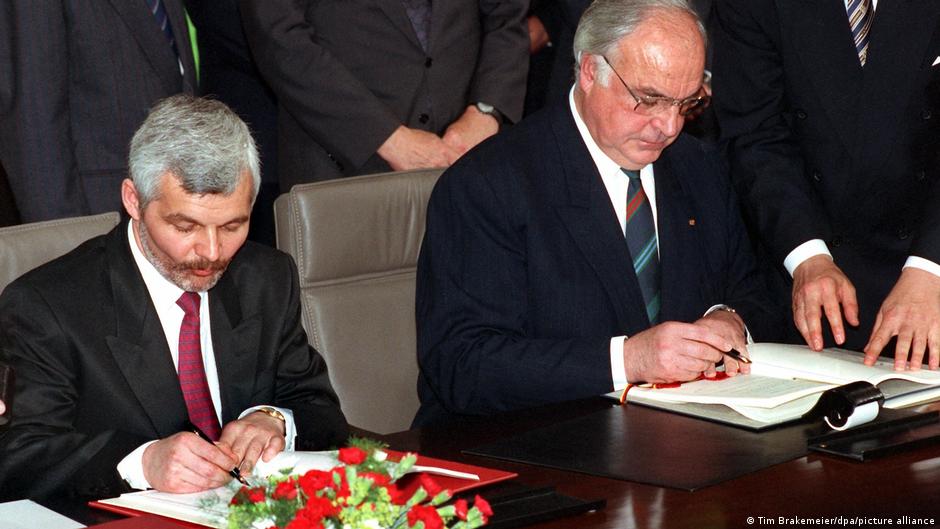
Germany and Poland have developed a partnership since signing the Treaty on Good Neighborliness, Friendship and Cooperation, marking a significant shift in their relations.

Context

The treaty, signed in June 1991, established a framework for cooperation and mutual respect between the two nations, emphasizing their commitment to NATO and EU alliances.S1S2

Key points

  • The treaty was a response to historical tensions between Germany and Poland.S1
  • Germany and Poland have since become close allies within NATO and the EU.S1S2
  • The relationship has faced challenges despite the initial partnership.S1
  • Both countries have worked to overcome past grievances through dialogue.S2
  • The treaty laid the groundwork for economic and political collaboration.S1
  • Cultural exchanges have increased as a result of improved relations.S2
  • Germany and Poland have cooperated on various regional security issues.S1
  • The partnership has been tested by differing political views at times.S2

Why it matters

  • The treaty symbolizes a commitment to peace and cooperation in Europe.S1
  • Strengthened ties between Germany and Poland contribute to regional stability.S2
  • The relationship serves as a model for reconciliation in post-conflict scenarios.S1

What to watch

  • Monitor ongoing political discussions between Germany and Poland.S2
  • Watch for developments in EU policies affecting both nations.S1
  • Observe how historical grievances continue to influence their partnership.S2
Timeline · newest first
4mos Deutsche Welle · 2 reports

How Germany and Poland rebooted relations 35 years ago

When Germany and Poland signed the Treaty on Good Neighborliness, Friendship and Cooperation in June 1991, they chose partnership over enmity and became close NATO and EU allies. B…

Germany and Poland: A Historical Overview of Relations

1 outlet 2 reports
The brief

Germany and Poland have developed a partnership since signing the Treaty on Good Neighborliness, Friendship and Cooperation, marking a significant shift in their relations.

Context

The treaty, signed in June 1991, established a framework for cooperation and mutual respect between the two nations, emphasizing their commitment to NATO and EU alliances.S1S2

Key points

  • The treaty was a response to historical tensions between Germany and Poland.S1
  • Germany and Poland have since become close allies within NATO and the EU.S1S2
  • The relationship has faced challenges despite the initial partnership.S1
  • Both countries have worked to overcome past grievances through dialogue.S2
  • The treaty laid the groundwork for economic and political collaboration.S1
  • Cultural exchanges have increased as a result of improved relations.S2
  • Germany and Poland have cooperated on various regional security issues.S1
  • The partnership has been tested by differing political views at times.S2

Why it matters

  • The treaty symbolizes a commitment to peace and cooperation in Europe.S1
  • Strengthened ties between Germany and Poland contribute to regional stability.S2
  • The relationship serves as a model for reconciliation in post-conflict scenarios.S1

What to watch

  • Monitor ongoing political discussions between Germany and Poland.S2
  • Watch for developments in EU policies affecting both nations.S1
  • Observe how historical grievances continue to influence their partnership.S2
Timeline · newest first

Sources · 2 citations

S1S2 Deutsche Welle 2 reports · EN