The brief
Recent reports highlight the spread of AI-generated images and narratives related to the World Cup, which are being used to promote various political agendas.
Context
The World Cup has become a focal point for misinformation, with fabricated images circulating widely on social media.S1S2
Key points
- Images of Keir Starmer in a Croatia jersey are being shared, but they are not authentic.S1S2
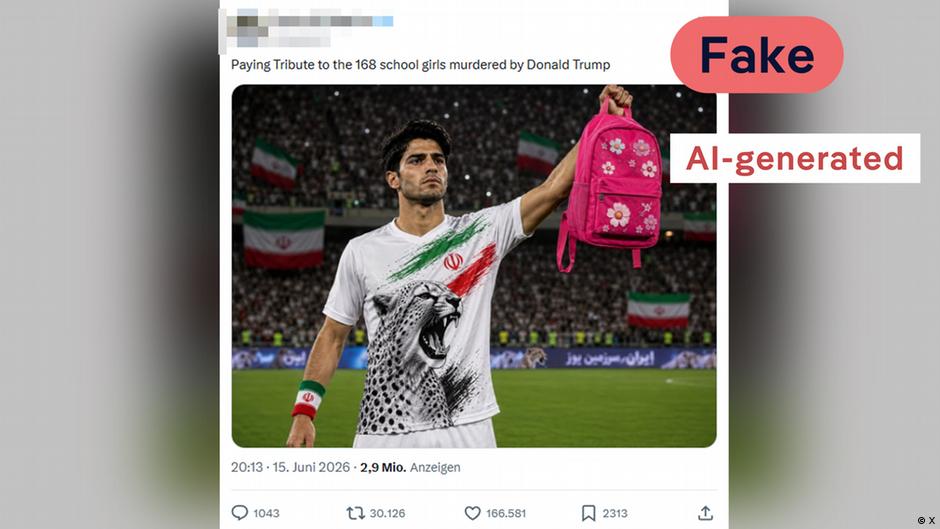
- An AI-generated image depicting an Iranian protest against a US strike is circulating online.S1S2
- Calls to arrest Brazil's President Lula are being amplified through manipulated images.S1S2
- An image of Adolf Hitler purportedly in the German fan section has also been circulated, which is false.S1S2
- These fakes are part of a broader trend of using AI to create misleading political narratives.S1S2
- The spread of such misinformation can influence public perception and political discourse.S1S2
- Fact-checking organizations are working to debunk these AI-generated fakes as they emerge.S1S2
- The use of AI in creating political narratives raises concerns about the integrity of information.S1S2
Why it matters
- Misinformation can undermine trust in media and institutions during significant events like the World Cup.S1S2
- Political narratives driven by fake images can exacerbate tensions and influence public opinion.S1S2
- Understanding the impact of AI-generated content is crucial for media literacy in the digital age.S1S2
What to watch
- Monitor how social media platforms respond to the spread of AI-generated misinformation.S1S2
- Watch for developments in fact-checking initiatives aimed at combating misinformation.S1S2
- Observe potential political ramifications as these narratives continue to circulate.S1S2