Story China

Concerns Rise Over China's 'Ethnic Unity' Law

China
The brief

China's new 'ethnic unity' law has raised significant concerns regarding the potential for forced integration of ethnic minorities, with critics arguing it could suppress cultural autonomy.

Context

The law is perceived as a tool for the Chinese government to strengthen control over ethnic groups and limit their cultural expressions.S1S2

Key points

  • The law is seen as a means to combat what the government labels as 'separatism'.S1S2
  • Critics argue that the law undermines the cultural rights of ethnic minorities.S1S2
  • Authorities may use the law to justify increased surveillance and repression of ethnic groups.S1S2
  • The law could lead to a homogenization of cultural practices across diverse ethnic communities.S1S2
  • Supporters of the law claim it promotes national unity and social stability.S1S2
  • The legislation has sparked protests and backlash from various ethnic communities.S1S2
  • International human rights organizations have expressed alarm over the implications of the law.S1S2
  • The law may affect China's relations with other countries concerned about human rights issues.S1S2

Why it matters

  • The law could exacerbate tensions between the Chinese government and ethnic minority groups.S1S2
  • It raises questions about the future of cultural diversity in China.S1S2
  • The international community may respond with increased scrutiny of China's human rights practices.S1S2

What to watch

  • Monitor reactions from ethnic minority groups in China as they respond to the law.S1S2
  • Watch for potential international diplomatic responses to the law's implementation.S1S2
  • Observe how the Chinese government enforces the law and its impact on local communities.S1S2
Timeline · newest first
7mos Deutsche Welle · 4 reports

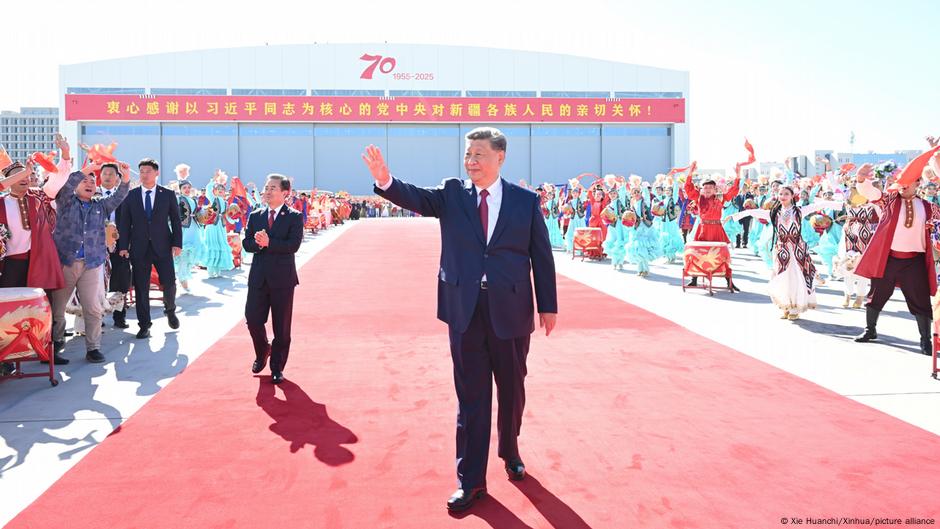
China: 'Ethnic unity' law sparks fears of forced integration

Critics see the law as allowing authorities in Beijing more room to frame ethnic groups' demands for cultural autonomy as a push towards "separatism."

Concerns Rise Over China's 'Ethnic Unity' Law

1 outlet 4 reports
The brief

China's new 'ethnic unity' law has raised significant concerns regarding the potential for forced integration of ethnic minorities, with critics arguing it could suppress cultural autonomy.

Context

The law is perceived as a tool for the Chinese government to strengthen control over ethnic groups and limit their cultural expressions.S1S2

Key points

  • The law is seen as a means to combat what the government labels as 'separatism'.S1S2
  • Critics argue that the law undermines the cultural rights of ethnic minorities.S1S2
  • Authorities may use the law to justify increased surveillance and repression of ethnic groups.S1S2
  • The law could lead to a homogenization of cultural practices across diverse ethnic communities.S1S2
  • Supporters of the law claim it promotes national unity and social stability.S1S2
  • The legislation has sparked protests and backlash from various ethnic communities.S1S2
  • International human rights organizations have expressed alarm over the implications of the law.S1S2
  • The law may affect China's relations with other countries concerned about human rights issues.S1S2

Why it matters

  • The law could exacerbate tensions between the Chinese government and ethnic minority groups.S1S2
  • It raises questions about the future of cultural diversity in China.S1S2
  • The international community may respond with increased scrutiny of China's human rights practices.S1S2

What to watch

  • Monitor reactions from ethnic minority groups in China as they respond to the law.S1S2
  • Watch for potential international diplomatic responses to the law's implementation.S1S2
  • Observe how the Chinese government enforces the law and its impact on local communities.S1S2
Timeline · newest first

Sources · 2 citations

S1S2 Deutsche Welle 4 reports · EN