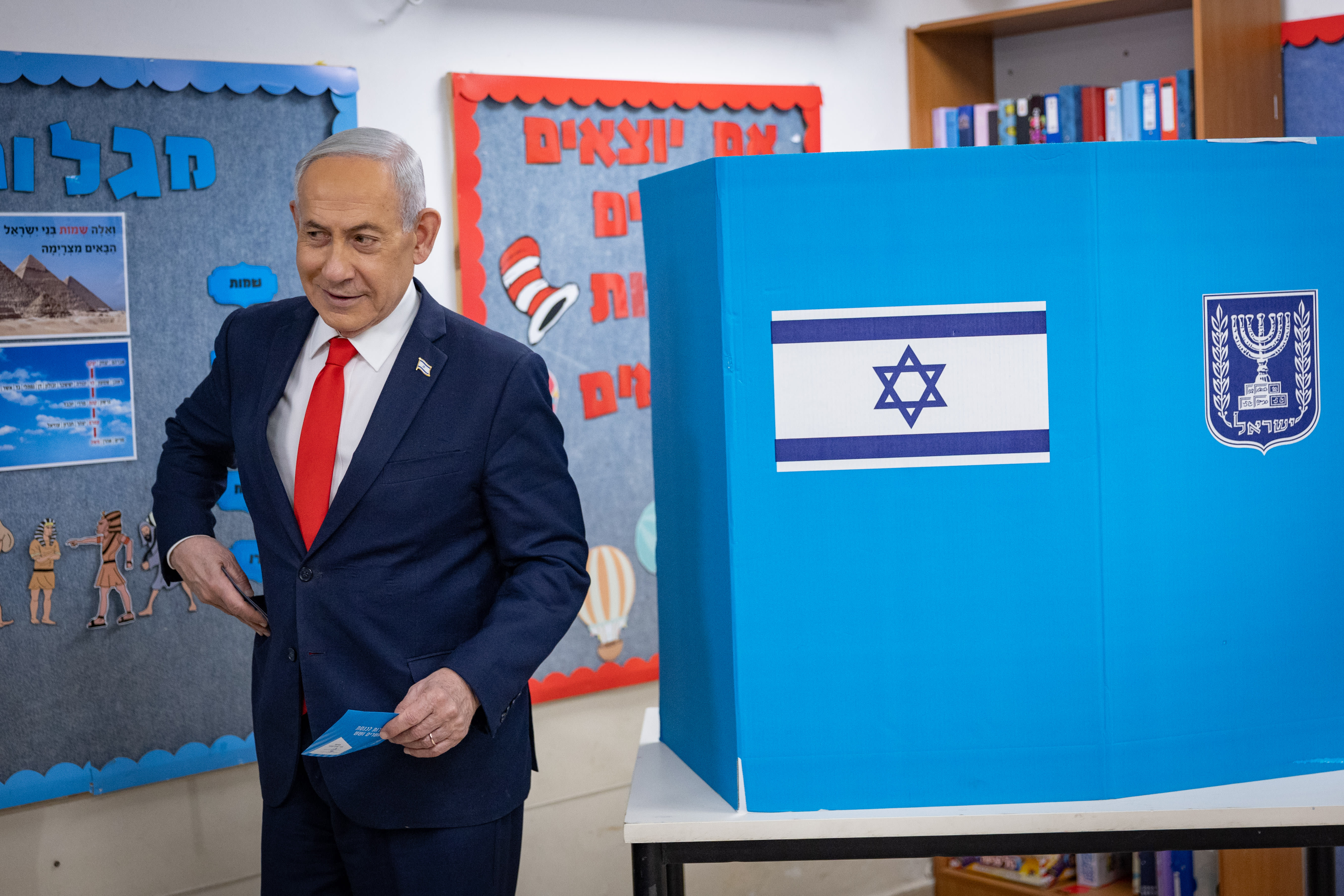
In a historic turnout, Israelis flocked to the polls in the highest numbers seen in 50 years, casting their votes in a pivotal election that could determine the future of Prime Minister Benjamin Netanyahu's leadership. Observers on the ground in Tel Aviv reported a vibrant atmosphere as citizens engaged in the democratic process, underscoring the significance of this electoral moment for the nation. Matthew Knott, reporting from Tel Aviv, noted the palpable urgency among voters, reflecting widespread sentiment regarding Netanyahu's tenure.
Initial exit polls indicate a tightly contested race, with the opposition bloc led by Gadi Eisenkot appearing to gain a slight edge over Netanyahu's Likud party. Despite this, Likud is projected to remain the largest single party in the Knesset, which may complicate the formation of a new government. The results suggest a potential shift in the political landscape, as Arab parties also appear to have made gains, further diversifying the representation in the Israeli parliament.S2
As the election results unfold, the implications for Netanyahu's government are significant. Analysts are closely watching how the dynamics within the Knesset will play out, particularly if the opposition can unify and challenge the long-standing dominance of Likud. The political ramifications of this election will likely resonate beyond Israel's borders, influencing regional stability and international relations.S2