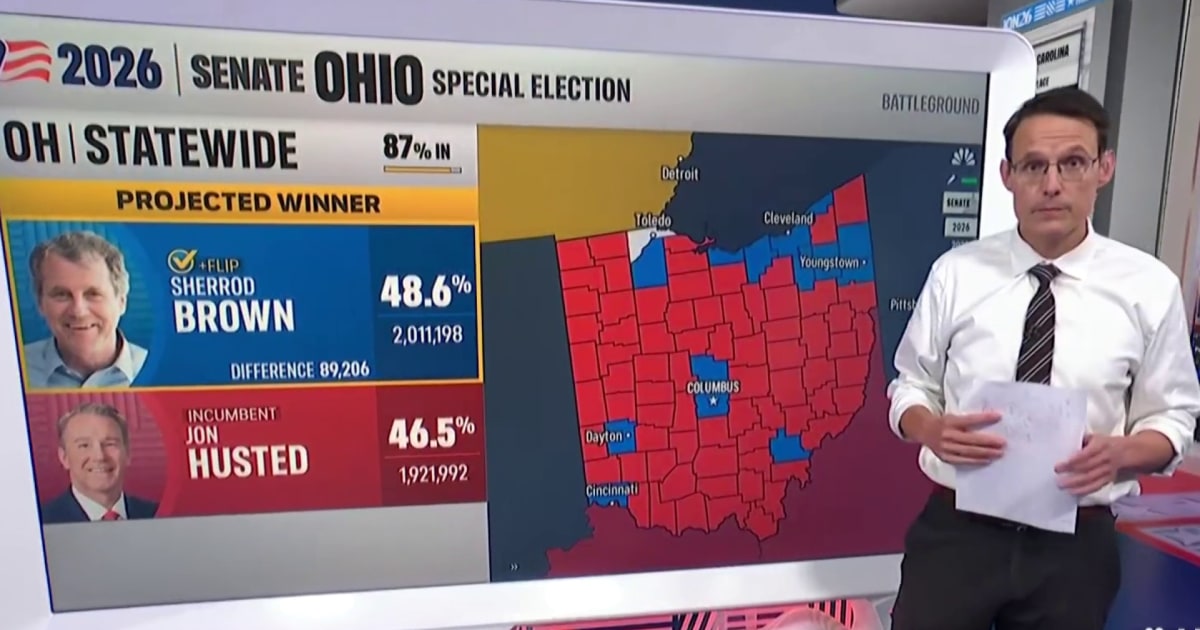
In a significant political comeback, former Senator Sherrod Brown has reclaimed his seat in the U.S. Senate, defeating incumbent Republican Senator Jon Husted in a closely contested race. As of 11:30 p.m. on election night, Brown led Husted by more than 2 percentage points, according to the Associated Press. This victory marks a notable shift in Ohio's political landscape, where historically, the party in power tends to lose seats during midterm elections as voters express their frustrations with the current administration.
Brown's win is particularly remarkable given his previous defeat two years ago, when he was swept out of office. His return to the Senate is seen as a victory for progressive Democrats in Ohio, a state that has been trending Republican in recent years. The race was closely monitored, especially with Vice President JD Vance hailing from Ohio, which added an additional layer of significance to the outcome.S2
The implications of Brown's victory extend beyond Ohio, as it could influence the balance of power in the Senate and the Democratic Party's strategies moving forward. With this win, Brown aims to push forward on key issues that resonate with Ohio voters, including healthcare and economic reform, as he seeks to re-establish his influence in the Senate after a tumultuous political period.S1S2