California Voters Reject Voter ID and Billionaire Tax Measures

United States
The brief

In a significant electoral outcome, California voters have decisively rejected both a billionaire tax ballot measure and Proposition 39, which sought to impose stricter voter ID requirements. The results were revealed on November 3, 2026, following a campaign that featured rallies and extensive public discourse around the implications of these measures. The billionaire tax measure was part of a broader initiative aimed at increasing funding for public services by taxing the wealthiest individuals in the state, but it failed to gain the necessary support among voters, reflecting a complex attitude towards taxation and wealth distribution in California.

Proposition 39, which aimed to mandate voter identification at polling places and tighten verification standards for mail-in ballots, also met with rejection from the electorate. This measure was proposed amid ongoing debates about election integrity and access to voting, yet voters opted against what many perceived as an unnecessary restriction on the voting process. The defeat of both measures indicates a prevailing sentiment among Californians who may prioritize accessibility and equity in voting over additional verification requirements or increased taxation on the wealthy.S2

The outcomes of these propositions are likely to influence future legislative efforts in California, particularly as discussions continue around voting rights and fiscal policy. With the rejection of these measures, lawmakers may need to reassess their strategies and consider alternative approaches to address the concerns of their constituents regarding wealth inequality and electoral access.S1S2


Timeline · newest first
2d Latimes

Billionaire tax ballot measure trails; California voters reject voter ID

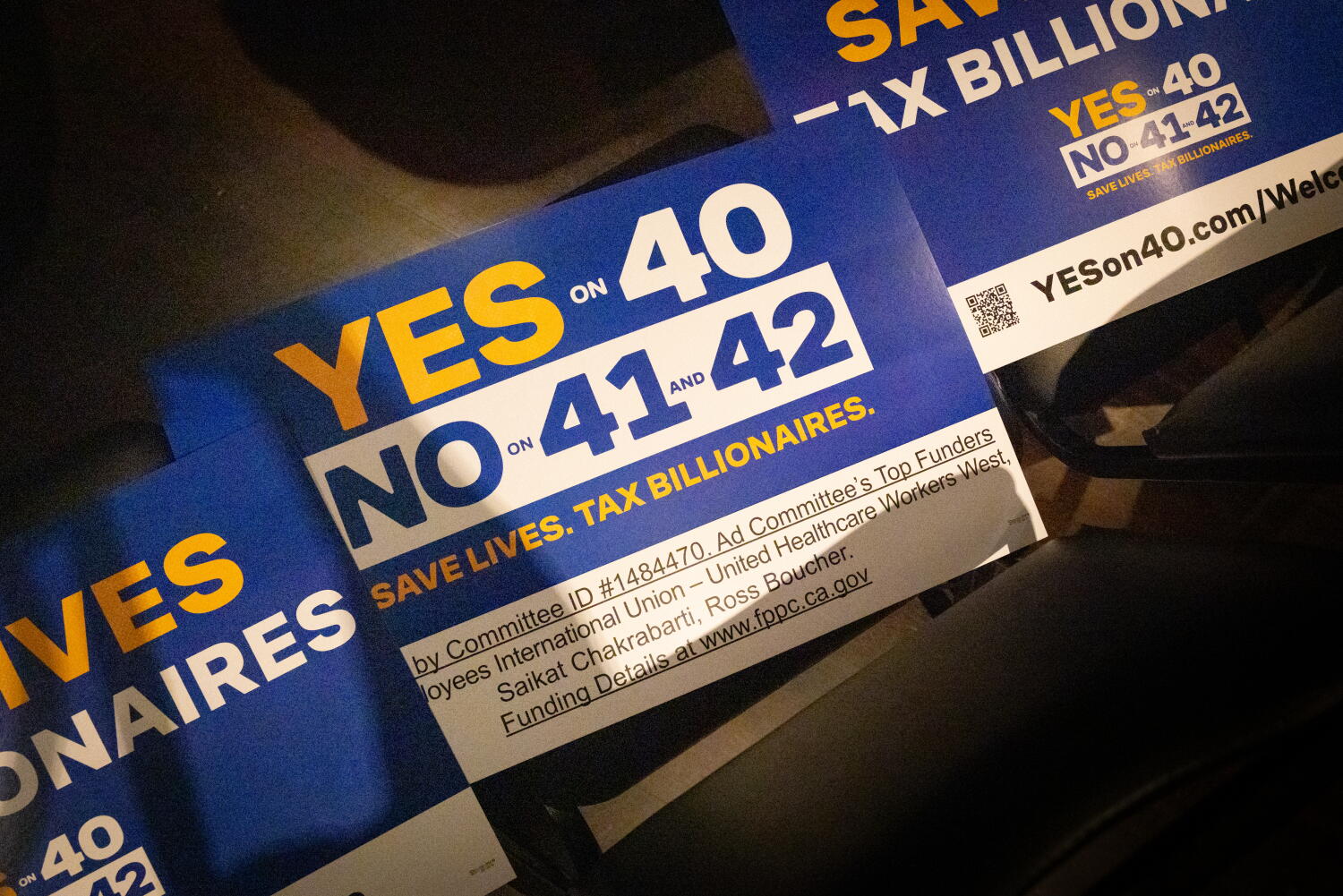
Yes on 40 signs sit on seats at the “Ballots Over Billionaires” rally on Oct. 5 in Los Angeles. (Jason Armond/Los Angeles Times) By Seema Mehta and Queenie Wong Nov. 3, 2026 10:31…

2d Nypost

California voters reject Prop 39, stricter voter ID measure

California voters rejected Proposition 39 on Tuesday, turning down a push to mandate voter ID at polling places and tighter verification standards for mail-in ballots.

California Voters Reject Voter ID and Billionaire Tax Measures

2 outlets 2 reports
The brief

In a significant electoral outcome, California voters have decisively rejected both a billionaire tax ballot measure and Proposition 39, which sought to impose stricter voter ID requirements. The results were revealed on November 3, 2026, following a campaign that featured rallies and extensive public discourse around the implications of these measures. The billionaire tax measure was part of a broader initiative aimed at increasing funding for public services by taxing the wealthiest individuals in the state, but it failed to gain the necessary support among voters, reflecting a complex attitude towards taxation and wealth distribution in California.

Proposition 39, which aimed to mandate voter identification at polling places and tighten verification standards for mail-in ballots, also met with rejection from the electorate. This measure was proposed amid ongoing debates about election integrity and access to voting, yet voters opted against what many perceived as an unnecessary restriction on the voting process. The defeat of both measures indicates a prevailing sentiment among Californians who may prioritize accessibility and equity in voting over additional verification requirements or increased taxation on the wealthy.S2

The outcomes of these propositions are likely to influence future legislative efforts in California, particularly as discussions continue around voting rights and fiscal policy. With the rejection of these measures, lawmakers may need to reassess their strategies and consider alternative approaches to address the concerns of their constituents regarding wealth inequality and electoral access.S1S2

Timeline · newest first

Sources · 2 citations

S1 Latimes 1 report · EN
S2 NypostLead 1 report · EN