Story China

China's New Ethnic Unity Law and Its Implications

China
The brief

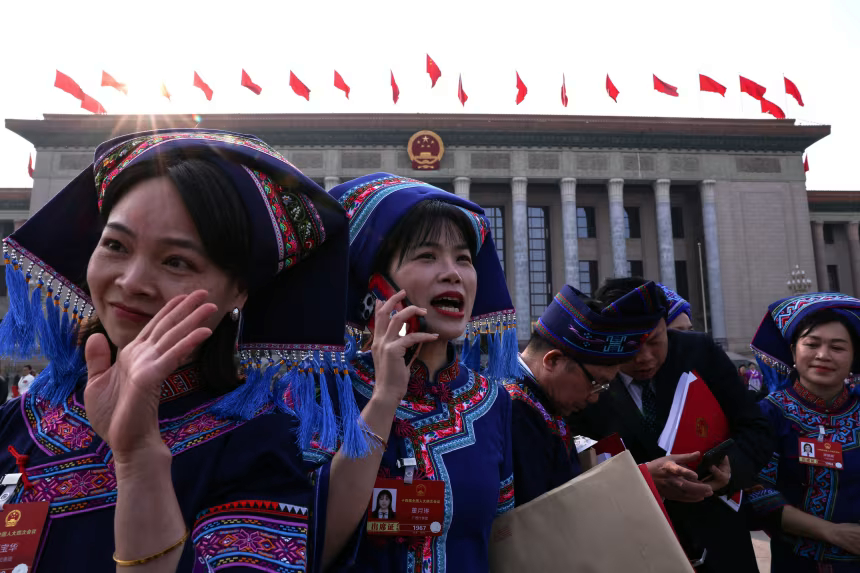
China has enacted a new ethnic unity law aimed at promoting integration among its minority groups, a move that has drawn criticism for potentially leading to forced assimilation.

Context

The law reflects a long-standing initiative by Chinese leadership to encourage ethnic minorities to adopt a national identity aligned with the Communist Party.S1S2

Key points

  • The law mandates that ethnic minorities integrate into mainstream Chinese culture.S2
  • It extends the government's influence into various aspects of life, including education and community interactions.S2
  • Critics argue that the law could accelerate forced assimilation practices.S1
  • The Chinese government maintains that the law promotes national unity and stability.S1
  • There are concerns that the law may lead to increased targeting of dissenters among minority groups.S1
  • The law is part of a broader strategy by Xi Jinping to reinforce loyalty to the Communist Party.S2
  • Implementation of the law may vary across different regions, particularly in areas with significant minority populations.S2
  • International reactions to the law are likely to include condemnation from human rights organizations.S1

Why it matters

  • The law could reshape the cultural landscape of minority communities in China.S2
  • It raises significant human rights concerns regarding the treatment of ethnic minorities.S1
  • The law may affect China's international relations, particularly with countries that advocate for minority rights.S1

What to watch

  • Monitor reactions from international human rights organizations regarding the law's implementation.S1
  • Observe any changes in policies affecting education and cultural practices in minority regions.S2
  • Watch for potential protests or dissent from minority groups in response to the law.S1
Timeline · newest first
4mos Al Jazeera

What’s China’s new ethnic unity law, and what does it mean for minorities?

Critics say it could hasten the forced assimilation of minorities and lead to the targeting of critics outside China. Beijing, however, rejects these accusations. China has brought…

4mos Egypt Independent

China tells its ethnic minorities to integrate or face consequences with sweeping new unity law

Beijing — For years, Chinese leader Xi Jinping has pushed ethnic minority groups like Tibetans and Uyghurs to adopt an identity rooted in Chinese nationality and allegiance to the…

China's New Ethnic Unity Law and Its Implications

2 outlets 2 reports
The brief

China has enacted a new ethnic unity law aimed at promoting integration among its minority groups, a move that has drawn criticism for potentially leading to forced assimilation.

Context

The law reflects a long-standing initiative by Chinese leadership to encourage ethnic minorities to adopt a national identity aligned with the Communist Party.S1S2

Key points

  • The law mandates that ethnic minorities integrate into mainstream Chinese culture.S2
  • It extends the government's influence into various aspects of life, including education and community interactions.S2
  • Critics argue that the law could accelerate forced assimilation practices.S1
  • The Chinese government maintains that the law promotes national unity and stability.S1
  • There are concerns that the law may lead to increased targeting of dissenters among minority groups.S1
  • The law is part of a broader strategy by Xi Jinping to reinforce loyalty to the Communist Party.S2
  • Implementation of the law may vary across different regions, particularly in areas with significant minority populations.S2
  • International reactions to the law are likely to include condemnation from human rights organizations.S1

Why it matters

  • The law could reshape the cultural landscape of minority communities in China.S2
  • It raises significant human rights concerns regarding the treatment of ethnic minorities.S1
  • The law may affect China's international relations, particularly with countries that advocate for minority rights.S1

What to watch

  • Monitor reactions from international human rights organizations regarding the law's implementation.S1
  • Observe any changes in policies affecting education and cultural practices in minority regions.S2
  • Watch for potential protests or dissent from minority groups in response to the law.S1
Timeline · newest first

Sources · 2 citations

S1 Al Jazeera 1 report · EN
S2 Egypt IndependentLead 1 report · EN