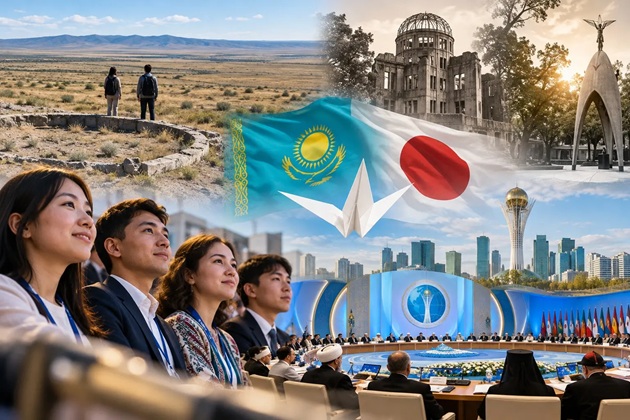
Kazakhstan and the Japanese organization Soka Gakkai International (SGI) are enhancing their collaboration to promote nuclear disarmament, drawing from their unique histories of nuclear suffering. The atomic bombings of Hiroshima and Nagasaki, alongside decades of nuclear testing at Semipalatinsk, have shaped the experiences of both nations, fostering a partnership that is now expanding through interfaith dialogue. This initiative was highlighted during a recent meeting in Astana, where representatives from both sides discussed the importance of their shared history in addressing the ongoing threat of nuclear weapons.
The collaboration between SGI and Kazakhstan’s Foreign Ministry, along with the United Nations mission, aims to advance nuclear abolition efforts. This partnership has evolved to include youth peace education programs and other initiatives that support the Congress of Leaders of World and Traditional Religions. These educational efforts are designed to engage younger generations in discussions about peace and the implications of nuclear armament, emphasizing the lessons learned from past tragedies in Hiroshima, Nagasaki, and Semipalatinsk.S2
As the two entities work together, they are also focusing on creating platforms that allow for broader interfaith dialogue, which is seen as essential in building a global consensus against nuclear weapons. The recent discussions in Astana mark a significant step in their ongoing commitment to peace and the shared goal of a nuclear-free world. This partnership not only highlights the historical context of their collaboration but also sets a foundation for future actions aimed at nuclear disarmament.S1S2