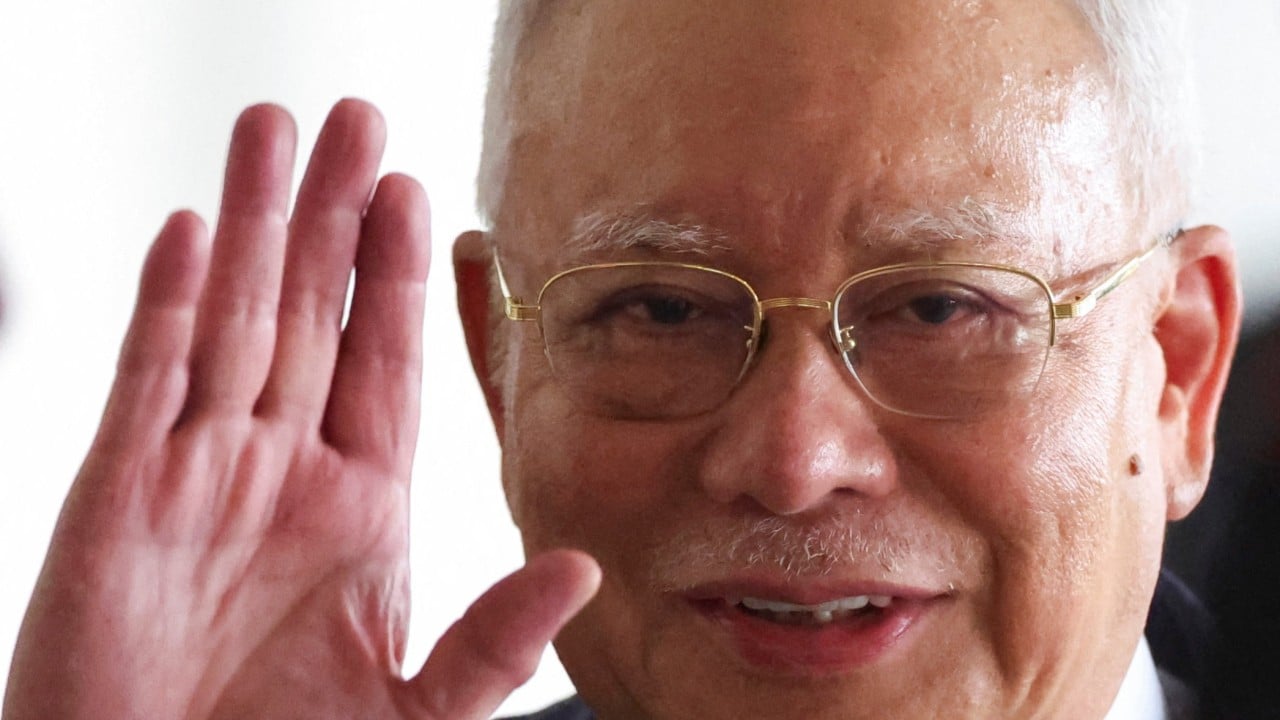
Former Malaysian Prime Minister Najib Razak, who has been serving a prison sentence for his involvement in the 1MDB scandal, is set to be transferred to house arrest. This decision follows a court order that allows Najib to serve his sentence in a more lenient environment after his party, the United Malays National Organization (UMNO), paid a significant fine as part of a royal pardon agreement. His lawyer confirmed the arrangement on Friday, highlighting the party's efforts to collect donations to cover the fine, which facilitated this transition from prison to house arrest.
Najib Razak was convicted of embezzling millions in connection with the 1MDB scandal, a financial scandal that has drawn international attention due to its scale and implications. The former leader's imprisonment has been a contentious issue in Malaysian politics, and his recent move to house arrest marks a significant shift in his legal circumstances. The decision has sparked discussions about the influence of political parties in legal matters, especially regarding high-profile figures like Najib.S2
The royal pardon that enabled this change in Najib's status has raised questions about the integrity of the judicial process in Malaysia. Critics argue that such pardons may undermine the rule of law, particularly when they involve prominent political figures. As Najib begins his house arrest, the political landscape in Malaysia remains tense, with ongoing debates about accountability and governance in the wake of the 1MDB scandal.S1S2