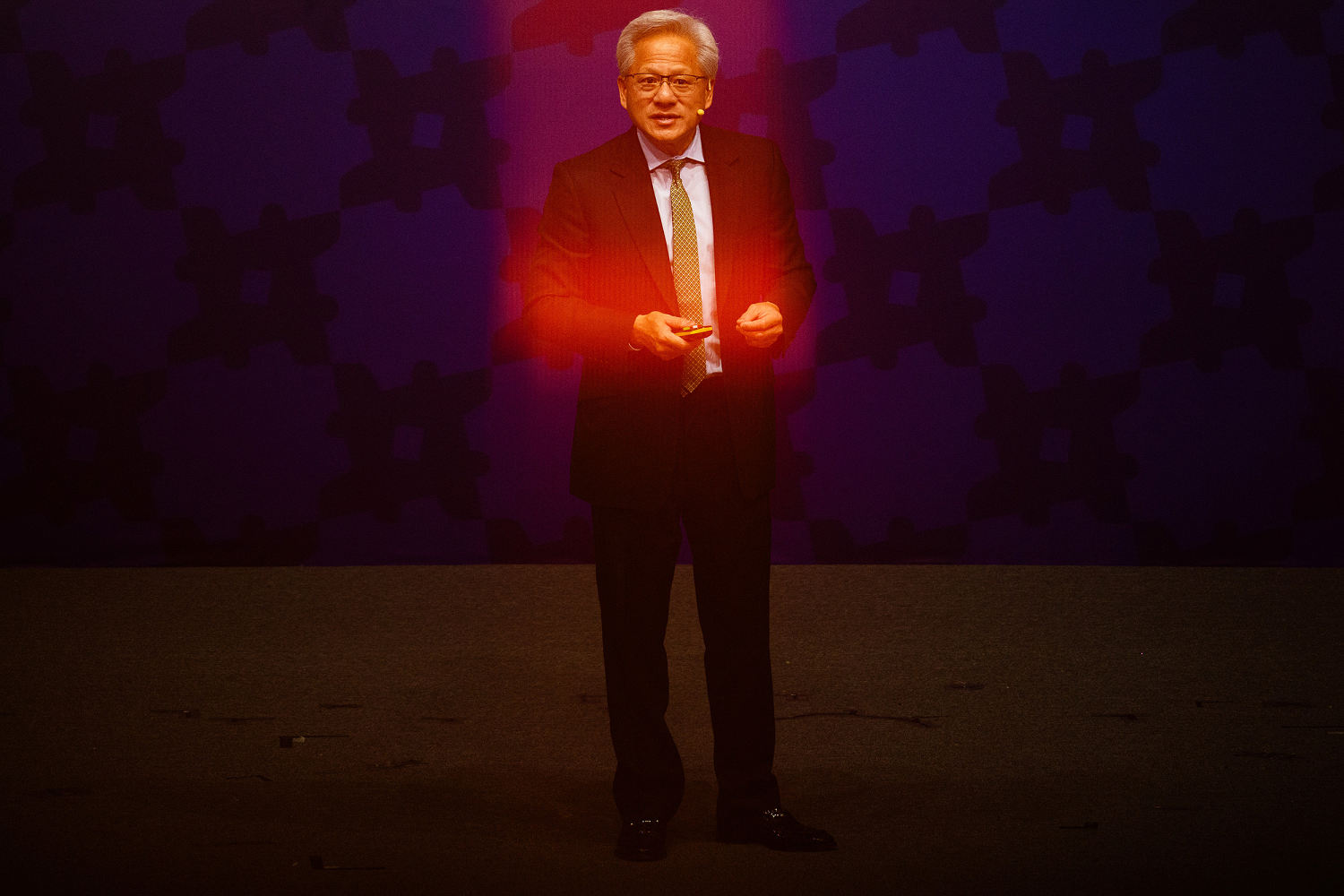
Nvidia, the leading chipmaker co-founded by Jensen Huang in 1993, is facing significant uncertainty regarding its leadership as Huang's future comes under scrutiny amid allegations of a Chinese espionage affair. The company currently lacks a publicly known succession plan for Huang, who has been instrumental in transforming Nvidia into one of the most valuable firms globally. His management style is characterized by micromanagement, with more than 60 executives reporting directly to him, and he is known for sending hundreds of emails daily to staff, often compared to haikus and ransom notes, reflecting his obsessive attention to detail.
As the allegations surrounding Huang intensify, concerns are growing about the potential impact on Nvidia's future. The CEO's deep involvement in the company's operations raises questions about how the organization would cope without his direct oversight. Huang's absence could lead to instability at a time when Nvidia is navigating a highly competitive market, particularly in sectors like artificial intelligence and gaming, where it has established a strong foothold. The lack of a clear successor adds to the anxiety among investors and employees alike, who are wary of the implications for the company's strategic direction.S2
The situation is further complicated by Huang's unique position within the company; he is not only the face of Nvidia but also a key decision-maker whose vision has shaped its trajectory. As the company grapples with these challenges, stakeholders are left to ponder the implications of a leadership vacuum at such a critical juncture. The coming months will be crucial for Nvidia as it seeks to reassure investors and maintain its competitive edge in the tech industry, all while addressing the fallout from the ongoing controversy surrounding its CEO.S1S2