Do Baby Boomers really have it better than Gen Z?

Germany
The brief

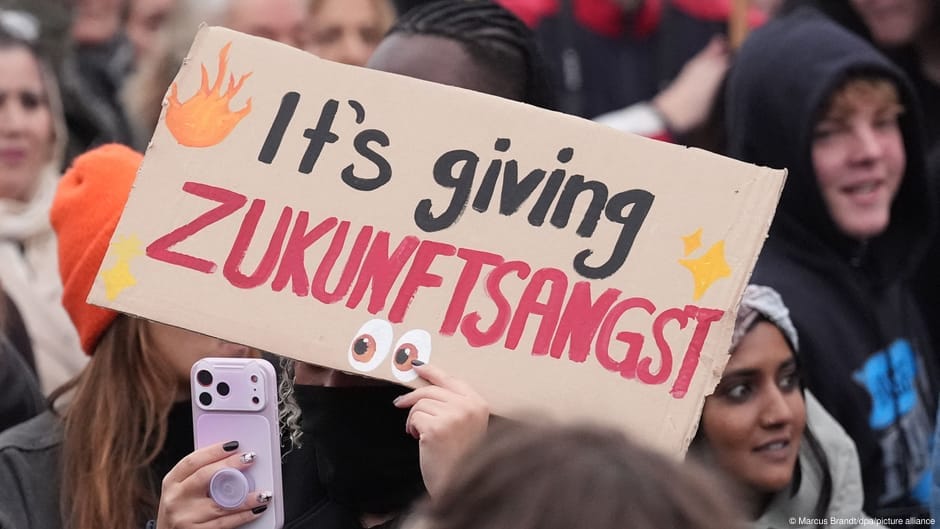
Young people across Germany and Europe have been taking to the streets, voicing fears of a bleak future, but researchers and data suggest the picture is more complicated. Youth researcher Simon Schnetzer, who wrote the annual Youth in Germany study, tells DW that it is fair to ask whether things were just as tough for earlier generations, but that young people see difficulties now and say that is why they need support today. He poses the central question raised by the demonstrations: whether young people have been given the conditions they need to live and work with confidence and keep the system funded. His answer is no.

The pension figures show a clear trend. According to Germany's public pension insurance system, there were 3.73 contributors for every retiree in 1957, a figure that fell to 2.1 by 2025 and is projected to drop to 1.73 by 2045. In absolute terms, 35.35 million contributors will be financing pensions for 16.82 million retirees. The pension system already receives around €118 billion [$131 billion] in annual government subsidies, roughly 25% of the federal budget, and the number of retirees relying on federal basic income support has risen from 257,000 in 2003 to 738,000 in 2024.S1S2

Housing costs add to the strain on lower-income households. According to a report by the German Institute for Economic Research (DIW), the share of income spent on rent by low-income households rose from around 24% in 1990 to nearly 36% in 2021. Germany's Federal Statistical Office (Destatis) found that in 2025 an average of 11% of the population spent more than 40% of their disposable income on housing, rising to 35% among people at risk of poverty. Real estate platform Jacasa calculates that Boomers, who currently own around 4.8 million owner-occupied houses and apartments, could help ease pressure on the housing market as those properties change hands in the coming decades.S1S2

Timeline · newest first
1h Wol

Do Baby Boomers really have it better?

Germany Do Baby Boomers really have it better? November 14, 2026 admin 1 Views 0 Comments Young people across Germany and Europe are taking to the streets, voicing fears of a bleak…

2h Deutsche Welle

Gen Z protests: Do Baby Boomers really have it better than young people?

Should young people in Germany be more worried about their future than Baby Boomers were in the 1980s and 1990s? Or should both generations take to the streets and protest together…

Do Baby Boomers really have it better than Gen Z?

2 outlets 2 reports
The brief

Young people across Germany and Europe have been taking to the streets, voicing fears of a bleak future, but researchers and data suggest the picture is more complicated. Youth researcher Simon Schnetzer, who wrote the annual Youth in Germany study, tells DW that it is fair to ask whether things were just as tough for earlier generations, but that young people see difficulties now and say that is why they need support today. He poses the central question raised by the demonstrations: whether young people have been given the conditions they need to live and work with confidence and keep the system funded. His answer is no.

The pension figures show a clear trend. According to Germany's public pension insurance system, there were 3.73 contributors for every retiree in 1957, a figure that fell to 2.1 by 2025 and is projected to drop to 1.73 by 2045. In absolute terms, 35.35 million contributors will be financing pensions for 16.82 million retirees. The pension system already receives around €118 billion [$131 billion] in annual government subsidies, roughly 25% of the federal budget, and the number of retirees relying on federal basic income support has risen from 257,000 in 2003 to 738,000 in 2024.S1S2

Housing costs add to the strain on lower-income households. According to a report by the German Institute for Economic Research (DIW), the share of income spent on rent by low-income households rose from around 24% in 1990 to nearly 36% in 2021. Germany's Federal Statistical Office (Destatis) found that in 2025 an average of 11% of the population spent more than 40% of their disposable income on housing, rising to 35% among people at risk of poverty. Real estate platform Jacasa calculates that Boomers, who currently own around 4.8 million owner-occupied houses and apartments, could help ease pressure on the housing market as those properties change hands in the coming decades.S1S2

Timeline · newest first

Sources · 2 citations

S1 Wol 1 report · EN
S2 Deutsche WelleLead 1 report · EN