At a time when press freedom is under pressure and international newsrooms are shrinking, the Werner Holzer Prize celebrates foreign correspondence, a profession many consider indispensable to democracy. The award honours Werner Holzer, a veteran reporter and former editor-in-chief of the German daily Frankfurter Rundschau, and this year's ceremony coincided with what would have been his 100th birthday. Holzer spent decades reporting from some of the world's most important hot spots and championing international journalism.
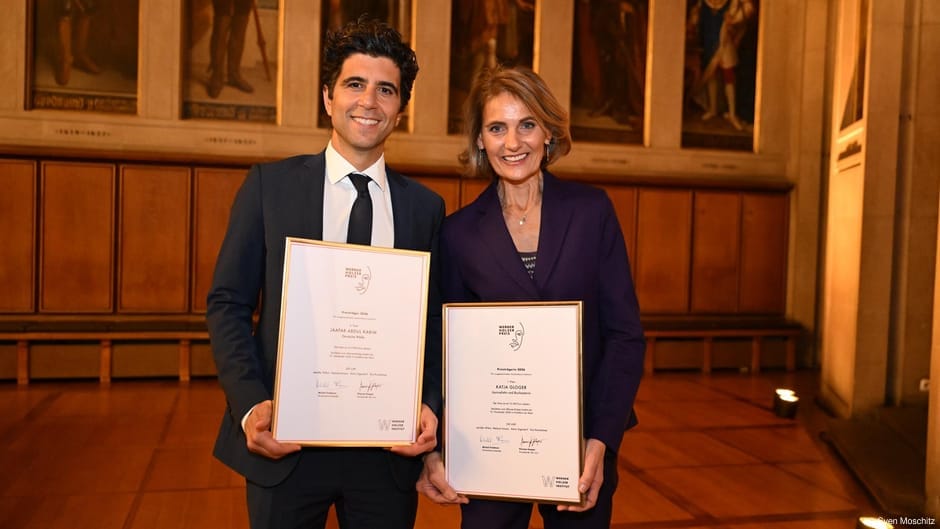
The ceremony took place in Frankfurt's Römer, the city's historic town hall, where Mayor Mike Josef recalled that freedom of speech and freedom of the press were first enshrined for all Germans by the Frankfurt Parliament in the nearby Paulskirche in 1848. The 2026 winners reflect the breadth of the award. First prize went to Katja Gloger, a veteran Russia correspondent who moved to Moscow in 1989 and accompanied Vladimir Putin during the early years of his presidency. In her nonfiction book "The Failure: An Investigative Report of Germany's Russia Policy," Gloger and co-author Georg Mascolo offer a searing critique of the misjudgments and illusions that shaped German policy toward Russia for decades.S1S2
Second prize went to DW journalist and presenter Jaafar Abdul Karim, whose talk show JaafarTalk reaches millions of viewers across the Arab world and in Germany. Whether in Tunis, Beirut or Cairo, Abdul Karim tackles subjects that are often considered taboo. A research grant went to freelance journalist Luise Land, whose project explores why her German-Namibian family still owns extensive landholdings in Namibia, tracing the enduring legacy of the genocide against the Herero and Nama peoples by German colonial forces in the early 20th century.S1S2
The jury said Gloger is one of the leading foreign policy reporters and has gained access to the very heart of the Kremlin's power elite, from Mikhail Gorbachev to Vladimir Putin. At the ceremony, Gloger made a passionate plea for more journalism and more international coverage in the German press, saying, "We must defend trustworthy, reliable and fact-based journalism with everything in our power." She worked for Reporters Without Borders for 12 years and cited the latest rankings, which show that only one in 100 people can get information from a free, independent press. She said she would dedicate the award to journalists in exile and to her colleagues at Novaya Gazeta, the independent Russian newspaper long known for its critical reporting on the Kremlin.S1S2