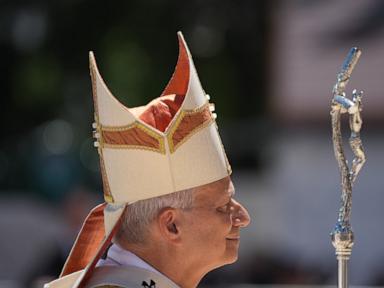
Pope Leo XIV wrapped up a 12-day homecoming tour of South America on Monday that eased doubts about his recovery from lung cancer surgery and highlighted the social justice priorities shaping his papacy. The 71-year-old pontiff travelled through Uruguay, Argentina and Peru, an itinerary many doubted he could complete a month after surgery. The Chicago-born pope, who spent nearly two decades as a missionary in the region and picked up Peruvian citizenship along the way, was described by Vatican expert Elise Ann Allen, who has written a biography of him, as showing "incredible strength and determination" that people had largely underestimated.
Visiting care homes and prisons, Leo pressed political leaders to put the needs of the vulnerable first. He urged Argentina's President Javier Milei and other leaders to "safeguard democracy" and use words carefully, insisting growth must benefit all. On the final day he visited a shelter for abandoned elderly people, saying "the weakest and most defenceless are not protected but abused." In Uruguay he went into one of the most dangerous neighbourhoods in Montevideo to highlight the deaths of children caught up in drug violence, and described the country's high suicide rates as "painful."S1S2
Crowds were large throughout. An estimated 2.5 million people turned out for his first Mass in Buenos Aires, the Vatican said, his biggest liturgical event to date, and Argentina had not received a papal visit since Pope John Paul II in 1987. In Peru, around three million people lined the streets of Lima. Leo told them they had formed him as a pastor, saying: "Today I understand how much of this land remains with me and how much of my own story also belongs to you."S1S2
The trip also addressed clerical abuse. Leo met victims in Argentina and Peru, including some linked to the now-disbanded Catholic society Sodalitium Christianae Vitae. In Peru he spoke of the "pain" caused by abuse and said the Church must make "amends" to victims and foster "a culture of prevention and protection."S1