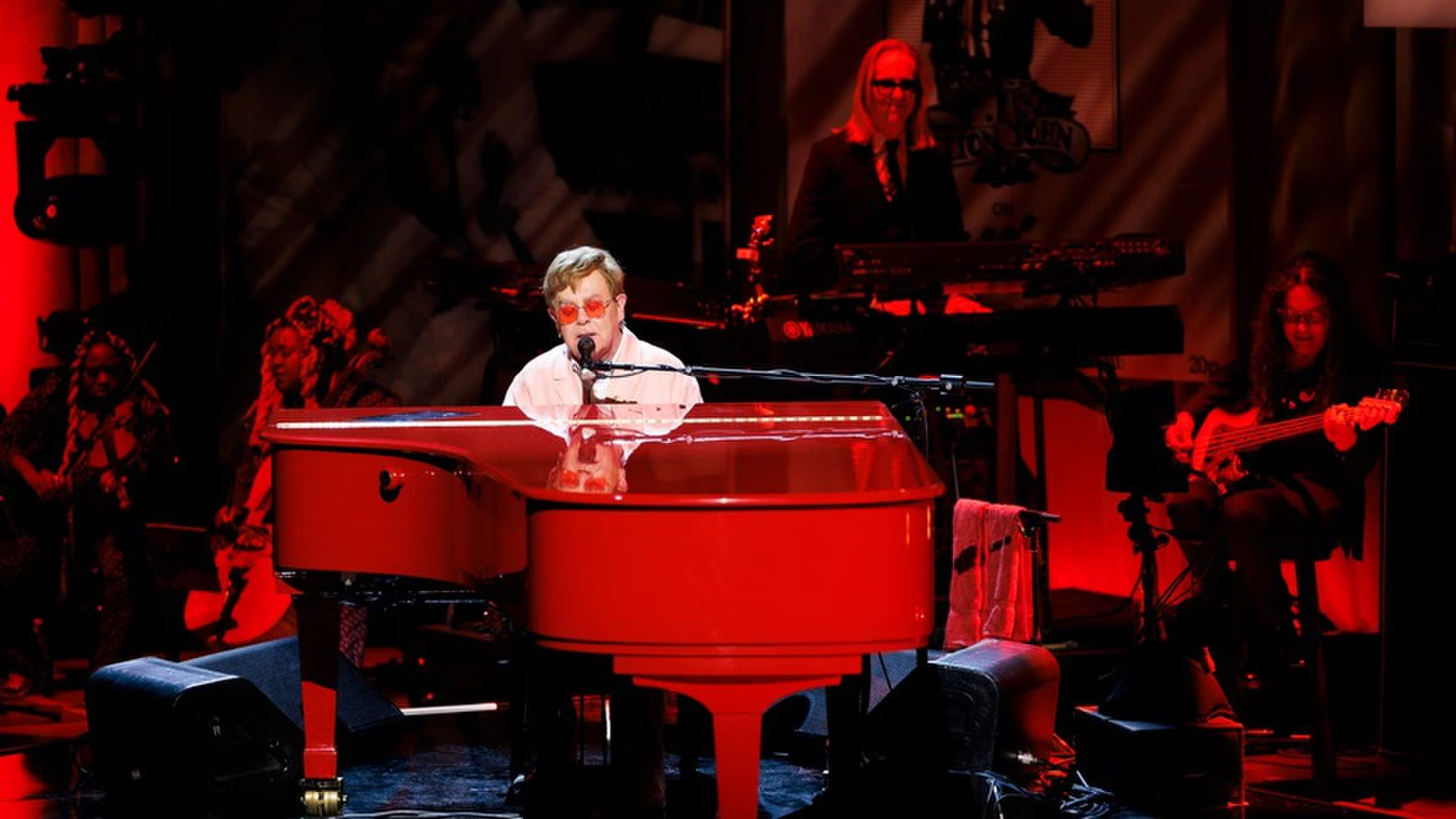
Elton John made a surprise appearance at the 2026 Aria awards in Sydney on Wednesday, delivering a pre-recorded message to urge the Australian government to protect artists from AI companies. He backed Not AI's To Take, a campaign by the creative and media industries calling on the Albanese government to ensure Australian artists are reimbursed and consulted before AI firms use their work for training. "You have a duty to protect Australian artists and their work. Don't let AI use any Australian artist's work without full permission," John said. He hosted the very first Aria awards ceremony in 1987.
The campaign's backers include music, film, television and publishing groups, along with news outlets such as News Corp, Foxtel, Seven Media and Guardian Australia. It warns that changes demanded by AI giants could put the $70bn creative industry and its 600,000 workers at risk. Australian musicians Jack River, Dobby, Josh Pyke and KLP also addressed the room on behalf of the campaign, joining Jimmy Barnes, Paul Kelly and Peter Garrett, who launched it earlier this week. Dobby warned that AI training could draw on the work of Yothu Yindi, Missy Higgins, Gurrumul, Elton John, Beyonce and the Beatles, adding that Australia should not become "the weak link that lets the world down." The Australian Recording Industry Association also backed the campaign, displaying its slogan on a billboard outside the venue.S1S2
Several winners also used their speeches to criticise AI, including Tim Minchin and Laneway festival co-founder Danny Rogers. Musician Ben Lee told Guardian Australia that AI companies should face the same rules as anyone else: "If AI companies want to train on Australian music, it's simple: pay us." Greens senator Sarah Hanson Young said in a statement that Parliament should take notice of the unity among industry figures.S1S2
The debate centres on copyright. The government ruled out a text and data mining exception for AI in October 2025, but creative groups fear it could revisit copyright as it courts AI investment, after leaked slides showed it weighing an opt-out model. Under such a model, AI firms could train on works unless rights holders objected; Anthropic has proposed this approach. A spokesperson for Attorney-General Michelle Rowland told the Guardian that any changes would give creators control and fair pay. The government is expected to unveil a package of AI laws, including on copyright, in late 2026 or early 2027.S1S2