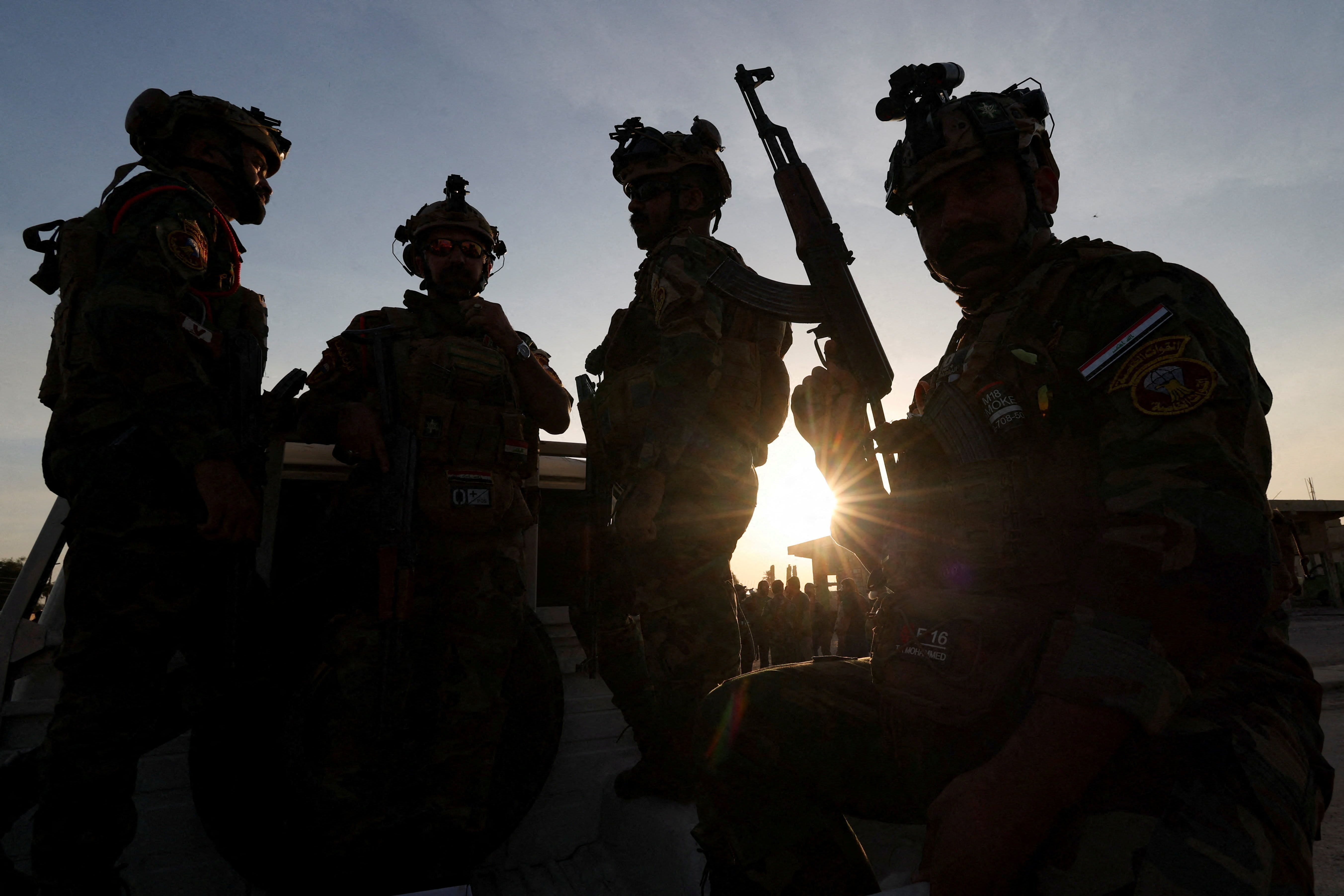
Iraqi Prime Minister Ali al-Zaidi has made his riskiest move since taking power six months ago, directly confronting the heavily armed Shi'ite militias that function as proxies of Iran. He has told his security forces to prepare to take on Kataib Hezbollah, the most powerful Iran-aligned group, which officials have accused of running a smuggling ring that siphoned off hundreds of millions of dollars' worth of state-owned oil. Kataib Hezbollah has rejected the findings of the investigation into the smuggling network.
Pro-Iranian militias, including Kataib Hezbollah, enjoy a semi-official status in Iraq, which critics say encourages them to act with impunity. The group, which has no announced leadership structure, has thousands of hardened fighters and forms several battalions in Iraq's Popular Mobilization Forces, a grouping of armed factions originally set up to fight Islamic State in 2014 that was later recognised as an official security force. Fighters receive state salaries, and members, including some designated as terrorists by the US, hold senior positions in the PMF. Although it is technically under the command of the prime minister, the group often operates outside the chain of command and has defied government statements calling for an end to attacks on US forces.S1S2
Kataib Hezbollah, whose name means Battalions of the Party of God, has its own political party, Huquq or Rights, which holds five lawmakers. An Iraqi official report said the group also generates cash through businesses including construction, housing, trade, tourism and currency exchange, though the group denies this and says it is dedicated to security.S1S2
Founded in the aftermath of the 2003 US-led invasion of Iraq, Kataib Hezbollah is among the most influential members of the Islamic Resistance in Iraq, an umbrella group of hardline Shi'ite armed organisations supported by Iran. It developed a reputation for deadly attacks on military and diplomatic targets during the counterinsurgency war and sectarian conflict of the 2000s, using snipers, rockets, mortars and roadside bombs. The US designated it a terrorist organisation in 2009. It fought alongside other Shi'ite militias in Syria's 2011-2024 civil war and reports directly to Iran's Revolutionary Guards. The group was led by dual Iraqi-Iranian citizen Abu Mahdi al-Muhandis until he was killed in a US drone strike in 2020, along with Revolutionary Guards Quds Force commander Qassem Soleimani, at Baghdad's international airport.S1S2
Kataib Hezbollah holds a transnational Shi'ite ideology that views the borders between Iraq, Syria and Lebanon as Western constructs. It was long opposed to the presence of US troops in Iraq, whose formal presence ended in September.S1