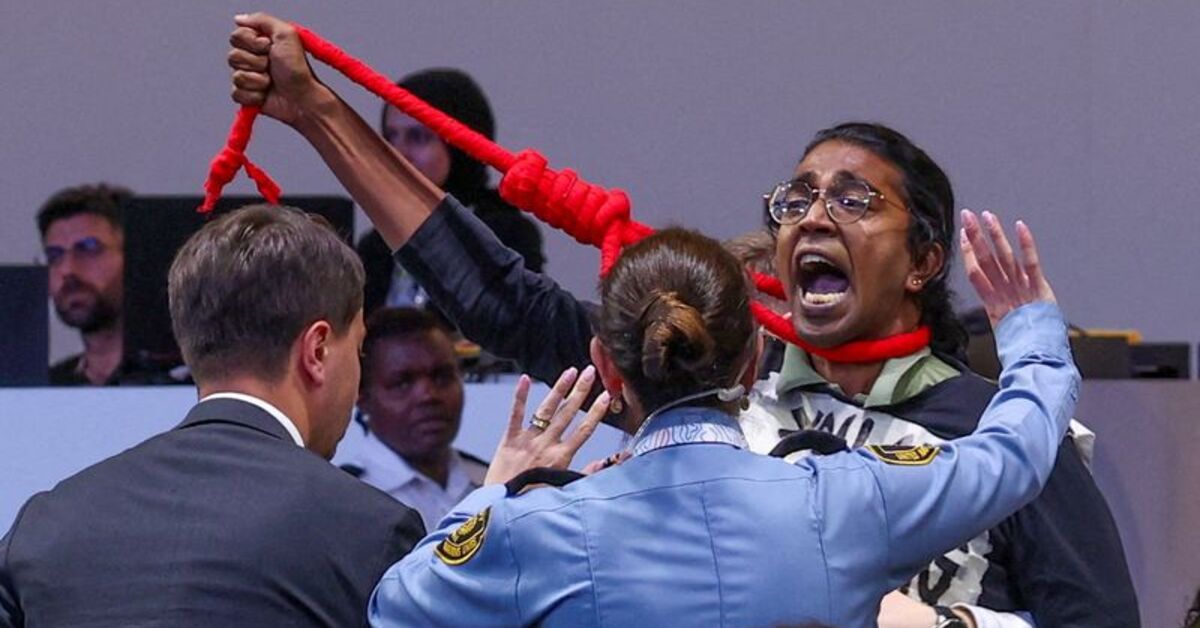
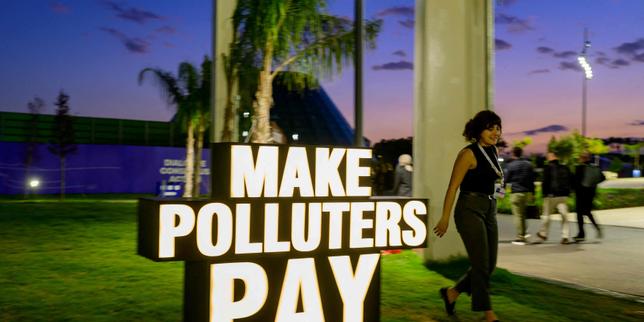
Negotiators at the UN climate summit COP31 in Antalya, Turkey, were fighting over how to address global warming as the two-week talks wrapped up on Friday, the last scheduled day. Activists and country leaders were in an uproar after the term "fossil fuels" was left out of the draft of the final agreement. Negotiators who pulled an all-nighter from Thursday into Friday said they expected the talks to go into overtime on Saturday.
Past COPs have failed to agree on how to move away from coal, oil and gas, which warm the planet, heat the oceans and worsen air quality. Climate change also intensified several of this year's disasters, including Europe's deadly heat waves and Nepal's devastating flooding. Mohamed Adow, director of Power Shift Africa, warned that if fossil fuels do not make it into the final agreement, the summit risks being the "worst COP ever." Such agreements, often adopted by nearly 200 nations, remain voluntary and non-binding.S2
Panama vowed to "formally object" if the final agreement does not add climate finance, cap oil production and acknowledge failing goals, among other demands. Environment Minister Juan Carlos Navarro said the talks were being held hostage by a "petroleum mafia" and needed to be reformed. "The COPs have become an exercise in hypocrisy and futility," he said.S2
The United Nations announced in the lead-up to COP31 that the world is dangerously close to missing its goal of limiting global warming to 1.5 degrees Celsius (2.7 degrees Fahrenheit) above pre-industrial temperatures. Tasneem Essop, executive director of Climate Action Network International, said at a Friday event that "there is nothing on the table that protects people, or addresses the priorities of the Global South."S2
One of the main deals on the table is an electrification goal to raise the share of electricity in total global energy consumption from roughly 21% today to 35% by 2035. The final draft does not specify that this should be reached with renewable sources such as solar and wind, leaving room for fossil fuel power plants to be counted toward the push. Ghiwa Nakat, executive director of Greenpeace in the Middle East and North Africa, said that "weakening commitments on fossil fuel phase-out risks undermining progress."S2