Story Italy Giorgia Meloni

Italian workers and students protest over wages and public services

Italy
The brief

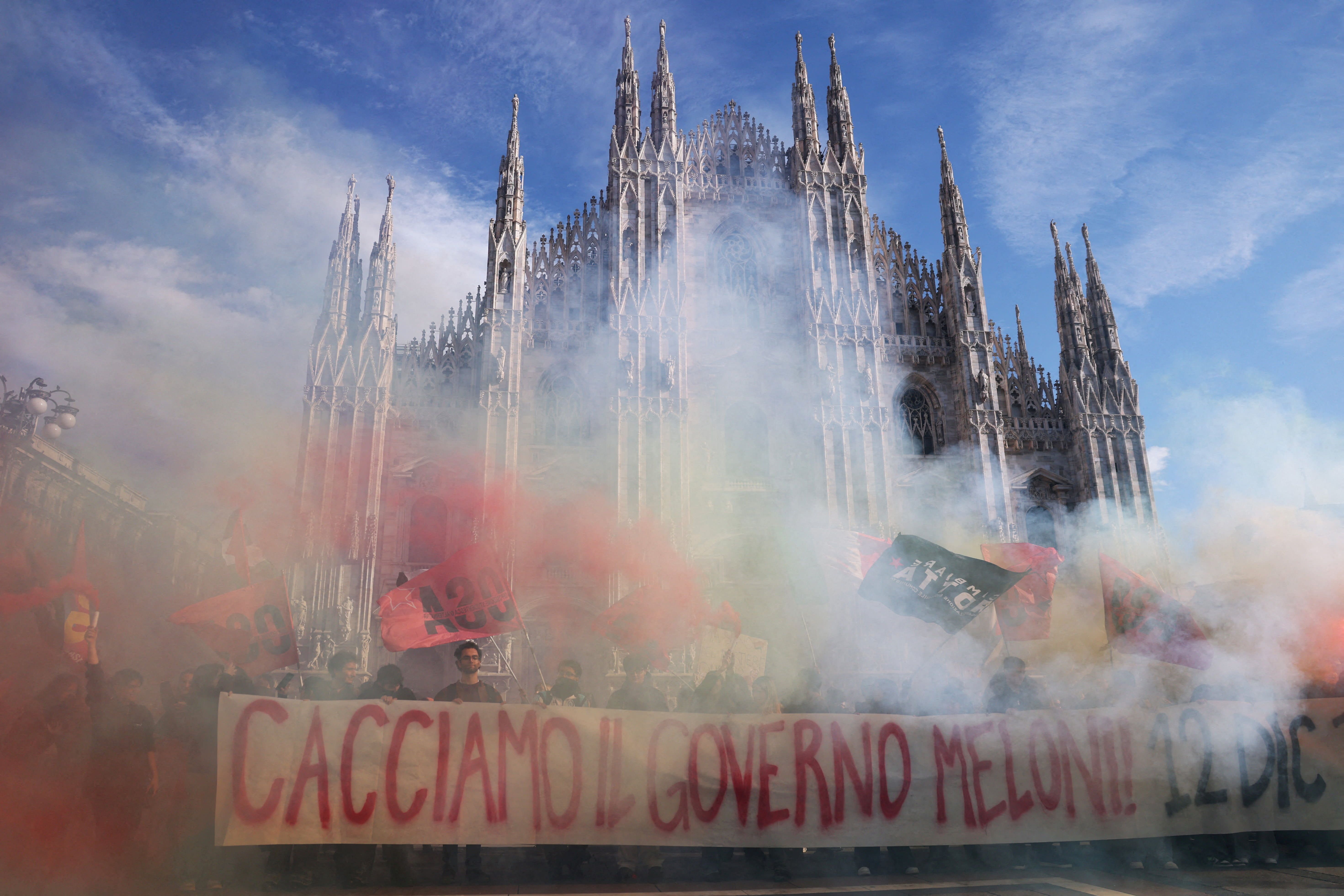
Tens of thousands of workers and students took to the streets across Italy on Friday as the country's largest trade union, CGIL, staged a general strike demanding higher wages and greater investment in public services. Landini, CGIL's leader, told a rally in Rome that more than one million people had taken part in demonstrations across more than 100 Italian cities, although the Interior Ministry said it was too early to provide its own estimate.

The protests coincided with a wider wave of youth mobilization across Europe, with student protests also planned in Germany, France, Britain, Austria, Belgium and Spain over rising living costs and military spending. "Across Europe and among ordinary people, the demand for change is growing," Landini said. Other Italian unions, including the grassroots Cobas movement, also called separate strike action amid discontent over the policies of Prime Minister Giorgia Meloni's government.S1

The CGIL strike lasted the entire working day and involved workers in both the private and public sectors, including schools and healthcare. Air and rail transport were excluded from the general strike, and its impact on local public transport was limited by minimum-service requirements, although a separate rail strike was due to begin at 9 p.m. on Friday and run until 8 p.m. on Saturday.S1

The demonstrations follow a nationwide mobilization on October 30, when thousands of students joined striking workers to demand more funding for education and relief from rising living and housing costs. Student groups have since continued protests and occupations at schools and universities, with opposition to higher military spending also emerging as a rallying cry. Laura Peritore, a 24-year-old university student, said: "We are living under a government that, piece by piece, is cutting healthcare and education."S1

Parliament is examining Meloni's €26 billion ($30 billion) budget for 2027, which CGIL says does not go far enough to support incomes and public services. According to the financial newspaper ItaliaOggi, only a fraction of the budget is targeted at under-35s. Industry Minister Adolfo Urso described the general strike as a "pre-emptive strike", saying Landini had called it before he knew the contents of the budget. The protests come as Italy gears up for a parliamentary election due in 2027.S1S2

Timeline · newest first
1h Jpost

Italian workers, students protest over wages, public services

Other Italian unions, including the grassroots Cobas movement, also called for separate strike action, while student demonstrations were planned nationwide.

2h Thehindu

Italian workers, students protest over wages and public services

Parliament is examining Meloni's €26 billion ($30 billion) budget for 2027, which CGIL says does not go far enough to support incomes and public services

Italian workers and students protest over wages and public services

2 outlets 2 reports
The brief

Tens of thousands of workers and students took to the streets across Italy on Friday as the country's largest trade union, CGIL, staged a general strike demanding higher wages and greater investment in public services. Landini, CGIL's leader, told a rally in Rome that more than one million people had taken part in demonstrations across more than 100 Italian cities, although the Interior Ministry said it was too early to provide its own estimate.

The protests coincided with a wider wave of youth mobilization across Europe, with student protests also planned in Germany, France, Britain, Austria, Belgium and Spain over rising living costs and military spending. "Across Europe and among ordinary people, the demand for change is growing," Landini said. Other Italian unions, including the grassroots Cobas movement, also called separate strike action amid discontent over the policies of Prime Minister Giorgia Meloni's government.S1

The CGIL strike lasted the entire working day and involved workers in both the private and public sectors, including schools and healthcare. Air and rail transport were excluded from the general strike, and its impact on local public transport was limited by minimum-service requirements, although a separate rail strike was due to begin at 9 p.m. on Friday and run until 8 p.m. on Saturday.S1

The demonstrations follow a nationwide mobilization on October 30, when thousands of students joined striking workers to demand more funding for education and relief from rising living and housing costs. Student groups have since continued protests and occupations at schools and universities, with opposition to higher military spending also emerging as a rallying cry. Laura Peritore, a 24-year-old university student, said: "We are living under a government that, piece by piece, is cutting healthcare and education."S1

Parliament is examining Meloni's €26 billion ($30 billion) budget for 2027, which CGIL says does not go far enough to support incomes and public services. According to the financial newspaper ItaliaOggi, only a fraction of the budget is targeted at under-35s. Industry Minister Adolfo Urso described the general strike as a "pre-emptive strike", saying Landini had called it before he knew the contents of the budget. The protests come as Italy gears up for a parliamentary election due in 2027.S1S2

Timeline · newest first

Sources · 2 citations

S1 Jpost 1 report · EN
S2 ThehinduLead 1 report · EN
Share this story

Italian workers and students protest over wages and public services