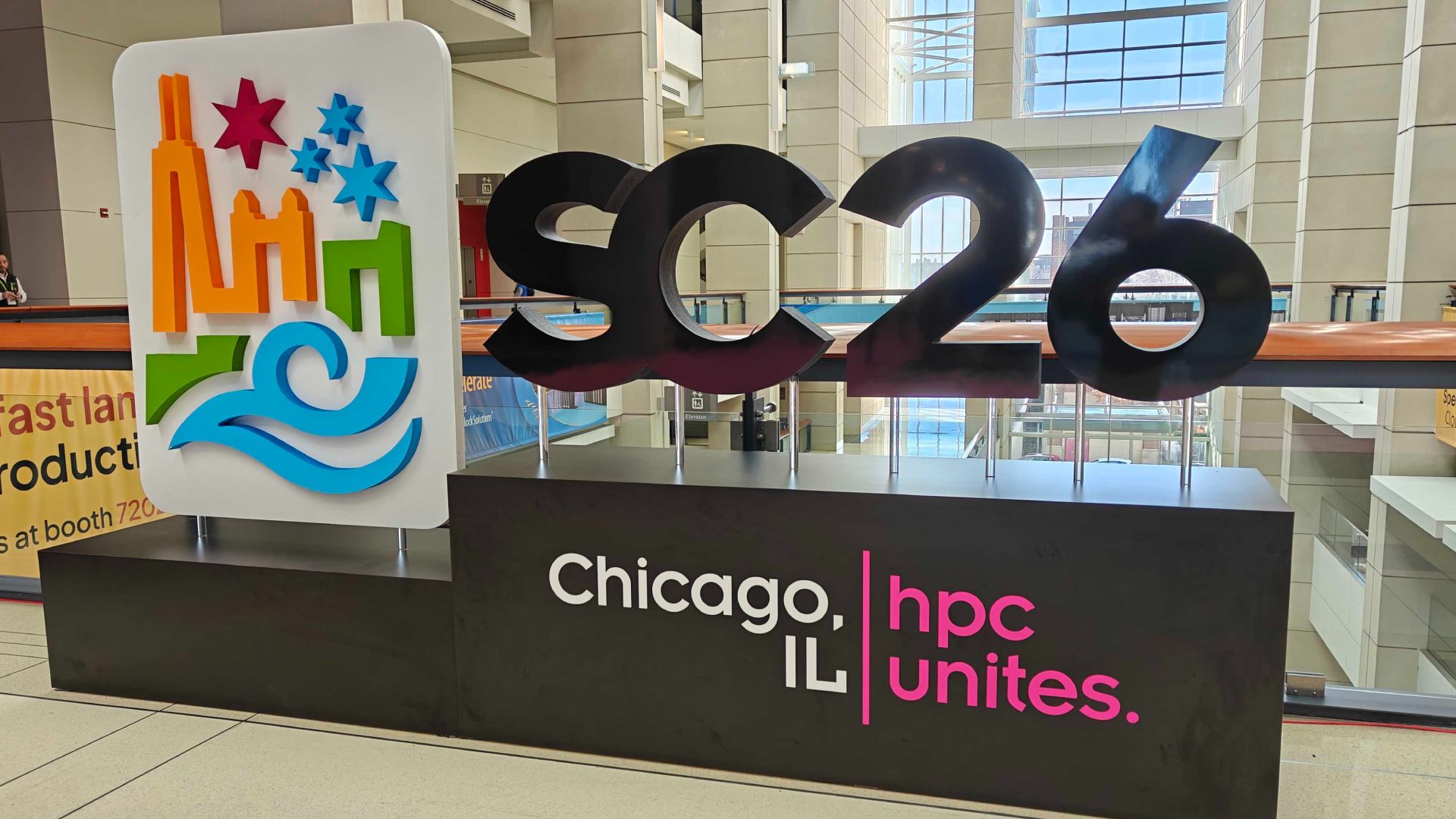
Tom's Hardware Premium has published its weekly roundup, dominated by coverage from the annual Supercomputing conference (SC26), where all of its conference coverage is currently free to access with a Tom's Hardware account. Its resident CPU analyst Jake Roach reported from the show floor on an exchange between Nvidia and AMD over server processors.
AMD claims its latest EPYC Venice lineup is the best at agentic workloads, while Nvidia's marketing described its Vera CPU as purpose-built for agentic AI. At SC26, Nvidia CPU chief Ian Finder rebuked that marketing, calling the idea that Nvidia could have predicted the data center moment "absurd" and saying the company's design know-how helped it develop the processor.S1
Nvidia said existing software cannot always take full advantage of Vera without architecture-specific optimization, and showed that under some workloads Vera's performance can be improved by up to 39% when its Olympus-based Arm cores are taken into account. Whether similar gains can be achieved on workloads other than matrix multiplication remains unclear.S1
Nvidia also announced Rubin HPC, a Rubin GPU variant that it says is purpose-built for agentic workflows and scientific simulations that process large datasets. Nvidia says it has over 50,000 CUDA cores, slightly below double the count of the standard Rubin GPU, though technical details remain scant.S1
On the new TOP500 list, AMD is featured in over 40% of systems, a 14% gain in its position. Its leading system is Lux, developed with the U.S. Department of Energy, and a second system, Discovery, is expected to debut in 2028 with EPYC CPUs and Instinct accelerators. The top 10 systems are unchanged, with China's LineShine in Shenzhen still first and El Capitan second.S1