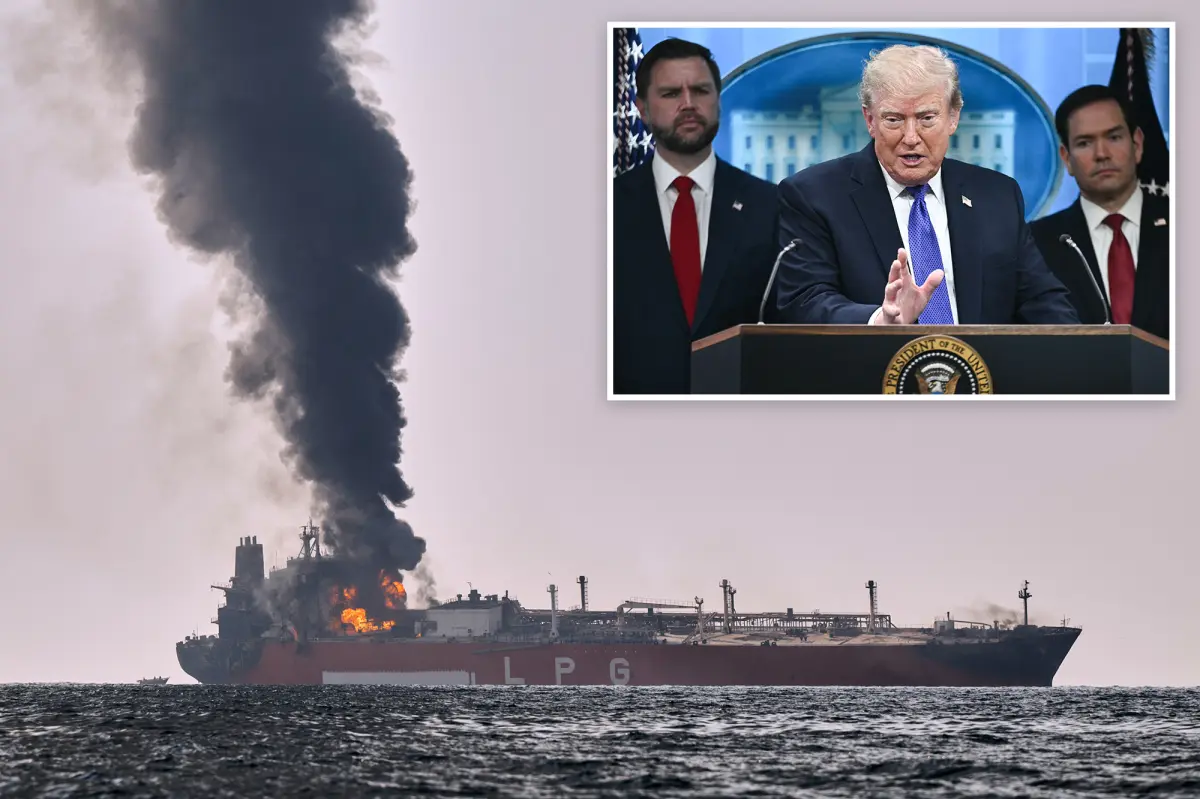
Iran is reportedly preparing to send a convoy of more than 14 oil tankers through the US naval blockade in the coming days, according to satellite tracking data and Iranian media reports. The tankers are reportedly assembling near Kharg Island, the departure point for approximately 85% to 90% of Iran's crude oil exports, and are crewed and flying Iranian flags. Tehran reportedly plans to send the convoy toward the Gulf of Oman. The Persian-language service of Euronews described the information as "unofficial reports," and no independent confirmation has emerged that the convoy has departed.
TankerTrackers, a company that monitors oil tankers using satellite imagery, said its data suggested Iran was preparing to resume oil exports. Co-founder Samir Madani told Reuters that a tanker was receiving Iranian crude from another vessel in the Gulf. "If it leaves the blockade area, this will be the first successful seaborne export of Iranian crude oil since mid-July," he said. Madani did not identify the tanker but said it was not subject to US Treasury Department sanctions. According to Asharq Bloomberg, about 200,000 barrels of Iranian oil were transferred between the tankers Olim and Hao Fan near Kharg Island, with both vessels reportedly switching off their tracking systems.S1S2
The reported preparations follow a column published on Wednesday by the Fars News Agency, which is affiliated with the Islamic Revolutionary Guard Corps (IRGC), proposing that Iran move a group of tankers to break through the blockade. Under the proposal, Tehran would warn that any US military attempt to attack or detain the tankers would trigger immediate Iranian strikes on regional energy infrastructure, particularly oil facilities in the United Arab Emirates. Similar proposals appeared two days earlier in Hamshahri Online and the Young Journalists Club (YJC), and Iranian media have begun referring to the plan as the "Fereydun Plan," named after a scene from the Shahnameh, the Persian epic.S1S2
Iranian politicians have also called for a firmer response. Parliament member Mohammad Bayat said on Friday that Tehran needed to abandon its passive approach amid a situation of "neither war nor peace," and called for an ultimatum to regional countries and the United States to create conditions for breaking the blockade.S1S2