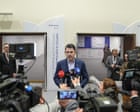
Climate negotiations at the COP31 summit in Antalya, Turkey, approached a final deal on Sunday after talks ran past a Friday deadline, through Saturday and into the early hours of Sunday. Co-presidents Australia's Chris Bowen and Turkey's Murat Kurum held meetings with scores of countries until late evening, and a third and, in theory, final draft of the outcome, known as the cover decision, was published shortly after 3am local time.
The new draft addresses a central disagreement over fossil fuels. The previous draft, published on Thursday, lacked any reference to a "just, orderly and equitable transition away from fossil fuels", which many countries regarded as a red line. The latest text instead opens by recalling the Cop28 agreement in Dubai three years ago "in its entirety", the so-called "United Arab Emirates consensus", the only UN climate cover agreement to have used the phrase fossil fuels. Saudi Arabia and other oil-rich states have opposed subsequent attempts to state explicitly that the world should move away from fossil fuels.S1S2
Other points of disagreement were handled differently in the draft. It removes a hard numerical target for carbon capture, utilisation and storage technology and states that as much electrification as possible should be powered by clean energy. It includes a promised goal of 35% of the world's final energy coming from electricity by 2035, but does not include a target of $120bn for adaptation finance backed by developing countries. The full text now runs to 94 paragraphs across 10 pages.S1
Kurum told a late-night plenary that the parties could agree on the text, saying concerns about fossil fuels and about helping developing countries finance adaptation had been addressed. The deal followed consultations among Australia, which leads the talks, Turkey, the host, and nearly 200 delegations. Delegations had until 0300 GMT to raise objections, with a session scheduled for 0600 GMT to begin approving the deal, and the conference was due to reconvene later on Sunday morning. The talks have to balance the needs of nations most vulnerable to climate change against those whose economies depend on producing or consuming fossil fuels.S2S1
This year's COP is the first since the UN's environmental body confirmed that global temperature rise was set to pass 1.5 degrees Celsius (2.7 degrees Fahrenheit), a threshold all countries agreed over a decade ago to try not to exceed, and beyond which extreme weather impacts intensify.S2


