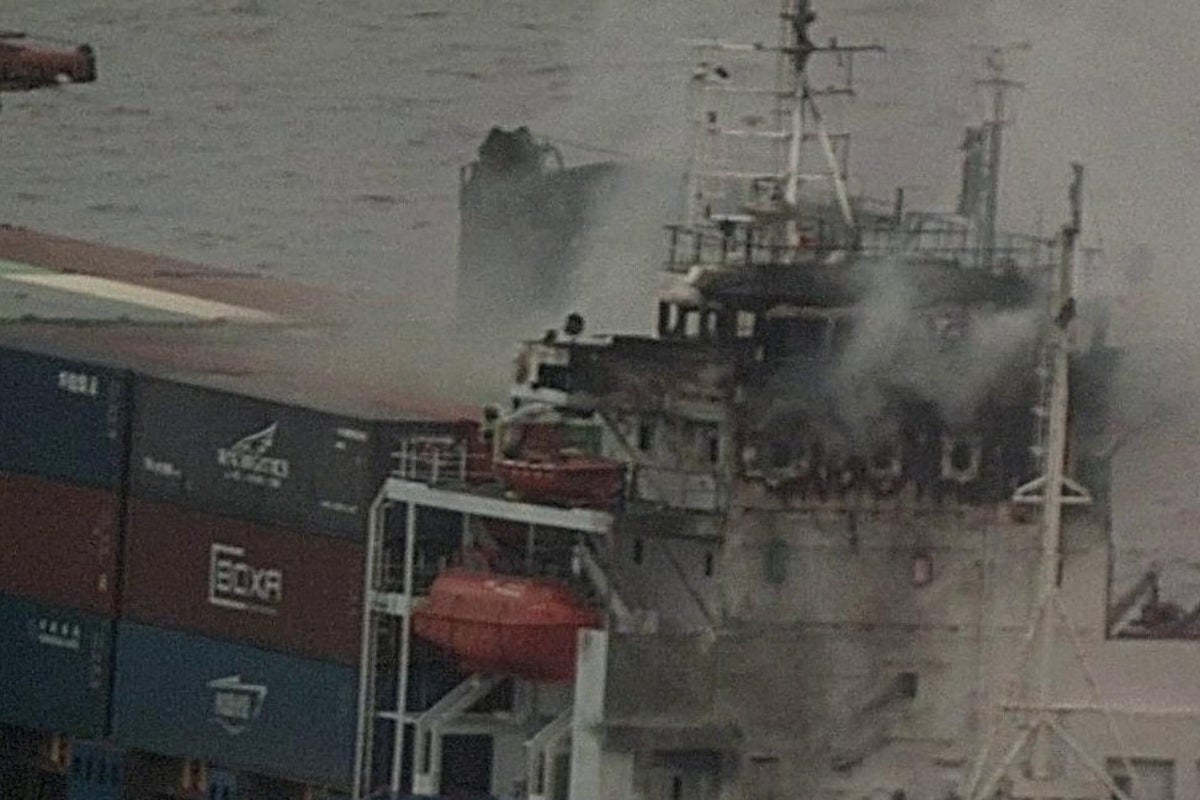
A Russian cargo ship struck by drones in the Baltic Sea was still burning late on Saturday as it sat at anchor in Finnish waters, with Finland leading the rescue operation after what it said was likely a Ukrainian attack. The Sparta II, a cargo vessel with Russian military connections, was bound for the Russian exclave of Kaliningrad when it was damaged in international waters west of Russia's Gogland island, a account Finland's Defence Forces corroborated with earlier Russian statements.
The 16 crew members abandoned the vessel for lifeboats and were transferred to a nearby Russian ship, which Finnish Border Guard Commander Ilja Iljin told public broadcaster Yle is now heading back to Russia. Overnight, vessels sprayed the Sparta II with water cannons in an effort to extinguish the flames and cool containers stacked on its deck, the Finnish coast guard said on Sunday. Finnish authorities said Russian vessels might eventually tow the wreckage back to Russia.S1S2
The Sparta II is a 121-metre Russian-flagged cargo vessel owned by the shipping company Oboronlogistika, which provides logistics services for the Russian Defence Ministry, according to the company's website. It left St. Petersburg on Friday, according to LSEG data, and is subject to U.S. sanctions, according to the U.S. Treasury Department.S2
Ukraine has sent waves of military drones towards Russia's northwest Leningrad region this year, and some have strayed into the airspace of Baltic countries, raising fears that the war was spilling onto NATO territory. Finnish armed forces spokesperson Aki-Mauri Huhtinen said it was likely that Ukraine was behind the attack but that it was not clear why the vessel had been targeted. Mikko Simola, commander of the Gulf of Finland Coast Guard, said a Russian helicopter was suspected of briefly violating Finnish airspace during the rescue operation.S1S2
Finnish Prime Minister Petteri Orpo said on X that the war was spilling into neighbouring areas and that Ukraine had the right to fight against the aggressor. Helsinki introduced temporary aviation and maritime restrictions in the eastern Gulf of Finland to protect civilians and allow authorities to intercept drones if needed. Sweden's Defence Minister Pal Jonson said Swedish combat aircraft, operating under Finnish command, took part in safeguarding Finnish and NATO territorial integrity. Estonia sent a navy vessel to assist with firefighting and pollution response, and Estonian Navy Commander Ivo Vark said the risk of further attacks in the Gulf of Finland could not be ruled out.S1S2