Story Vietnam Politics

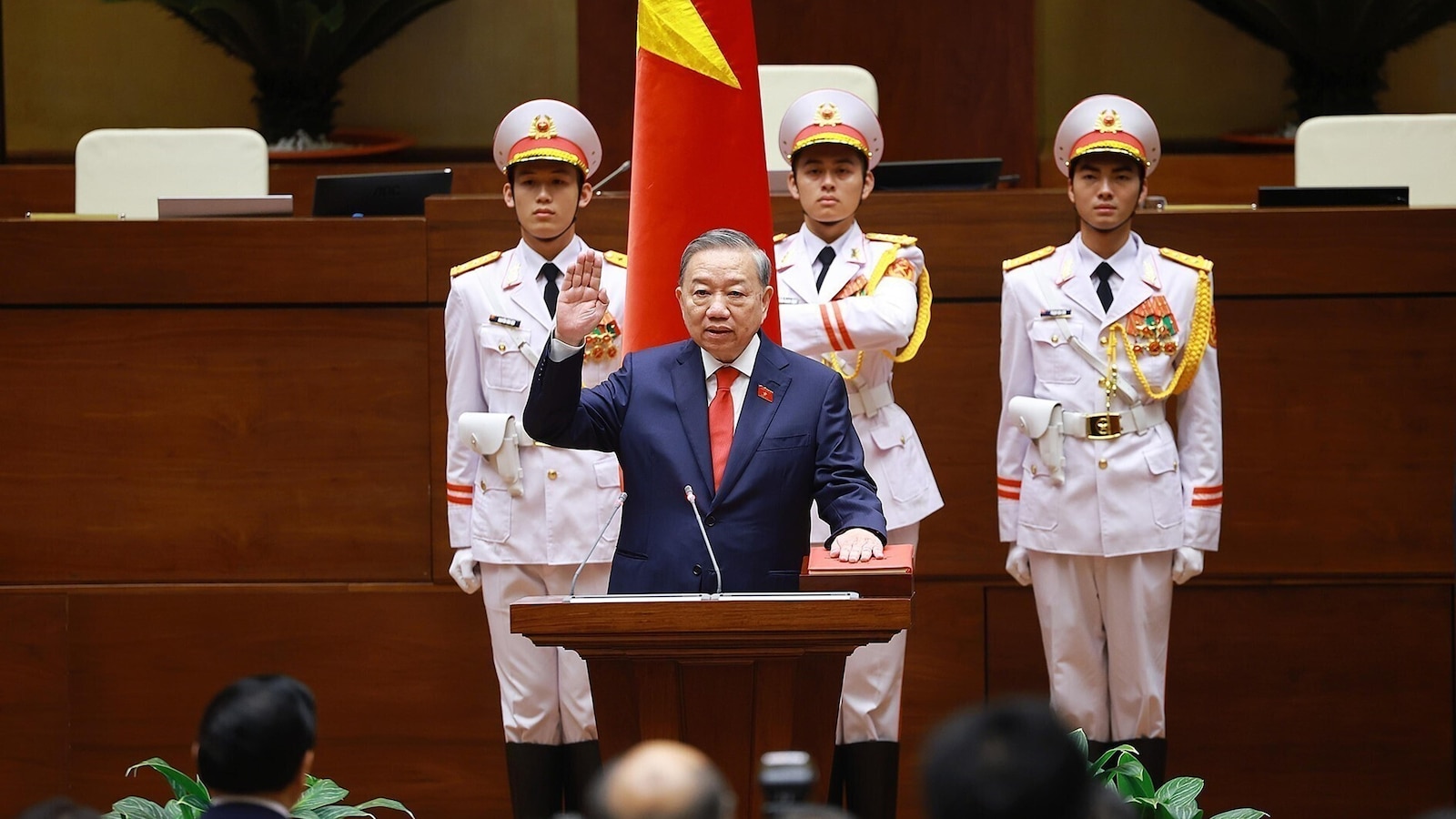
Vietnam Elects To Lam as President, Consolidating Power

Vietnam
The brief

Vietnam has elected Communist Party leader To Lam as president, marking a significant consolidation of power within the country's political structure.

Context

This election reflects a shift in Vietnam's governance, where the roles of party leadership and state presidency have been unified under a single individual.S2S3

Key points

  • To Lam's election was unanimous, indicating strong support within the Communist Party.S1
  • The move aligns Vietnam's political structure more closely with that of China.S1
  • Previously, the party leadership and state presidency were held by different individuals.S2S3
  • To Lam's control over both the party and state is seen as a consolidation of power.S1
  • The election is part of a broader trend of centralizing authority within the Vietnamese government.S2
  • To Lam's leadership may influence Vietnam's domestic and foreign policies moving forward.S1
  • The decision reflects the Communist Party's strategy to maintain stability and control.S2
  • This election could impact Vietnam's relations with other nations, particularly in Southeast Asia.S3

Why it matters

  • Consolidating power under one leader may streamline decision-making processes in Vietnam.S1
  • The shift could lead to more cohesive policies aligning with the Communist Party's goals.S2
  • It raises questions about the future of political pluralism in Vietnam.S3

What to watch

  • Monitor how To Lam's presidency affects Vietnam's economic policies and reforms.S2
  • Watch for changes in Vietnam's foreign relations, especially with China and the U.S.S1
  • Observe potential reactions from the public and political dissidents regarding this consolidation of power.S3
Timeline · newest first
6mos Deutsche Welle · 2 reports

Vietnam elects Communist Party leader To Lam as president

The election of To Lam as the state president marks a shift in Vietnam's power structure where party leadership and state presidency were held by different people.

Vietnam Elects To Lam as President, Consolidating Power

2 outlets 3 reports
The brief

Vietnam has elected Communist Party leader To Lam as president, marking a significant consolidation of power within the country's political structure.

Context

This election reflects a shift in Vietnam's governance, where the roles of party leadership and state presidency have been unified under a single individual.S2S3

Key points

  • To Lam's election was unanimous, indicating strong support within the Communist Party.S1
  • The move aligns Vietnam's political structure more closely with that of China.S1
  • Previously, the party leadership and state presidency were held by different individuals.S2S3
  • To Lam's control over both the party and state is seen as a consolidation of power.S1
  • The election is part of a broader trend of centralizing authority within the Vietnamese government.S2
  • To Lam's leadership may influence Vietnam's domestic and foreign policies moving forward.S1
  • The decision reflects the Communist Party's strategy to maintain stability and control.S2
  • This election could impact Vietnam's relations with other nations, particularly in Southeast Asia.S3

Why it matters

  • Consolidating power under one leader may streamline decision-making processes in Vietnam.S1
  • The shift could lead to more cohesive policies aligning with the Communist Party's goals.S2
  • It raises questions about the future of political pluralism in Vietnam.S3

What to watch

  • Monitor how To Lam's presidency affects Vietnam's economic policies and reforms.S2
  • Watch for changes in Vietnam's foreign relations, especially with China and the U.S.S1
  • Observe potential reactions from the public and political dissidents regarding this consolidation of power.S3
Timeline · newest first

Sources · 3 citations

S1 ABC News 1 report · EN
S2S3 Deutsche WelleLead 2 reports · EN