The brief
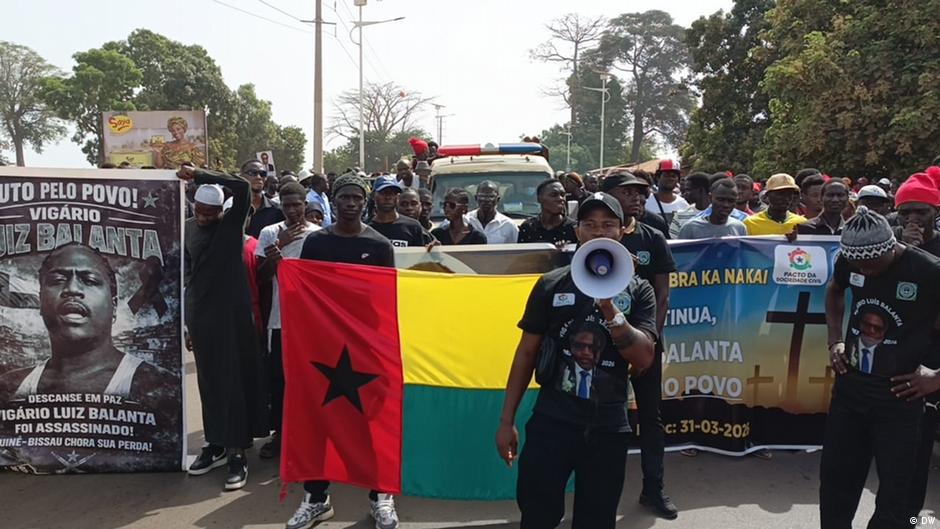
The killing of activist Vigario Luis Balanta has sparked widespread protests in Guinea-Bissau, raising alarms about potential repression under military rule.
Context
Balanta's death, marked by signs of extreme violence, has intensified scrutiny of the military government's actions and its impact on civil liberties.S1S2
Key points
- Vigario Luis Balanta was found dead, prompting public outcry.S1S2
- Protests erupted following the announcement of Balanta's death.S1S2
- Activists have accused the military rulers of repression.S1S2
- Concerns have been raised regarding media freedom in the country.S1S2
- The military government faces increasing pressure from civil society.S1S2
- Balanta's death is seen as a significant event in Guinea-Bissau's political climate.S1S2
- The situation has drawn international attention to Guinea-Bissau's governance.S1S2
- Calls for accountability and justice are growing among the populace.S1S2
Why it matters
- The incident highlights ongoing tensions between the military government and civil society.S1S2
- It raises questions about the future of political stability in Guinea-Bissau.S1S2
- The protests could lead to increased international scrutiny of human rights practices in the country.S1S2
What to watch
- Monitor developments in protests and government responses.S1S2
- Watch for potential international reactions or interventions regarding human rights.S1S2
- Observe the impact on media freedom and civil liberties in Guinea-Bissau.S1S2