The brief
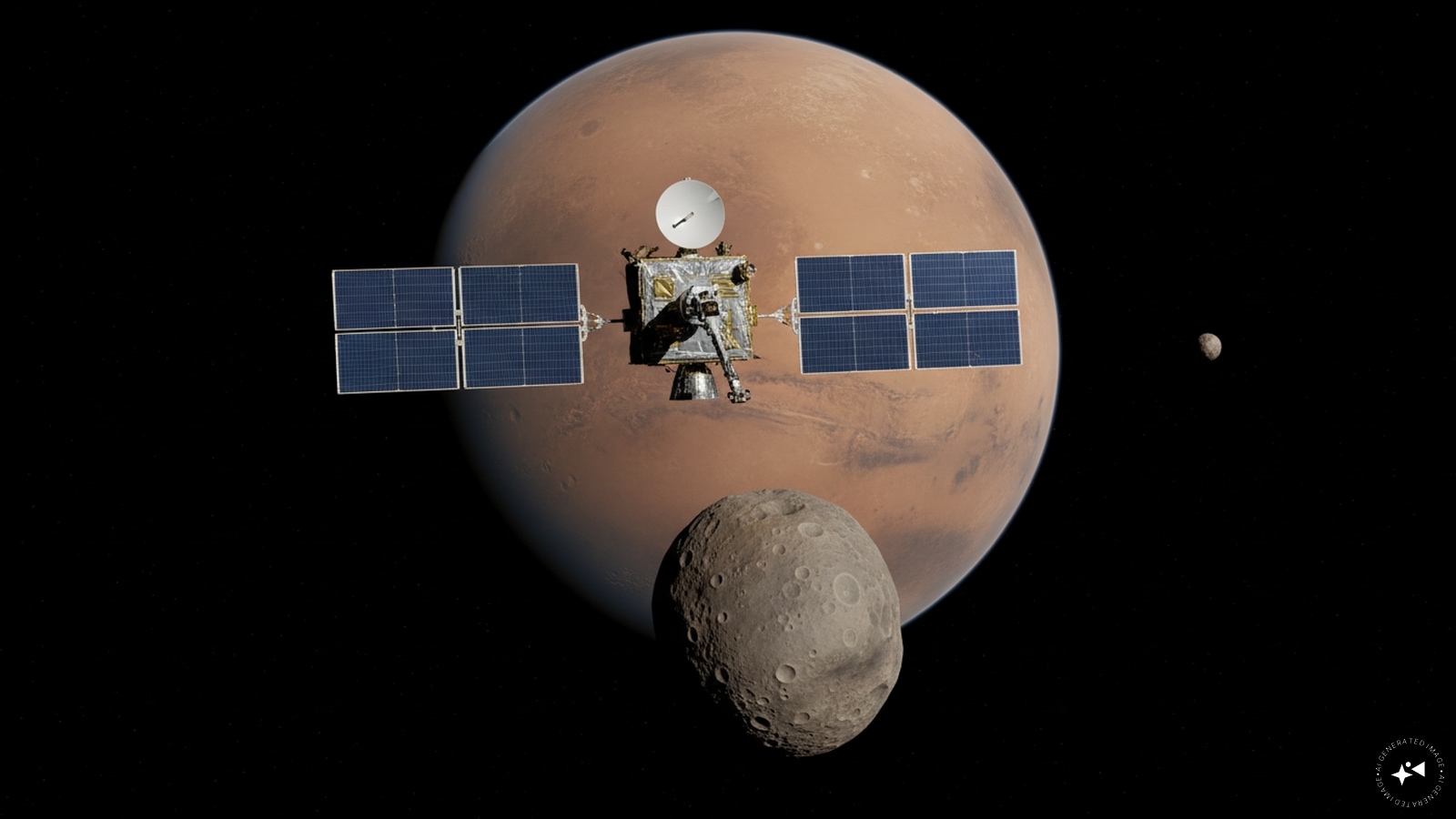
Japan has launched a spacecraft on a five-year mission to explore the Martian moons, Phobos and Deimos, with the goal of returning samples to Earth by 2031.
Context
This mission marks a significant step in planetary exploration, aiming to enhance our understanding of the Martian moons and their formation.S1S2
Key points
- The mission will deploy a rover and lander to investigate Phobos and Deimos.S1
- It is the first mission to bring back samples from Mars' moons.S2
- The project has a budget of $578 million.S2
- Samples collected will include dust, soil, and rocks.S2
- The mission aims to shed light on the origins of the moons and potentially the origins of life.S2
- This international collaboration highlights advancements in space exploration technology.S1
- The mission could provide insights into the history of the solar system.S1
Why it matters
- Understanding the Martian moons may reveal information about planetary formation.S1
- The mission could enhance knowledge about the potential for life beyond Earth.S2
What to watch
- Monitor the progress of the spacecraft as it travels to Mars.S1
- Watch for updates on the rover and lander's findings during the mission.S2