The brief
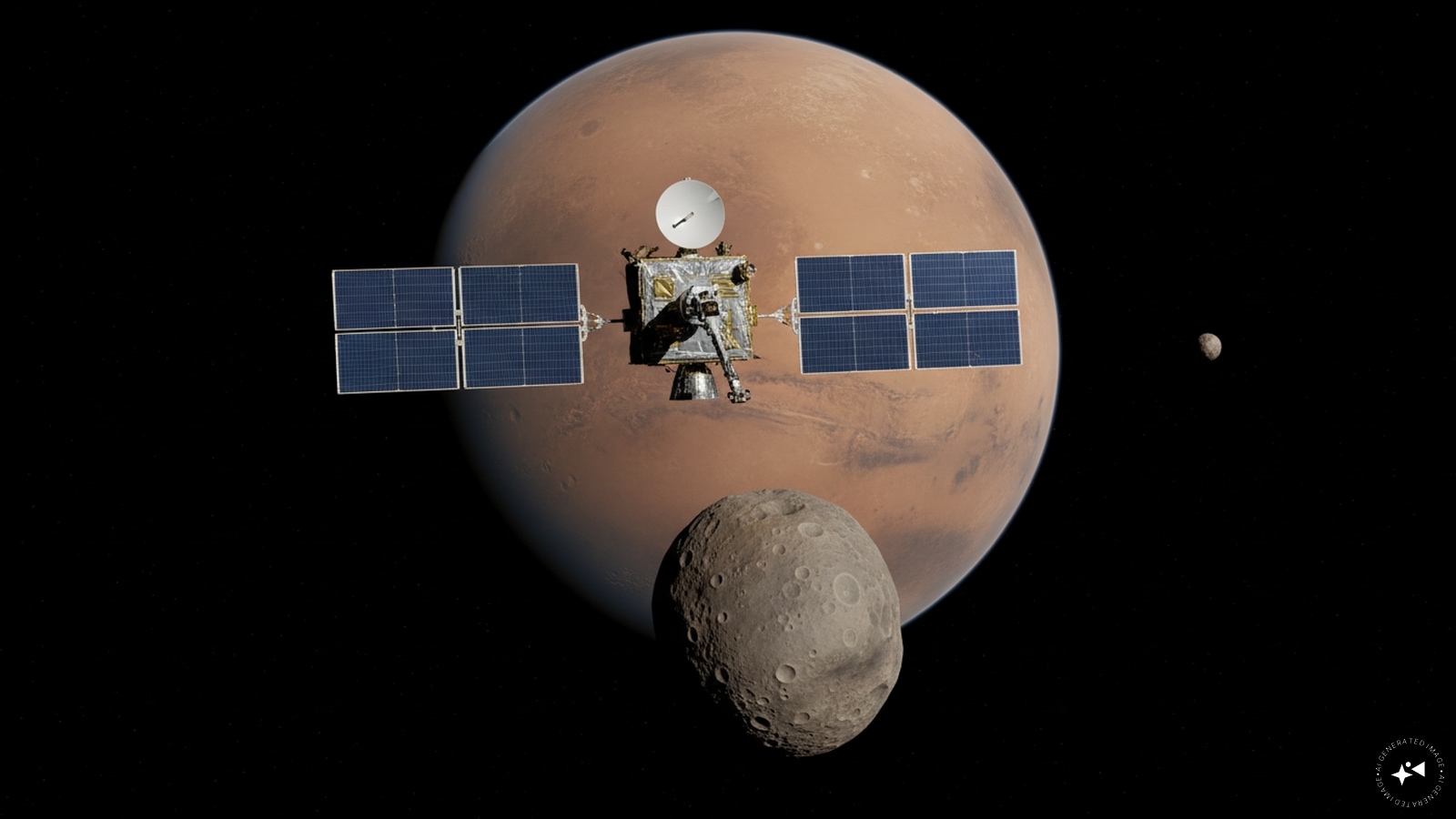
Japan has initiated an uncrewed space mission aimed at collecting samples from Phobos, one of Mars' moons, marking a significant milestone in space exploration.
Context
The Japan Aerospace Exploration Agency (JAXA) is leading this unprecedented mission, which aims to gather samples from Phobos and return them to Earth.S1S2
Key points
- The Martian Moons eXploration spacecraft was launched aboard an H3 rocket.S1
- The launch took place from the Tanegashima Space Center in Japan.S1
- This mission is the first attempt to collect samples from a moon of Mars.S2
- No previous missions have successfully returned samples from Mars or its moons.S2
- NASA has conducted multiple missions to Mars, but none have focused on its moons.S2
- The mission aims to enhance understanding of the Martian moons' composition and history.S1
- The samples collected could provide insights into the origins of Mars and its moons.S2
- The mission reflects Japan's growing capabilities in space exploration.S1
Why it matters
- This mission could pave the way for future exploration of Mars and its moons.S2
- Collecting samples from Phobos may help answer fundamental questions about the solar system's formation.S2
- It showcases Japan's advancements in space technology and exploration efforts.S1
What to watch
- Monitor the progress of the Martian Moons eXploration spacecraft as it travels to Phobos.S1
- Watch for updates on the mission's findings and sample collection timeline.S2
- Keep an eye on international reactions to Japan's achievements in space exploration.S1