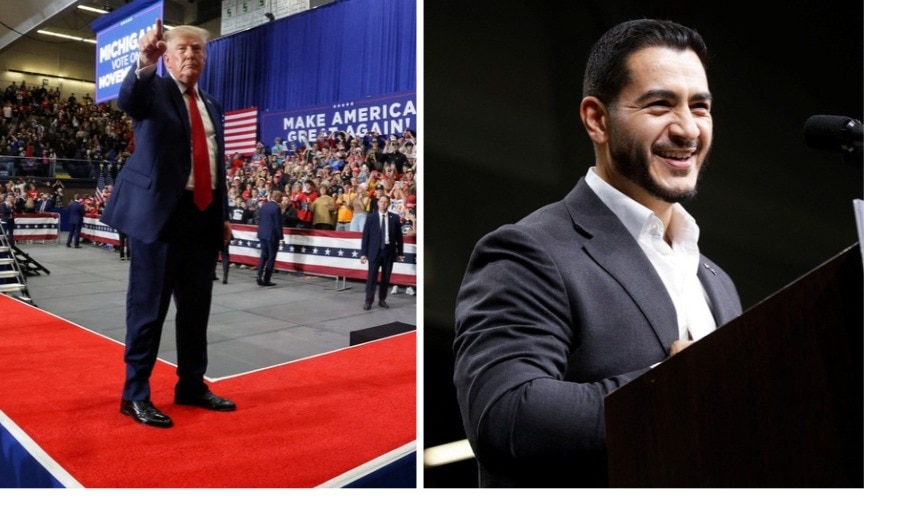
During a campaign rally in Michigan, President Donald Trump escalated his attacks on Senate candidate Abdul El-Sayed, focusing on El-Sayed's Muslim faith and Egyptian heritage. Trump portrayed El-Sayed as sympathetic to Islamic extremism, making these claims without providing any evidence to support his allegations. The rhetoric employed by Trump at the rally has raised concerns about the implications of targeting a candidate's religion and background in political discourse.
In his remarks, Trump went further by alleging that El-Sayed supports Sharia law, a claim that has been widely criticized as unfounded and inflammatory. The President also invoked the September 11 attacks, attempting to draw a connection between El-Sayed's background and terrorism, which many see as a tactic to stoke fear among voters. These statements have sparked backlash from various quarters, including civil rights groups who argue that such rhetoric is damaging and divisive.S2
The rally, which took place in a politically charged atmosphere, highlights the ongoing tension surrounding issues of race, religion, and identity in American politics. As the election approaches, candidates like El-Sayed are navigating a landscape where such attacks can influence voter perceptions significantly. El-Sayed's campaign has responded by emphasizing his commitment to inclusivity and the values of the community he represents, countering Trump's narrative with a message of unity.S1S2