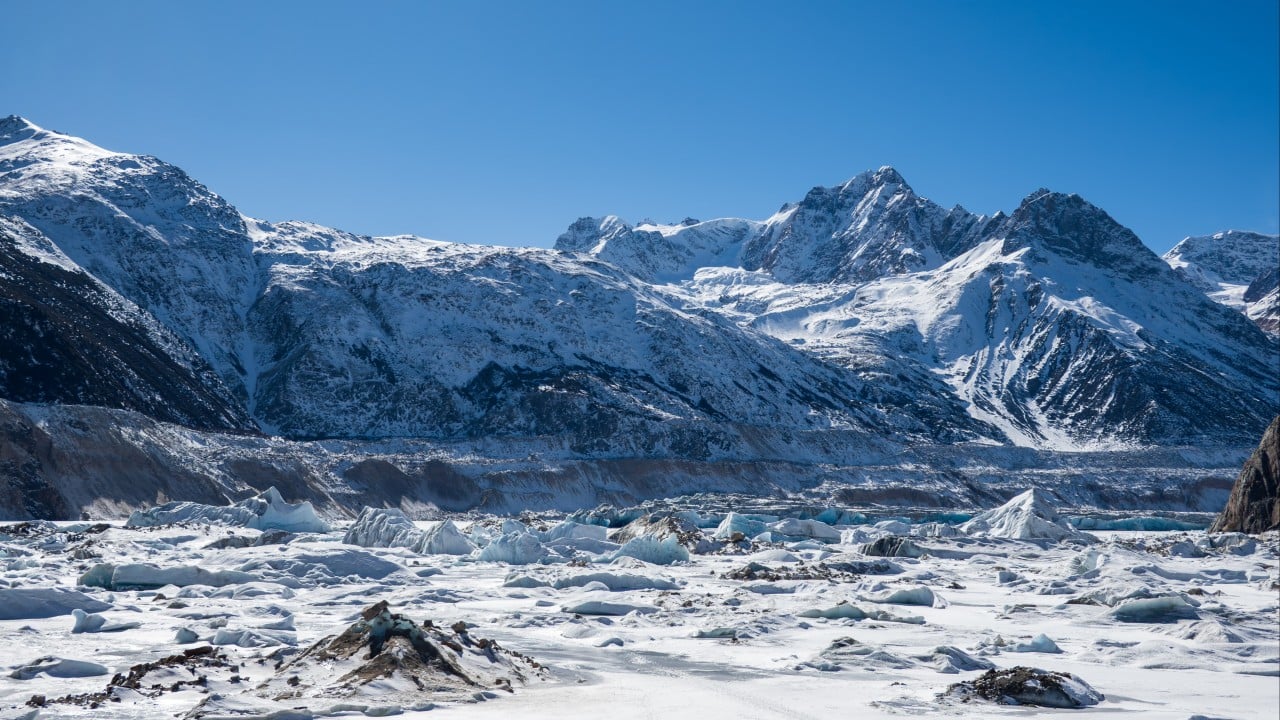
In a surprising finding, Chinese scientists have reported that certain areas of the Tibetan Plateau, which is experiencing warming at approximately twice the global average, are witnessing an increase in ground ice thickness. A team from Peking University has observed that shallow ground ice has unexpectedly thickened over the past two decades, impacting more than a third of the plateau’s permafrost, a phenomenon that challenges conventional understanding of climate change effects in the region.
The Tibetan Plateau is known for hosting the world’s largest expanse of alpine permafrost, and the research indicates that this thickening is largely driven by natural climate factors. This discovery raises questions about the complex interactions between climate change and permafrost dynamics, suggesting that not all effects of global warming are straightforward or uniform across different regions.S1S2
As the research continues, it may provide crucial insights into how climate change is reshaping the Tibetan environment and could have broader implications for understanding permafrost stability globally. The findings were published recently, highlighting the need for further investigation into the mechanisms behind this unexpected trend in ground ice behavior.S1S2