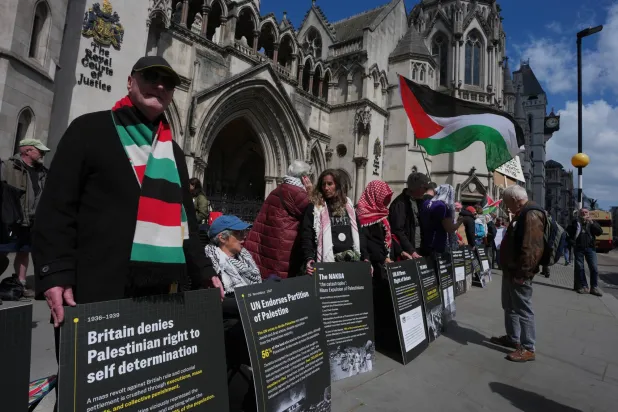
The UK Supreme Court heard a significant challenge on Wednesday regarding the government's decision to ban Palestine Action, a campaign group that has been labeled a terrorist organization. Co-founder of Palestine Action argued that the ban was disproportionate and undermined existing counter-terrorism laws. This legal battle comes after the British government proscribed the group last year following a series of high-profile incidents, including a break-in at the Royal Air Force's Brize Norton air base where two planes were damaged. The Home Office's classification of Palestine Action has sparked considerable controversy and debate over the balance between national security and civil liberties.
In conjunction with the court proceedings, over 4,000 individuals have reportedly been arrested for demonstrating support for Palestine Action, highlighting the public's strong reaction to the government's actions. The co-founder emphasized that the ban is unlawful and detrimental to free expression, raising questions about the implications of such a designation on activism and protest rights in the UK. The case has drawn attention not only for its legal ramifications but also for its potential impact on future anti-terrorism legislation and the rights of protestors.S2
As the Supreme Court deliberates on this matter, the outcome could set a precedent for how the UK government handles similar groups in the future. The decision is expected to resonate beyond the immediate context of Palestine Action, influencing broader discussions about the intersection of counter-terrorism measures and civil rights in the UK. The court's ruling will be closely watched by activists and legal experts alike, as it could redefine the limits of lawful protest and government authority in the name of national security.S1S2