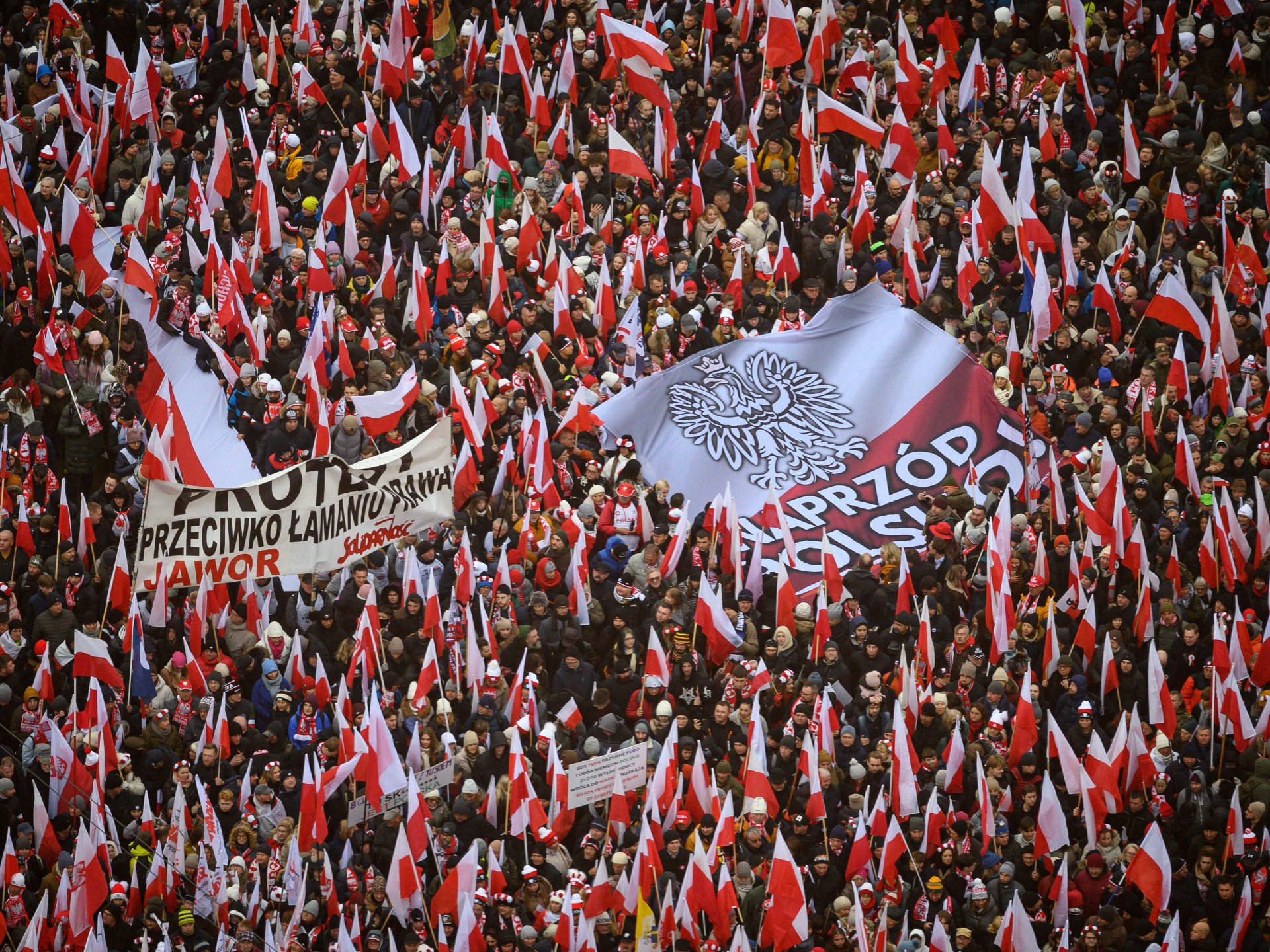
On November 11, tens of thousands of nationalist sympathisers gathered in Warsaw for Poland's annual Independence Day march, a significant event that commemorates the end of over a century of partition by Russia, Prussia, and Austria in 1918. This year's march comes in the wake of a tragic mass shooting in Krakow that left six people dead and more than a dozen injured. The gathering, which has historically been a flashpoint for tensions between right-wing groups and the centrist government, saw participants carrying Polish flags and chanting slogans under the motto "A Pole is the host in Poland," a phrase that supporters claim reflects national pride, despite criticism of the event's association with anti-Semitic and anti-immigration sentiments. Police were heavily deployed to ensure security during the demonstration, which organizers anticipated would draw a record turnout, including foreign nationalists from groups such as Spain's Revuelta and Hungary's Mi Hazank party.
Poland's conservative-nationalist President Karol Nawrocki was present at the march, having previously participated in similar events both in his official role and as a private citizen. His remarks suggested a critique of the current political elites, stating, "Poland does not exist today so that the political elites can grant themselves the right to manage citizens … against the will of the nation." This statement comes amid heightened political divisions in the country, particularly following the shooting incident that authorities believe may have been motivated by far-right ideology. Polish Prime Minister Donald Tusk had called for restraint ahead of the march, emphasizing the need for unity in the face of differing political views.S1
The shooting in Krakow, which occurred on November 7, involved a 24-year-old gunman who was reported to have an interest in neo-Nazi figures, including Anders Behring Breivik, who infamously killed 77 people in Norway in 2011. After opening fire from his car, the gunman was shot by police and later died in a hospital. Justice Minister Waldemar Zurek confirmed the shooter's motivations were being investigated, highlighting the potential influence of extremist ideologies on the tragic event. This context has added an additional layer of scrutiny to the Independence Day march, as the country grapples with the implications of far-right sentiments in its social and political landscape.S1