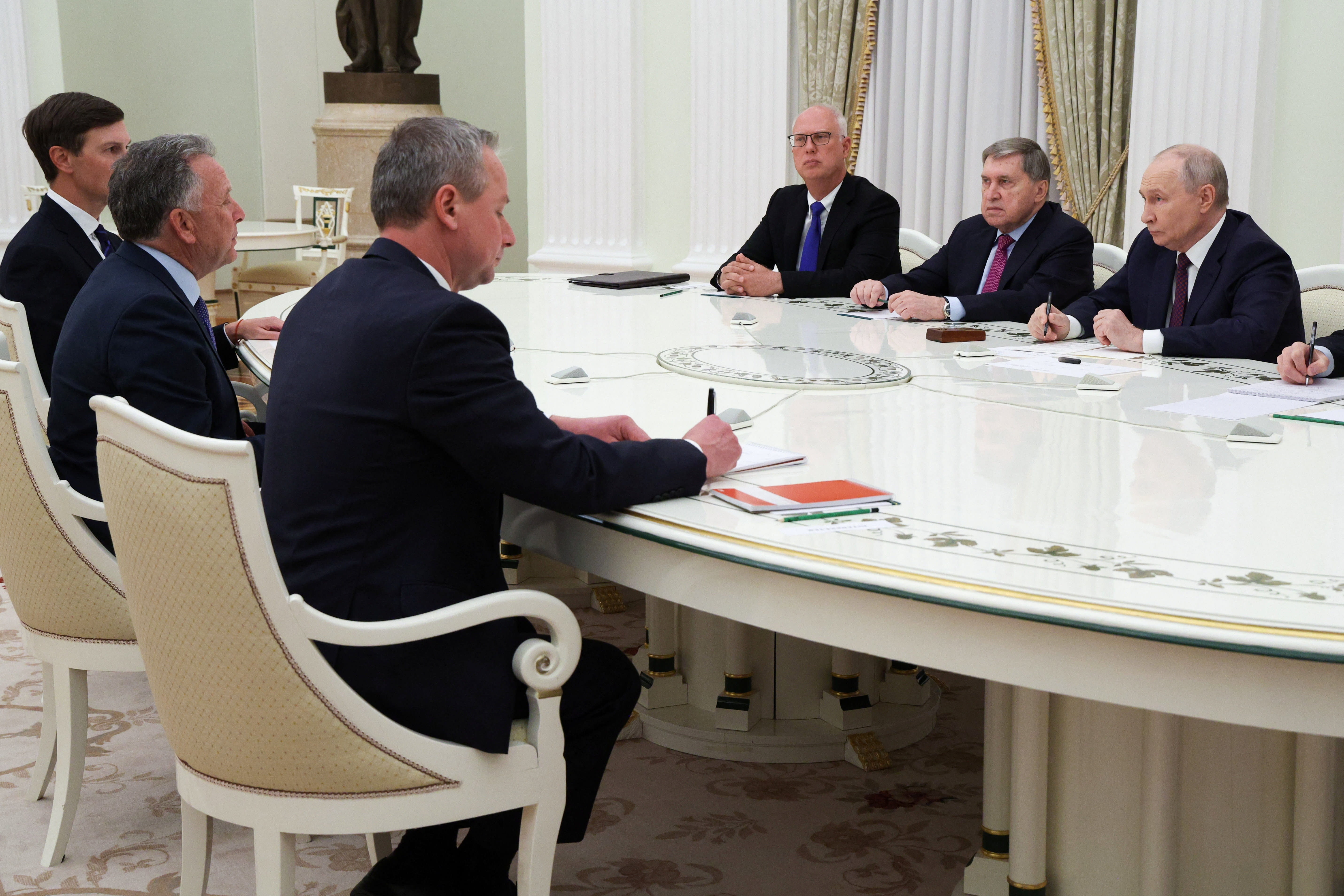
Russian President Vladimir Putin has said he wishes for "eternal peace" in Ukraine, even as he continues to reject a comprehensive ceasefire. The Kremlin, after talks with US envoys Steve Witkoff and Jared Kushner, set out its condition for peace as "a new, long-term architecture of indivisible security and peace", which in practice means reshaping Europe's security order in ways that benefit Russia.
Moscow has revived its December 2021 proposal of "draft treaties" with the US and Nato. Those drafts would have curbed Nato's eastward enlargement, including guarantees that Ukraine and Georgia would never join, and would have rolled back Nato military infrastructure in central and eastern European countries that joined after the Soviet Union's dissolution. Western leaders rejected the demands as an unacceptable ultimatum, and Russia launched its full-scale invasion of Ukraine two months later. Presidential foreign policy aide Yuri Ushakov has suggested Moscow will add "certain new considerations" to its demands in response to Western efforts to inflict a strategic defeat on Russia.S1
Commentators in Russia have framed the renewed focus on European security as a diplomatic win, with one newspaper arguing that the West had been forced to think about security after dismissing Russia's proposals. EU foreign policy chief Kaja Kallas has called Moscow's demands for a new European security architecture a "trap" designed to divert attention from a ceasefire, insisting that a ceasefire should come first, followed by a peace agreement. Europe itself is not at the table, as the Abu Dhabi talks involved Ukraine, Russia and the US, and Moscow has criticised European leaders for their military support for Kyiv.S1
Politico's analysis of the Abu Dhabi talks argues that Donald Trump's envoys gave Putin what he wanted most, namely room to stall. The sequencing of talks, with European security placed on the agenda before any ceasefire, is central to that reading.S2