SpaceX is preparing to launch its Starship to orbit in its boldest test yet, a 22-hour flight that aims to recapture the entire rocket in a move meant to accelerate moon and Mars travel. If all goes well, Elon Musk's company will perform a double catch: the massive booster returning to its Texas pad six minutes after blasting off, and the bullet-shaped spacecraft steering there the next day. Both will be plucked from midair by mechanical arms secured to the launch tower. The Federal Aviation Administration provided final approval a few hours ahead of the planned late afternoon liftoff.
If the effort succeeds, it will be the first time every single piece of a rocket launched into orbit is retrieved for recycling. Musk sees full reusability as the path to the fast and consistent launch rates needed for building moon bases and sending people to Mars. SpaceX's Kiko Dontchev, vice president of launch, said at a NASA tech summit last week at Florida's Kennedy Space Center: "It's hard to describe how I'm going to feel when we pull this off. It's so incredibly exciting. It's such a feat of engineering."S1S2
Once in orbit, Starship will deliver 26 of the company's most advanced Starlink satellites. The plan is for the rocket to complete 15 laps around the world at an altitude of around 275 kilometres, roughly 170 miles, before heading back to the launch site for Saturday's grand finale. SpaceX has already made three booster grabs at its sprawling Starbase near the US-Mexico border. This flight will be the first attempt to capture the upgraded version, which stretches 72 metres, the production model for moon and Mars travel, and the first attempt to catch the 52-metre spacecraft. Together they form the world's biggest and most powerful rocket, 124 metres tall.S1S2
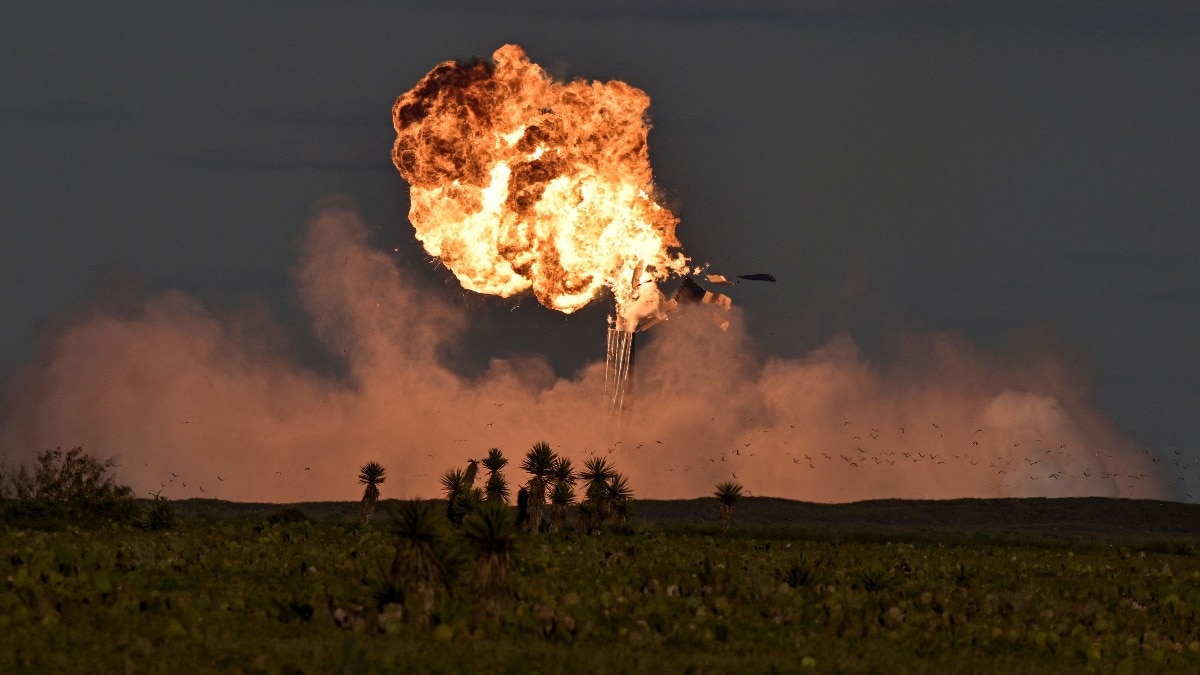
The spacecraft portions of the 14 previous Starships ended up in the ocean, either by design at flight's end or by accident in a stream of flaming wreckage. The first full-scale test flight in 2023 saw multiple engines fail to ignite and the tumbling rocket's self-destruct system activated. The last test, in September, was the first to reach orbit, but SpaceX did not try to recover any of the rocket stages.S1S2
SpaceX plans to start launching Starships from Florida within a few months and from Louisiana in a few years. Dontchev said scaled-up infrastructure combined with full reusability is "how you go from zero launches to 10 to 100 to 1,000 to 10,000 to 100,000." Smaller Falcon rockets will continue to fly from Cape Canaveral, carrying astronauts to the International Space Station for NASA and Starlink satellites from California, and Musk wants Starships to eventually replace them. NASA is paying SpaceX billions of dollars to land Artemis astronauts on the moon with Starships.S1S2