SpaceX launched Starship on its boldest test yet, a flight that reached orbit on Friday and aimed to become the first to recover every piece of a launched rocket, with the massive booster returning to its Texas pad six minutes after liftoff and the spacecraft steering back the following day, both to be caught midair by mechanical arms on the launch tower. The company's goal, in the account of its vice president of launch Kiko Dontchev, is to make full reusability the path to rapid launch rates, which Elon Musk sees as essential for building moon bases and sending people to Mars.
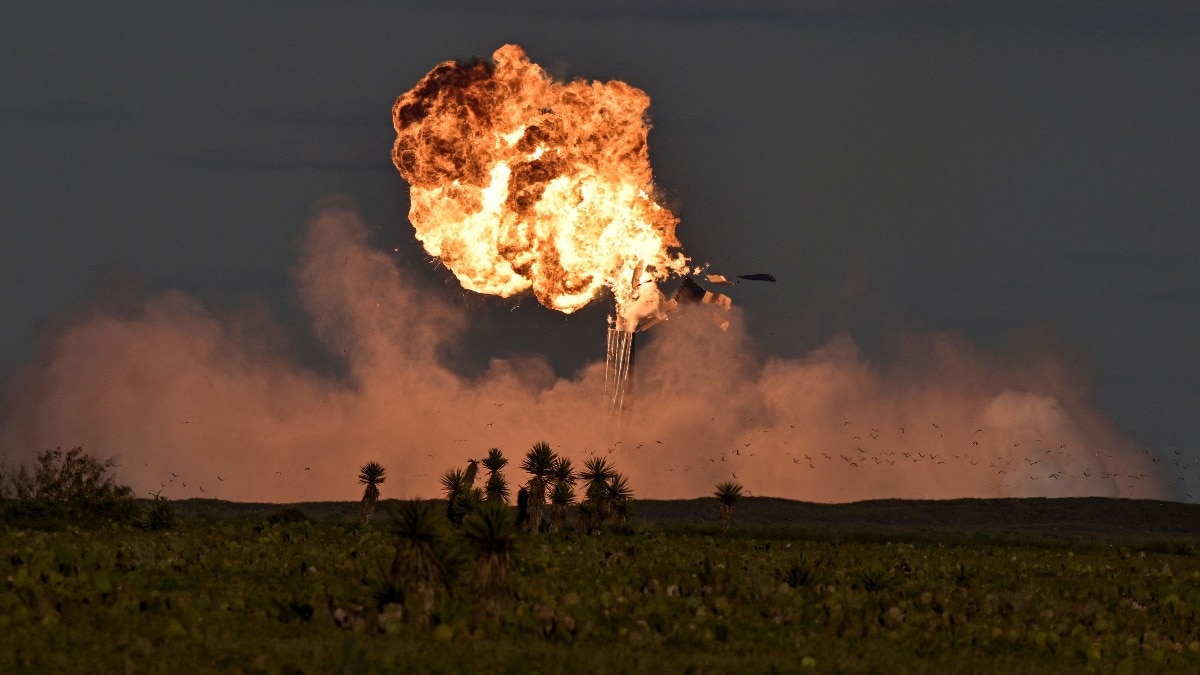
The upper stage performed as planned: shortly after reaching orbit, Starship deployed 26 of SpaceX's most advanced Starlink satellites, and it was scheduled to complete 15 laps around the world at an altitude of around 275 kilometres before returning to the launch site for Saturday's attempt. The booster, however, did not follow the script. The Super Heavy booster malfunctioned, controllers aborted its return, and it exploded after splashing down in the Gulf of Mexico, derailing the historic tower catch of both stages. No explanation was given for what went wrong, and launch commentator Kate Tice said the outcome was in line with the company's rigorous safety checks to protect the pad.S2
The attempt was significant because it was to be the first capture of the upgraded booster, which stretches 72 metres and is the production model for moon and Mars expeditions, and the first attempt to catch the 52-metre spacecraft. Together the two stages form a rocket about 124 metres tall, the world's biggest and most powerful. SpaceX had already made three booster grabs at its Starbase facility near the US-Mexico border, which made Friday's failure all the more surprising. Earlier Starships had mostly ended in the ocean, and the last test in September was the first to reach orbit without any attempt to recover stages.S1S2
SpaceX plans to start launching Starships from Florida within a few months and from Louisiana in a few years, with Dontchev arguing that scaled-up infrastructure combined with full reusability is how launch numbers grow from tens to many thousands. Smaller Falcon rockets will continue flying from Cape Canaveral, carrying astronauts to the International Space Station for NASA and Starlink satellites from California, and Musk wants Starship eventually to replace them. NASA is also paying SpaceX billions of dollars to land Artemis astronauts on the moon. Whether the spacecraft catch on Saturday will still go ahead after the booster loss was not confirmed in the reports.S1S2