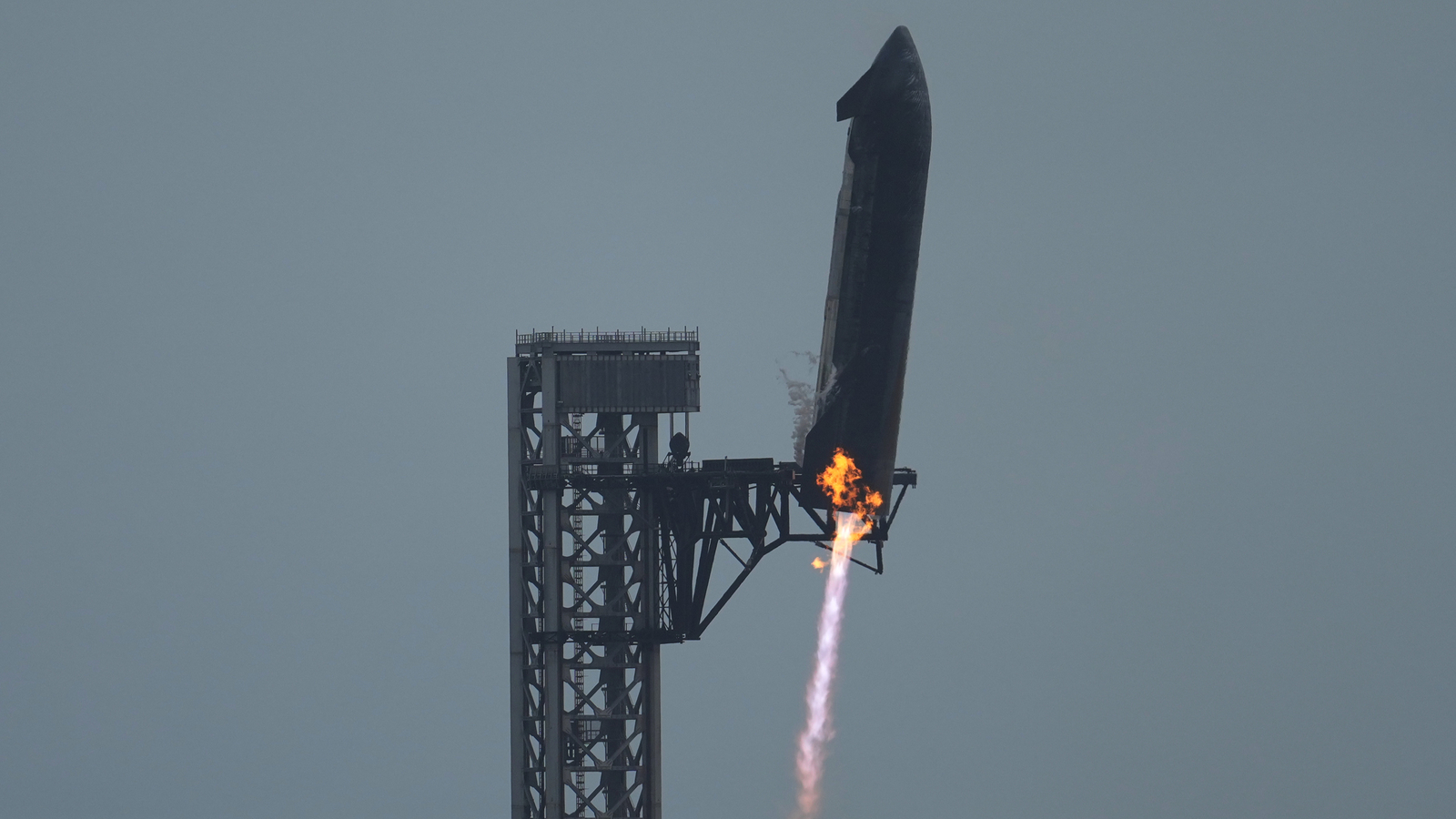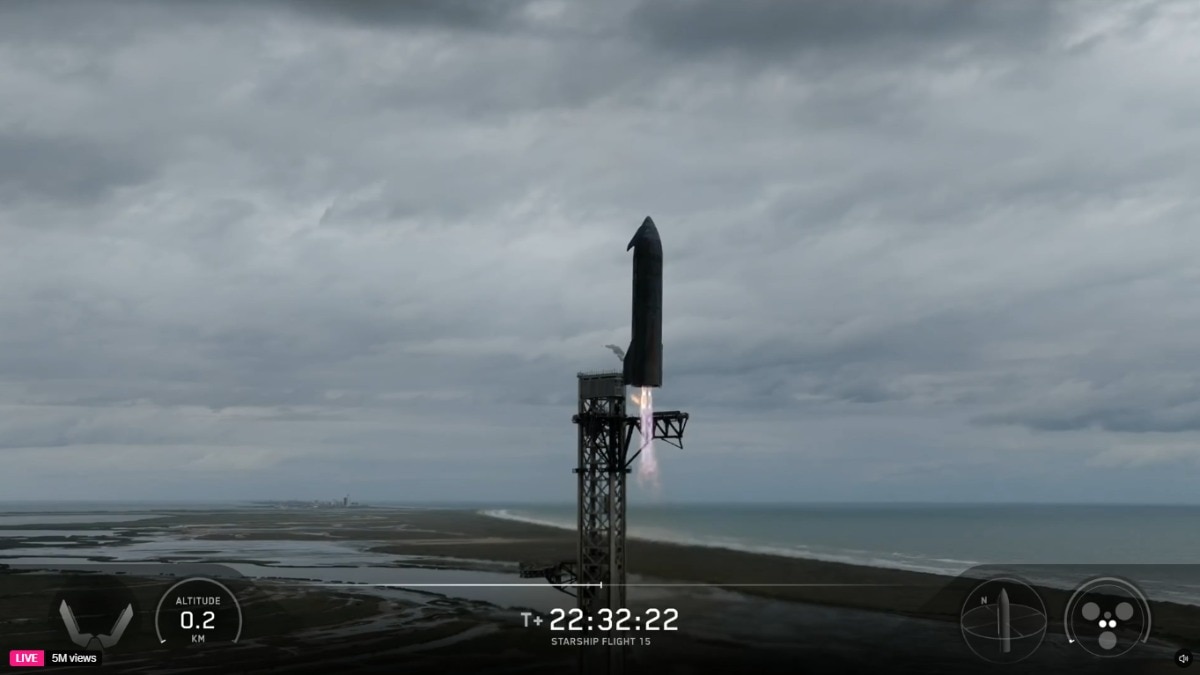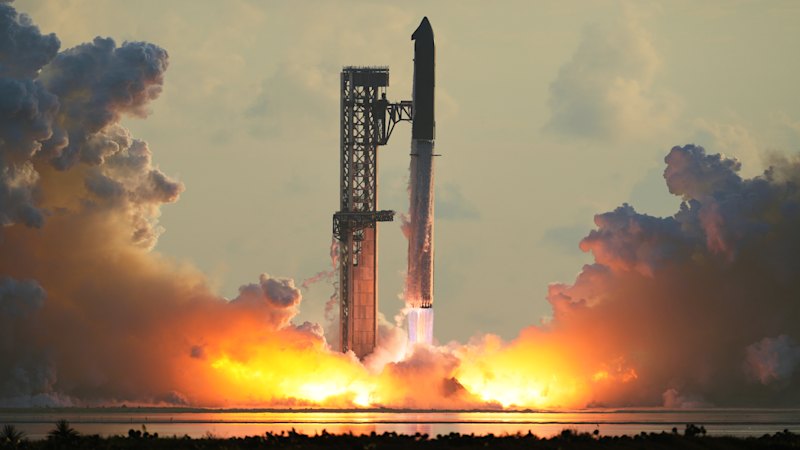
SpaceX's Starship spacecraft returned to Earth on Saturday (US time) when giant mechanical arms caught it midair above Launch Pad 2 in Texas, the point where its journey had begun 22 hours earlier. The spaceship descended slowly over Starbase out of a cloudy sky and slipped between the so-called "chopstick arms", the first-ever capture of a Starship flying back from space. Elon Musk congratulated his "incredible team" soon afterwards.
The catch was a partial success. The first-stage booster exploded shortly after liftoff from Texas on Friday, so the company fell short of its hoped-for double catch. SpaceX said the booster's engines stopped firing too soon on the way back down, and its guidance system sensed it was out of position and triggered a watery detour and self-destruction. Engineers are still investigating the cause, although the company had already made three earlier booster catches, which validated the technique.S3
The upper-stage spacecraft separated cleanly from its booster and reached orbit, releasing 26 advanced Starlink satellites. It completed 14 laps around the Earth, covering 265km (165 miles), well beyond the one to two laps of the previous mission. SpaceX reported that everything on the spacecraft, including its vital heat shield, appeared to work well. SpaceX said the catch demonstrates Starship's full reusability, which it considers crucial for rapid, low-cost recycling.S3
The flight was SpaceX's 15th full-scale Starship flight since 2023 and only its second trip to orbit. NASA, which is paying billions of dollars for Starship to land Artemis astronauts on the Moon later this decade, welcomed the achievement, with Administrator Jared Isaacman calling it "almost magic" on X. The 124-metre (407ft) rocket is the world's largest and most powerful, intended for Moon and Mars travel.S3
SpaceX expects to begin launching Starships from Florida's Kennedy Space Center within the next few months.S3