Live story United States Science Starlink

SpaceX catches Starship upper stage in historic first

United States
The brief

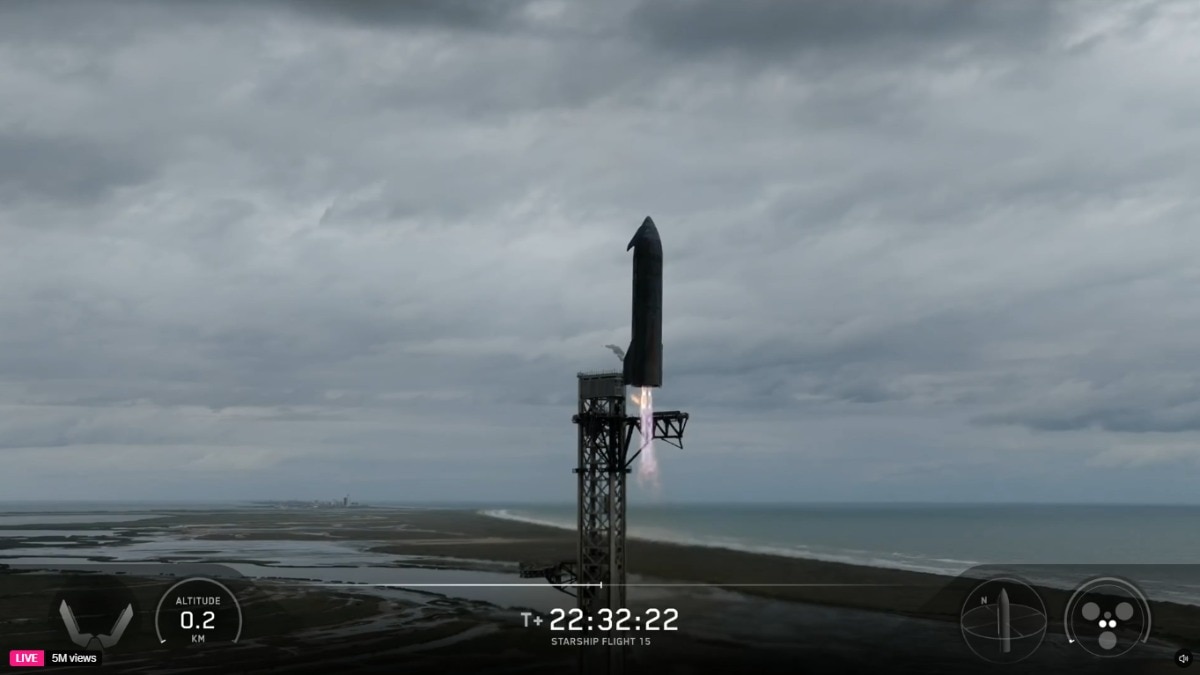
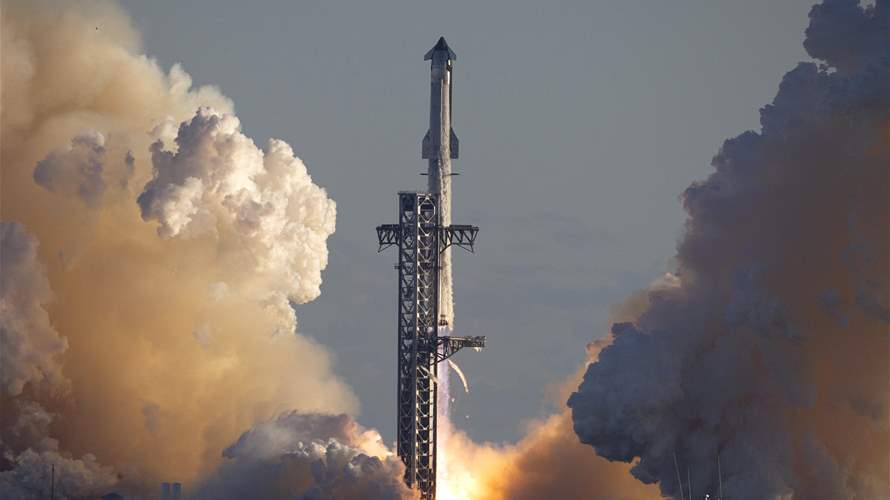
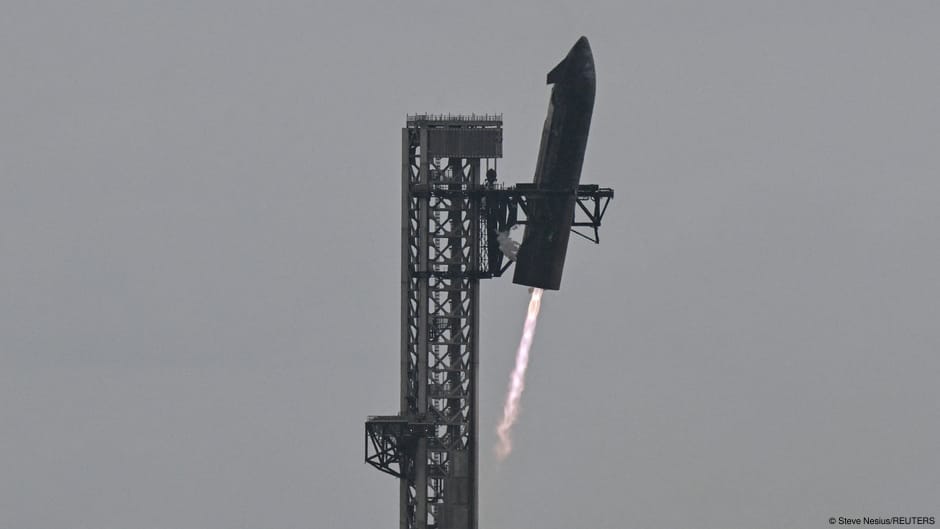
SpaceX successfully caught the upper stage, or spacecraft, of its massive Starship rocket on Saturday after it returned from orbit, a milestone the company had long sought. The catch was made by the mechanical "chopsticks" arms attached to the launch tower at SpaceX's facility in Starbase, Texas, nicknamed Mechazilla. The company has previously caught and reflown Super Heavy boosters, but this was the first time it had attempted to catch the Ship itself.

The milestone came during Test Flight 15, the most ambitious Starship test yet, which aimed for the first time to catch both the booster and the upper stage. The first phase went less smoothly: the booster experienced a problem on its way back, aborted its catch attempt and was diverted to an offshore splashdown in the Gulf of Mexico, where it exploded before reaching the water. The upper stage continued into orbit and flew around the Earth 14 times, roughly 22 hours after launch, before returning to land on the tower.S1S2

The flight also had effects beyond SpaceX. The Hawaii Department of Transportation temporarily paused some West Coast flights on Friday because of debris risk, and the FAA issued a rare nationwide ground stop due to telecommunications system failures. Both orders have since been lifted.S1

The test carried commercial and strategic weight. During the flight, SpaceX released another 26 of its newest Starlink v3 satellites into orbit, adding to a constellation that already included over 11,000 satellites in low Earth orbit. One Starship can carry up to 60 Starlink v3 satellites, and the company says a reliable, fully reusable rocket is critical to expanding Starlink, currently its profit center. Starship is also expected to carry astronauts and cargo between lunar orbit and the Moon's surface for NASA, and Elon Musk has described a longer-term aim of using it to colonize Mars.S1
Timeline · newest first
1h Cnbc

SpaceX catches upper stage of Starship rocket in historic first

After a booster explosion on Friday, SpaceX successfully caught the upper stage, or spacecraft, portion of its massive Starship rocket from orbit on Saturday — a triumphant milesto…

1h Theverge

Watch SpaceX successfully execute the first ‘chopstick’ catch of Starship

After aborting a planned catch of Starship Flight 15's booster, SpaceX successfully captured Starship with its "Mechazilla" launch and catch tower for the first time. The company h…

2h Engadget

Watch SpaceX attempt to catch the Starship upper stage for the first time

While the company has pulled off this trick a few times with Super Heavy boosters, it'll be a first for the Ship.

Developing

SpaceX catches Starship upper stage in historic first

3 outlets 3 reports
The brief

SpaceX successfully caught the upper stage, or spacecraft, of its massive Starship rocket on Saturday after it returned from orbit, a milestone the company had long sought. The catch was made by the mechanical "chopsticks" arms attached to the launch tower at SpaceX's facility in Starbase, Texas, nicknamed Mechazilla. The company has previously caught and reflown Super Heavy boosters, but this was the first time it had attempted to catch the Ship itself.

The milestone came during Test Flight 15, the most ambitious Starship test yet, which aimed for the first time to catch both the booster and the upper stage. The first phase went less smoothly: the booster experienced a problem on its way back, aborted its catch attempt and was diverted to an offshore splashdown in the Gulf of Mexico, where it exploded before reaching the water. The upper stage continued into orbit and flew around the Earth 14 times, roughly 22 hours after launch, before returning to land on the tower.S1S2

The flight also had effects beyond SpaceX. The Hawaii Department of Transportation temporarily paused some West Coast flights on Friday because of debris risk, and the FAA issued a rare nationwide ground stop due to telecommunications system failures. Both orders have since been lifted.S1

The test carried commercial and strategic weight. During the flight, SpaceX released another 26 of its newest Starlink v3 satellites into orbit, adding to a constellation that already included over 11,000 satellites in low Earth orbit. One Starship can carry up to 60 Starlink v3 satellites, and the company says a reliable, fully reusable rocket is critical to expanding Starlink, currently its profit center. Starship is also expected to carry astronauts and cargo between lunar orbit and the Moon's surface for NASA, and Elon Musk has described a longer-term aim of using it to colonize Mars.S1

Timeline · newest first

Sources · 2 citations

S1 Cnbc 1 report · EN
S2 EngadgetLead 1 report · EN
Theverge 1 report · EN