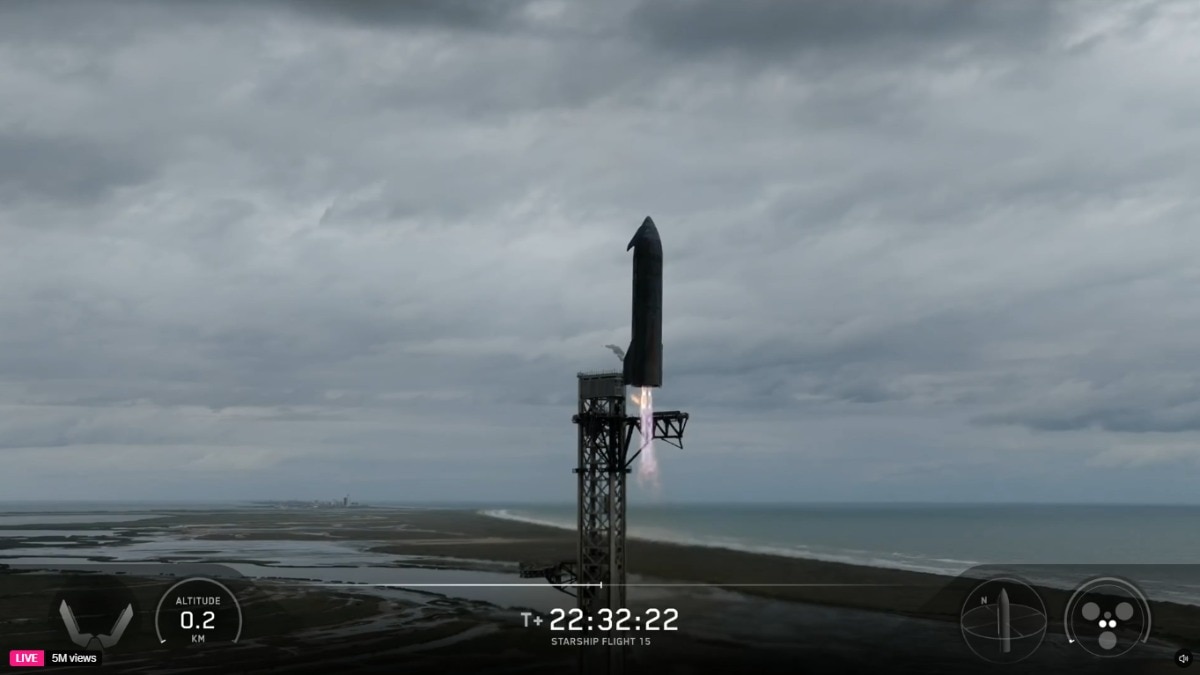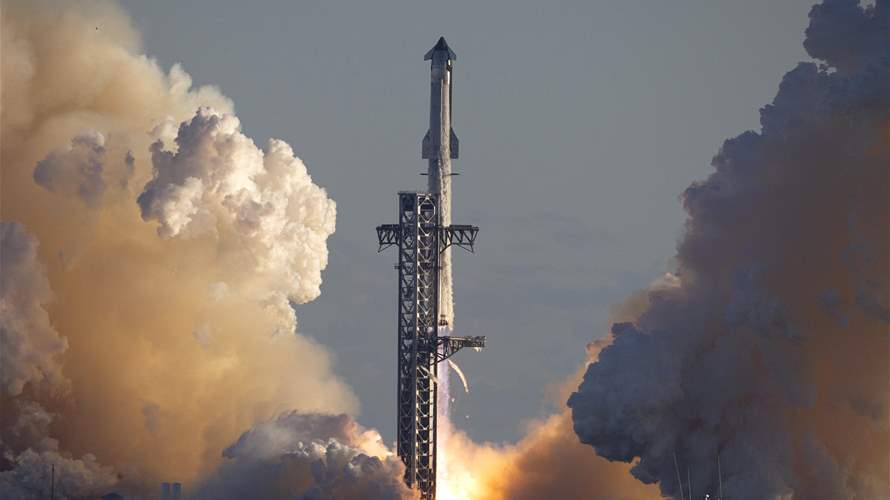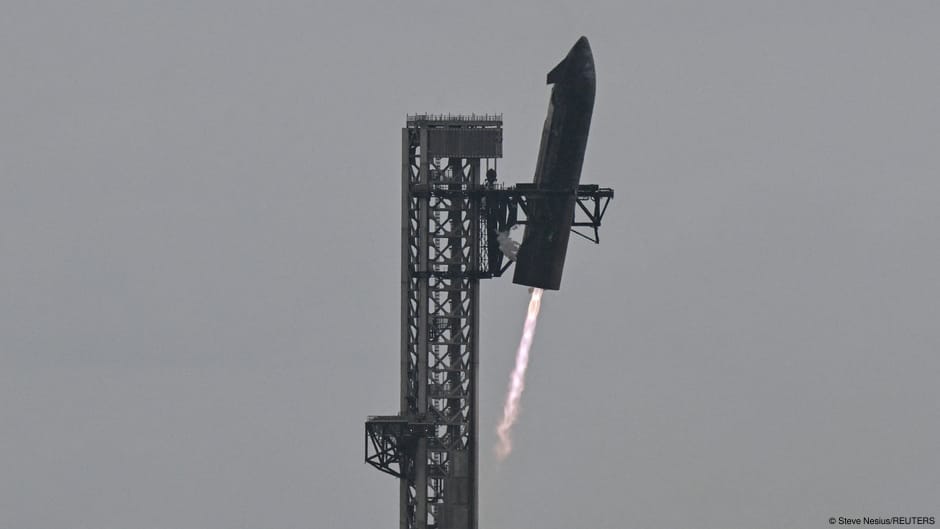
SpaceX's Starship spacecraft returned from its longest-yet flight in orbit on Saturday, descending to the tower it was launched from a day earlier and slipping smoothly between the mechanical "chopstick arms" above Launch Pad 2 in Texas. It was the first key recovery of the rocket system's centrepiece vessel in the company's decade-long effort to develop a fully reusable rocket. SpaceX commentator Dan Huot shouted, "Can you believe it? Look at her! Baby, she's back!"
The upper stage orbited Earth 14 times over more than 22 hours and deployed 26 Starlink satellites before returning. The flight was the 15th test of the world's biggest and most powerful rocket system. SpaceX had also intended to capture the Super Heavy booster that launched the Starship, but its lower stage recovery was aborted and the booster exploded over the Gulf of Mexico shortly after launch on Friday.S1S2
The milestone matters for the multibillion-dollar Starship programme, which billionaire Elon Musk sees as central to SpaceX's satellite business and to his ambitions of putting humans on the moon and eventually Mars. NASA is paying billions of dollars for Starship to land Artemis astronauts on the moon later this decade and help build a permanent lunar base. NASA Administrator Jared Isaacman wrote on X that it was "almost magic."S1
As for the booster, SpaceX's Kate Tice said its engines stopped firing too soon. The booster's guidance system sensed it was not in the correct position and initiated its self-destruction protocol. Engineers are still investigating the cause.S1