Story Kenya Climate

Kenyan farmers adopt low-cost techniques to curb erosion ahead of heavier rains

Kenya
The brief

Farmers in parts of Kenya are turning to simple soil conservation methods to protect their crops and land before the October–December short-rains season, which is forecast to be heavier than usual. In Limuru, Kiambu County, farmer Elizabeth Itotia is among those taking precautions after heavy rains two years ago washed away much of the nutrient-rich topsoil on her 5-acre (2-hectare) farm, which sits on a slope vulnerable to erosion.

The 2024 rains destroyed several crops, including kale, spinach, cabbage, potatoes and native vegetables, leaving Itotia with estimated losses of 200,000 Kenyan shillings ($1,500). More than 230 people were killed in the floods. To restore the land, she and her family had to bring in topsoil from other farms, an effort that required extra labor and money. The episode illustrates how recovery from extreme weather can take months or even years for farmers who depend on the rainy seasons.S1

The Kenya Meteorological Department has forecast El Niño conditions for the short-rains season, which runs from mid-October to December. El Niño, linked to warmer-than-average sea surface temperatures in the central and eastern tropical Pacific, can bring heavier-than-usual rain to East Africa. The timing is also difficult for maize, the country's staple crop, which is harvested as the short rains begin; heavy rain could force early harvests or leave corn insufficiently dried, raising the risk of aflatoxin contamination.S1

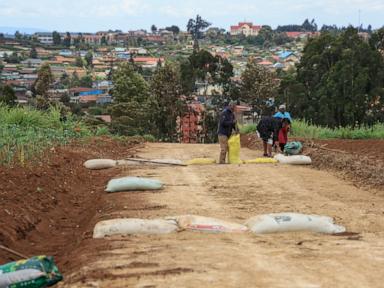
Itotia learned about the approach on social media and adopted a method of filling sacks with sand and placing them in trenches to slow runoff. She has also planted Napier grass and bamboo, whose roots help bind soil, in vulnerable areas; the Napier grass additionally provides fodder for her livestock. Her neighbour Esther Njoki has taken a similar approach with soil-filled sacks. "We have never applied this technique before, even though the soil in this area is very light and easily swept away," Njoki said, adding that topsoil loss leaves the land muddy and makes cultivation and movement across the farm difficult.S1

Samuel Munyiri, an agronomist at Osho Chemical Industries, said working the soil during the rainy season makes it more susceptible to washing away, and that the sandbags farmers are using are effective at reducing soil loss through runoff, particularly on sloped ground.S1

Timeline · newest first
4h ABC News

Kenyan farmers adopt new techniques to curb erosion during heavy rains

Farmers in parts of Kenya are turning to simple soil conservation techniques to protect their crops and farmland ahead of the October-December rainy season that is projected to be…

4h Internewscast

Kenyan Farmers Adopt New Techniques to Curb Heavy-Rain Erosion

Internewscast Internewscast LIMURU – After heavy rains stripped away much of her farm’s topsoil… This Post: Kenyan Farmers Adopt New Techniques to Curb Heavy-Rain Erosion first app…

Kenyan farmers adopt low-cost techniques to curb erosion ahead of heavier rains

2 outlets 2 reports
The brief

Farmers in parts of Kenya are turning to simple soil conservation methods to protect their crops and land before the October–December short-rains season, which is forecast to be heavier than usual. In Limuru, Kiambu County, farmer Elizabeth Itotia is among those taking precautions after heavy rains two years ago washed away much of the nutrient-rich topsoil on her 5-acre (2-hectare) farm, which sits on a slope vulnerable to erosion.

The 2024 rains destroyed several crops, including kale, spinach, cabbage, potatoes and native vegetables, leaving Itotia with estimated losses of 200,000 Kenyan shillings ($1,500). More than 230 people were killed in the floods. To restore the land, she and her family had to bring in topsoil from other farms, an effort that required extra labor and money. The episode illustrates how recovery from extreme weather can take months or even years for farmers who depend on the rainy seasons.S1

The Kenya Meteorological Department has forecast El Niño conditions for the short-rains season, which runs from mid-October to December. El Niño, linked to warmer-than-average sea surface temperatures in the central and eastern tropical Pacific, can bring heavier-than-usual rain to East Africa. The timing is also difficult for maize, the country's staple crop, which is harvested as the short rains begin; heavy rain could force early harvests or leave corn insufficiently dried, raising the risk of aflatoxin contamination.S1

Itotia learned about the approach on social media and adopted a method of filling sacks with sand and placing them in trenches to slow runoff. She has also planted Napier grass and bamboo, whose roots help bind soil, in vulnerable areas; the Napier grass additionally provides fodder for her livestock. Her neighbour Esther Njoki has taken a similar approach with soil-filled sacks. "We have never applied this technique before, even though the soil in this area is very light and easily swept away," Njoki said, adding that topsoil loss leaves the land muddy and makes cultivation and movement across the farm difficult.S1

Samuel Munyiri, an agronomist at Osho Chemical Industries, said working the soil during the rainy season makes it more susceptible to washing away, and that the sandbags farmers are using are effective at reducing soil loss through runoff, particularly on sloped ground.S1

Timeline · newest first

Sources · 2 citations

S1 ABC News 1 report · EN
S2 InternewscastLead 1 report · EN