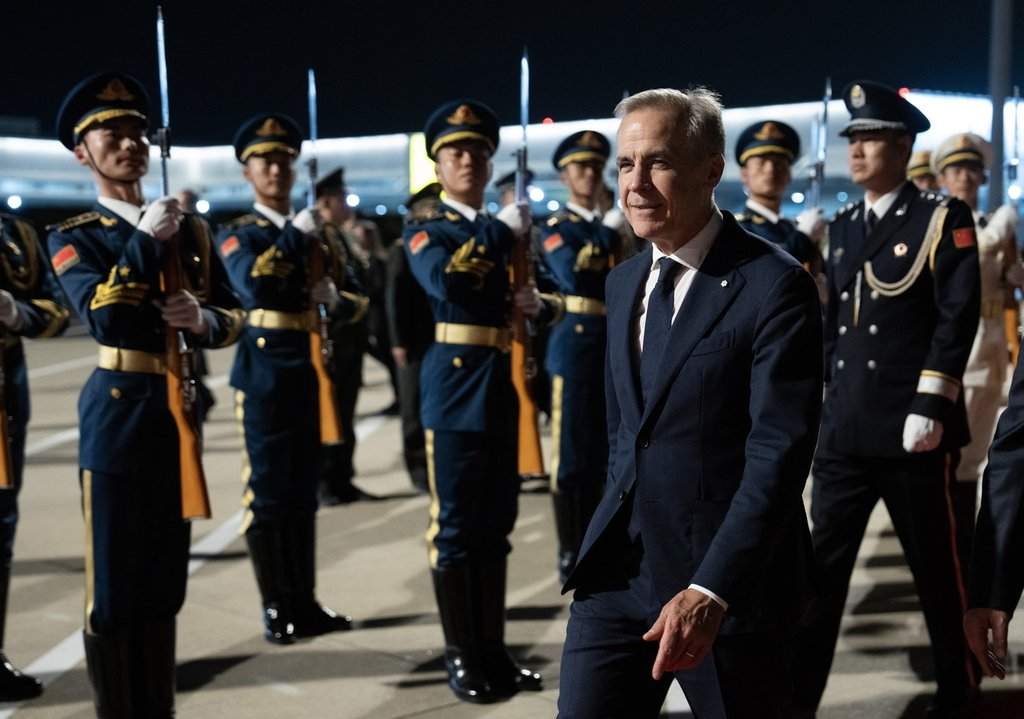
Prime Minister Mark Carney and Chinese President Xi Jinping agreed to drop trade restrictions on more goods at a bilateral meeting in Shenzhen, China, in what the pork sector hailed as a big step in restoring market access lost over years of diplomatic strain. Carney told Xi, "We can work together more broadly, pragmatically to solve problems," ahead of announcing a further relaxation of market access for certain goods. The meeting took place mid-morning Tuesday, which was Monday evening in Canada, on the sidelines of the Asia-Pacific Economic Co-operation summit that Xi is hosting.
Xi spoke in Mandarin and said both countries benefit when they focus on shared goals and set aside differences, a framing that has alarmed human rights activists. It was the second in-person meeting the two have held in China this year. In January, Carney travelled to Beijing for a meeting with Xi, the first trip to China by a Canadian prime minister in more than eight years. Canadian trade data suggests exports to the world's second-largest economy have surged 40 per cent since that first meeting, with increases in oil, canola and peas among the affected products.S2
The January agreement gave Chinese market access to Canadian imports such as canola meal and crab, in exchange for Canadian market access for Chinese steel and aluminum. That deal was due to expire at the end of this year, but earlier this month the two extended it until late 2028. In Tuesday's meeting the leaders expanded the goods covered by the extension, which removes a 25 per cent Chinese tariff on Canadian exports of frozen pork cuts and frozen cold-water shrimp, with Greenland halibut, some mollusks and sea cucumber also included. Carney's spokesperson said this represents approximately $400 million in Canadian exports annually.S2
In exchange, Ottawa said it would expand remissions coverage to 32 more steel and aluminum items from China, including 23 steel items and nine aluminum goods for which supply in Canada is either insufficient or unavailable. The two sides also agreed to open Chinese market access for Canadian fava beans, chickpeas and lentils.S2