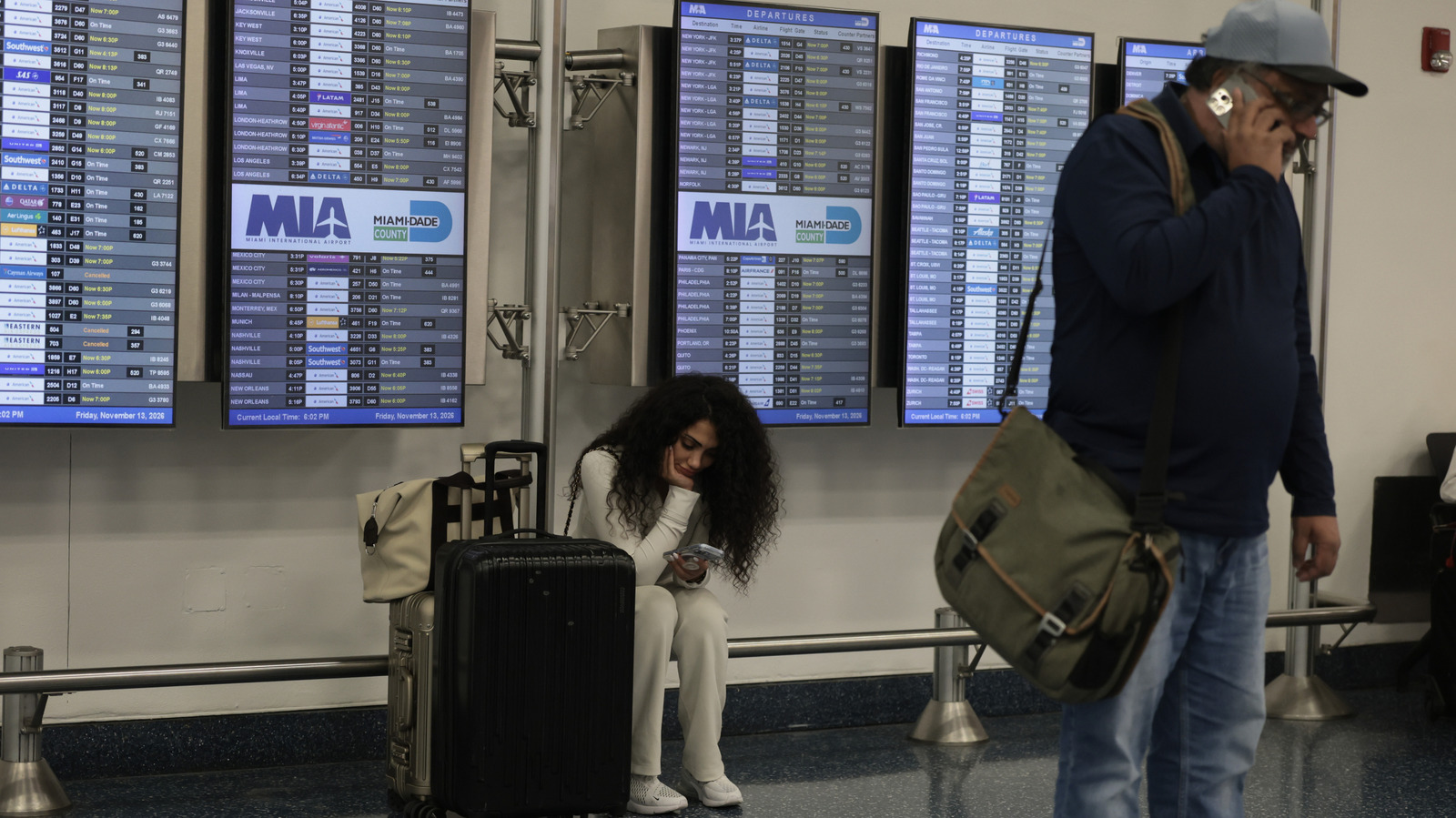
The Federal Aviation Administration said on Tuesday that it had paused the installation of routers linked to last week's nationwide ground stop and had switched off any Juniper routers already in place. Technicians tied Friday's disruption of key air traffic control systems to a router recently installed in El Dorado, Arkansas. The FAA said the router had caused a flood of data, with "excessive data" hitting the system "at a rate of 1,000 connection attempts every 4 to 5 seconds." That overwhelmed the 25-year-old routers across the network and created instability with aircraft communications and radar feeds at 17 of the nation's 22 regional air traffic control centers.
Transportation Secretary Sean Duffy said a contractor from L3Harris was replacing old copper wires with fiber-optic lines and installing the new router at the Arkansas site when the problem began. Another router in Amarillo, Texas also malfunctioned, and the FAA disabled both. FAA administrator Bryan Bedford said the agency knows the router caused the problem but does not yet know what triggered it. Duffy said national security agencies told him the failure was not caused by a cyberattack, and he asked the FBI to help analyze the Arkansas router. The routers that failed are being tested in a lab at L3Harris headquarters.S1S2
For now the FAA is relying on older Cisco routers that have been in place for 25 years to keep the network running. Democrats on the Senate Commerce Committee said only about 400 of more than 3,600 routers have been installed and called for a pause until the root cause is identified. Their letter to Duffy asked the agency to report to Congress on how it will prevent future failures. Duffy renewed his call for Congress to approve an additional $50 billion to modernize the air traffic control system, saying that "the longer we stay on an old rickety network, the less safe it becomes."S1S2