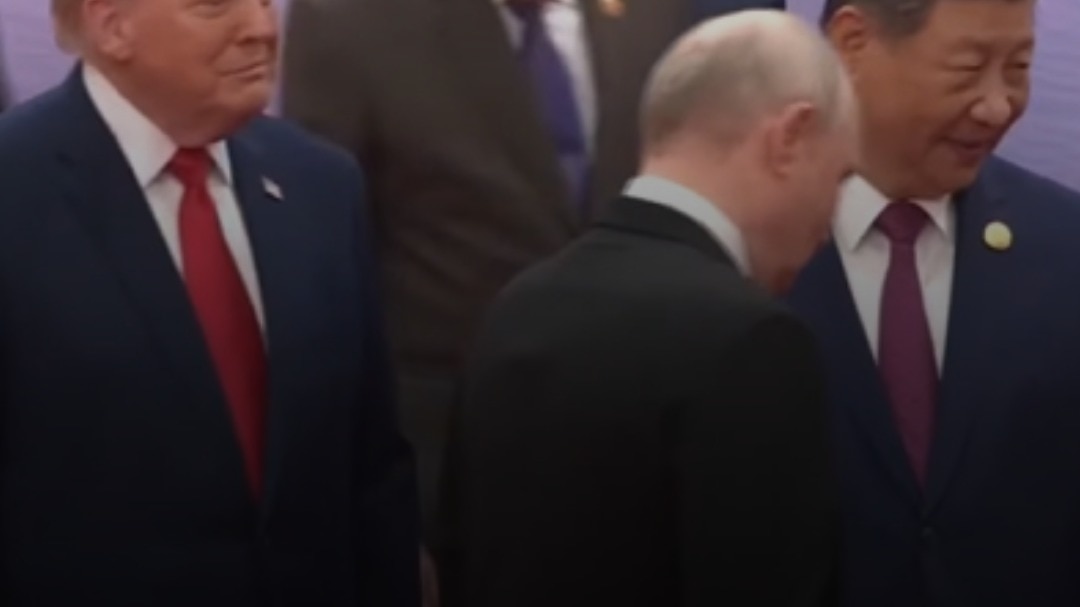
Chinese President Xi Jinping hosted US President Donald Trump and Russian President Vladimir Putin on Thursday for an unprecedented trilateral summit in Shenzhen, bringing together the leaders of the world's three most powerful military powers amid heightened geopolitical tensions. Xi hailed the talks as "groundbreaking", saying discussions ranged from global governance and denuclearisation to the war in Ukraine and energy security. Trump heralded the gathering as "really making history", while Xi called the talks "positive, constructive and fruitful".
The "peace declaration" released after the meeting made no mention of Russia's war in Ukraine or the US-led war in Iran. Instead, the three leaders agreed to pursue reforms of the United Nations, limit the role of the International Criminal Court and reaffirm their commitment to avoiding nuclear war. They also pledged to boost supplies of refined petroleum products to address global energy challenges. The tightly choreographed meeting fuelled concerns that Beijing, Washington and Moscow could seek to reshape the international order around competing spheres of influence.S1S2
For Putin, the three-way talks, and his separate meetings with both leaders earlier, offered a chance to show the world he was on par with the leaders of the US and China, despite Western efforts to isolate him since he launched the full-scale invasion of Ukraine in February 2022. Emma Chanlett-Avery, senior director for Political-Security Affairs at the Asia Society Policy Institute, said Putin had the most to gain as "he appeared on the world stage as one of the dominant players in the world". Chim Lee, a senior analyst with The Economist Intelligence Unit, said the meeting was a "major outcome for Russia".S1
The joint statement said the leaders are committed to work to reduce nuclear risks and prevent nuclear proliferation. The last nuclear arms pact between Russia and the United States, New START, expired in February. Trump has said he wants "a new, improved and modernized" deal that includes China, but Beijing has so far been reluctant to accept limits, as its estimated arsenal of around 500 warheads remains far smaller than those of Russia and the US, which are believed to possess more than 5,000 warheads each. Lee said China is unlikely to join a trilateral institutionalised nuclear arms control setting.S1