Story Iran

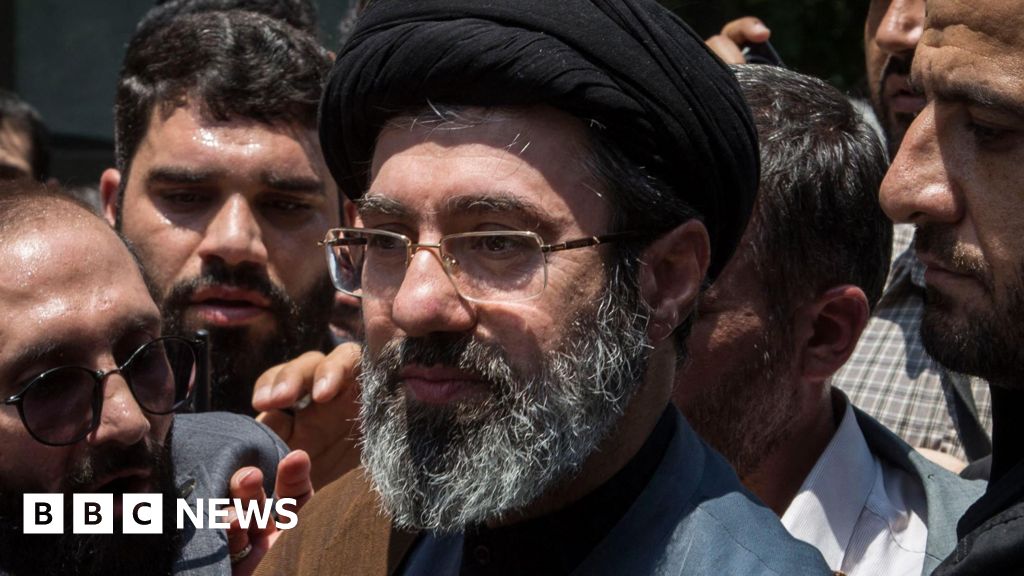
Mojtaba Khamenei's Appointment as Supreme Leader Sparks Division in Iran

Iran
The brief

The appointment of Mojtaba Khamenei as Supreme Leader has intensified divisions within Iran, with supporters celebrating the move while critics express concerns over continuity in governance.

Context

Mojtaba Khamenei's rise is seen as a consolidation of power by hardline factions and the Islamic Revolutionary Guard Corps (IRGC) in Iran.S2

Key points

  • Pro-establishment crowds are celebrating Mojtaba Khamenei's appointment.S1
  • Critics argue that this appointment indicates a lack of change in Iran's governance.S1
  • The rise of Mojtaba Khamenei highlights the strengthening of hardline factions in Iran.S2
  • The IRGC's influence is increasingly prominent in the political landscape following this appointment.S2
  • Supporters view the appointment as a necessary step for continuity in leadership.S1
  • Opponents fear that this move will entrench existing power structures.S1
  • The appointment is occurring amid what some describe as an existential war for the Islamic Republic.S2
  • The division in public opinion reflects broader societal tensions within Iran.S1

Why it matters

  • The appointment may solidify the hardline agenda in Iran's domestic and foreign policies.S2
  • Public reactions could influence future political stability and governance in Iran.S1

What to watch

  • Monitor the responses from various political factions within Iran.S1
  • Observe any changes in Iran's foreign policy following this leadership shift.S2
Timeline · newest first
8mos Financial Times

The rise of Mojtaba Khamenei

We're showing you this article with reduced functionality due to intermittent issues on FT.com. This article is up-to-date as of March 9 2026. Najmeh Bozorgmehr in Tehran and Andre…

8mos BBC

Iranians deeply divided over Mojtaba Khamenei's rise to power

While pro-establishment crowds celebrate Khamenei's appointment as his father's successor, others believe it signals no change to how Iran is ruled.

8mos The New Arab

The rise of Mojtaba Khamenei: Iran's hardliners cement power

Mojtaba Khamenei's appointment as Supreme Leader underscores the rise of hardline factions and the IRGC in Iran amid an existential war for the Islamic Republic

Mojtaba Khamenei's Appointment as Supreme Leader Sparks Division in Iran

3 outlets 3 reports
The brief

The appointment of Mojtaba Khamenei as Supreme Leader has intensified divisions within Iran, with supporters celebrating the move while critics express concerns over continuity in governance.

Context

Mojtaba Khamenei's rise is seen as a consolidation of power by hardline factions and the Islamic Revolutionary Guard Corps (IRGC) in Iran.S2

Key points

  • Pro-establishment crowds are celebrating Mojtaba Khamenei's appointment.S1
  • Critics argue that this appointment indicates a lack of change in Iran's governance.S1
  • The rise of Mojtaba Khamenei highlights the strengthening of hardline factions in Iran.S2
  • The IRGC's influence is increasingly prominent in the political landscape following this appointment.S2
  • Supporters view the appointment as a necessary step for continuity in leadership.S1
  • Opponents fear that this move will entrench existing power structures.S1
  • The appointment is occurring amid what some describe as an existential war for the Islamic Republic.S2
  • The division in public opinion reflects broader societal tensions within Iran.S1

Why it matters

  • The appointment may solidify the hardline agenda in Iran's domestic and foreign policies.S2
  • Public reactions could influence future political stability and governance in Iran.S1

What to watch

  • Monitor the responses from various political factions within Iran.S1
  • Observe any changes in Iran's foreign policy following this leadership shift.S2
Timeline · newest first

Sources · 2 citations

S1 BBC 1 report · EN
S2 The New ArabLead 1 report · EN
Financial Times 1 report · EN