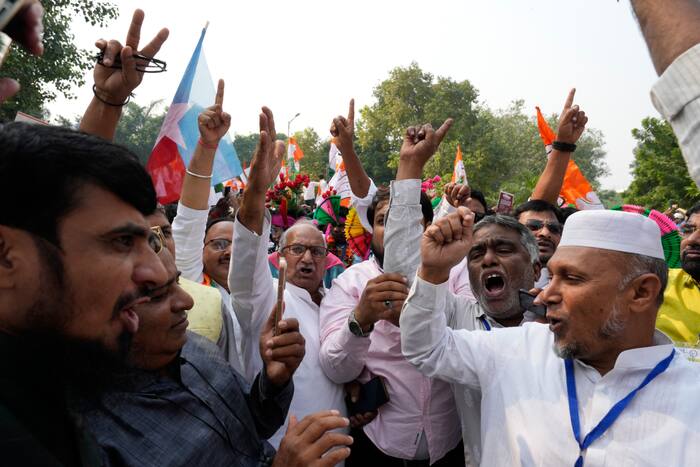
The brief
The Indian government's attempt to pass a women's quota bill has failed in parliament, marking a significant legislative setback for Prime Minister Modi's administration.
Context
The bill aimed to increase female representation in parliament but faced opposition amid accusations of ulterior motives related to electoral boundary changes.S1S2
Key points
- The women's quota bill was blocked in a parliamentary vote.S1
- Opposition parties accused the government of using the bill as a cover for redrawing electoral boundaries.S2
- The proposed amendment was the first constitutional change by Modi's government not to pass in parliament.S2
- The controversy surrounding the bill involved concerns about its timing and political motivations.S2
- The failure to pass the bill reflects growing tensions between the ruling party and opposition factions.S1
- The women's quota bill was part of a broader agenda to enhance gender representation in politics.S1
Why it matters
- The failure to pass the bill highlights challenges in advancing women's rights in India.S1
- It signals potential difficulties for the ruling party in achieving its legislative goals.S2
- The incident raises questions about the integrity of electoral reforms proposed by the government.S2
What to watch
- Monitor any future attempts by the government to reintroduce the women's quota bill.S1
- Observe the response from opposition parties and civil society regarding women's representation.S2
- Watch for potential shifts in public opinion regarding the Modi administration's legislative agenda.S1