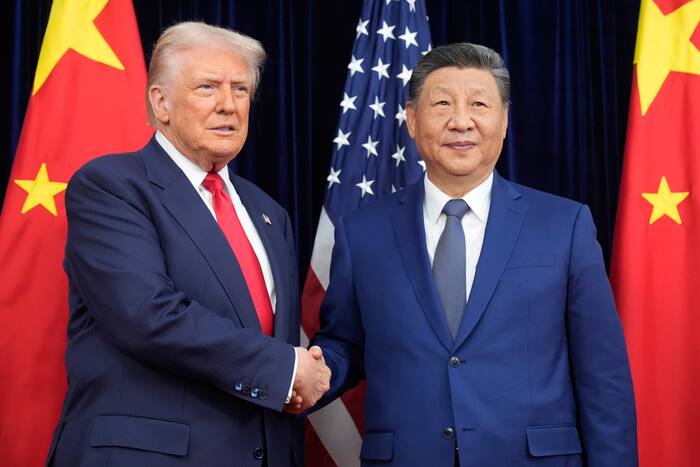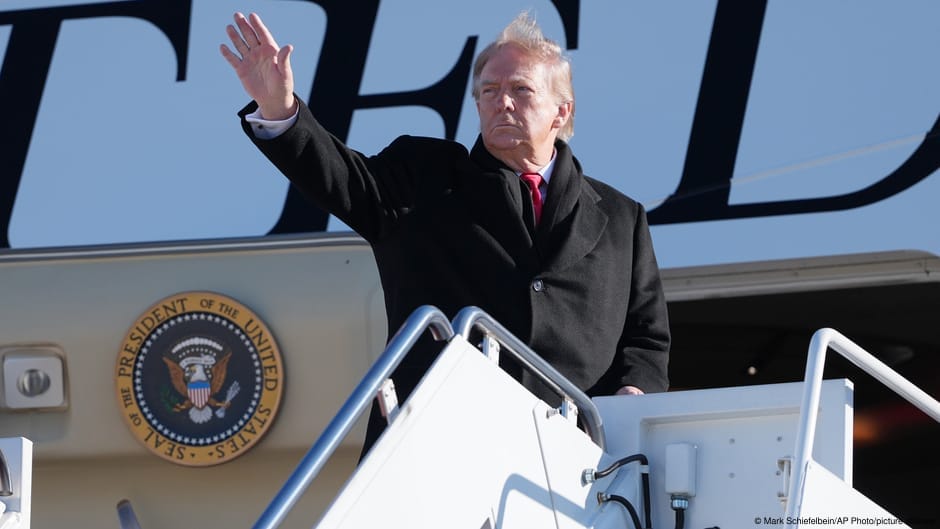
US President Donald Trump is due to arrive in Manila on Tuesday evening, the first stop on an Asia tour that is intended to shift attention away from recent setbacks at home. His Republican Party suffered a stunning defeat in the US midterm elections, and the administration is also facing spy allegations linked to Nvidia and new US curbs on China's access to AI chips that could complicate a fragile trade-war truce. In Manila, Trump is set to hold the first meeting of the Quad group of the US, India, Japan and Australia in two years, a grouping his predecessor Joe Biden regarded as a signature foreign policy initiative. The Quad has said it is not directed against any one country, though Chinese President Xi Jinping has objected to it as an effort to encircle Beijing.
The Manila schedule also includes a signing of a trade deal with Thailand, a cocktail reception and dinner hosted by Philippine President Ferdinand Marcos Jr, and a US-ASEAN 'Special Summit' on trade, security and the region's conflicts, which Trump will attend instead of the larger East Asia Summit. Protests are expected. Hundreds of leftist activists, students and indigenous people have set up a three-day campout near the summit venue, and days of demonstrations have included the burning of effigies of the president. Protesters are angry over the US-Israeli war in the Middle East and the US-led 'Pax Silica' supply chain initiative. The rights group Karapatan called Trump a fascist and a warmonger and criticised Marcos for welcoming him.S1S2
The tour continues on Wednesday when Trump travels to Shenzhen, China, for the Asia-Pacific Economic Cooperation summit, where he is due to hold a trilateral meeting with Xi Jinping and Russian President Vladimir Putin. That meeting is set for Thursday. Ahead of the summit, Chinese Premier Li Qiang told ASEAN leaders that China and the bloc had achieved 'truly extraordinary' economic results despite global trade restrictions, and urged them to stand united against interference. China is ASEAN's largest trading partner, but the bloc's 11 members, with a combined GDP of more than $3.9 trillion, want to deepen ties with Washington despite trade and diplomatic uncertainty under Trump.S1S2
Separately, Canada and China agreed on Tuesday to further reduce tariffs following talks between Xi and Canadian Prime Minister Mark Carney ahead of the Shenzhen summit, Ottawa said. The deals reflect a warming relationship between the two countries after years of strained ties, driven in part by trade tensions with Washington that have pushed both to reduce their dependence on the US. Former US Deputy Secretary of State Kurt Campbell credited Secretary of State Marco Rubio with reconvening the Quad, which he said had lost ambition under Trump, and described the US-Japan relationship as the linchpin of American policy in Asia.S1S2